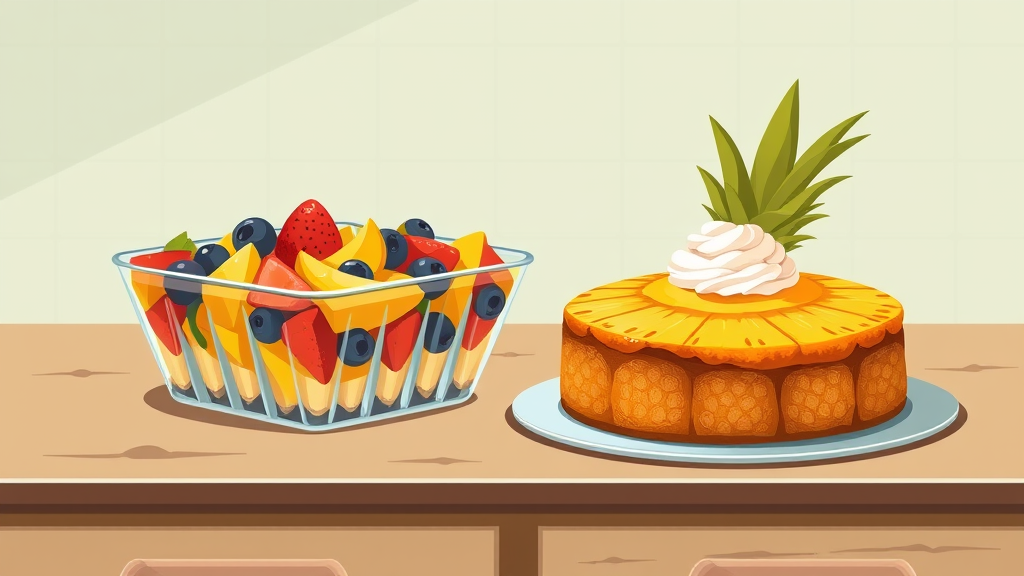

My grandmother never understood American dessert culture. She would listen on the phone while my mother, who had married an American, described these strange concoctions, and she would shake her head. In Naples, dessert meant fruit. Or maybe a simple cake with almonds and lemon zest. You did not dissolve things in boiling water and call it cooking.
But I have lived in America long enough to understand the pull of it. The 1960s were a wild time for home cooking, especially sweets. Convenience had become its own kind of art form. A recent roundup of 11 defining desserts from that decade captures this energy well, and reading through the list felt like opening a time capsule from a world I never lived in but have spent years trying to understand. You had elegant dinner party finales and you had quick no-bake treats sitting right next to each other, and that tells you something about what was happening in American kitchens.
What strikes me is how much personality these desserts had. No apologies. A Coca-Cola cake, dark and sweet, bringing Southern comfort to the dessert table. Cherries Jubilee, theatrical and dramatic, set on fire tableside so everyone felt like they were part of something wonderful. These were recipes built to impress. I respect that ambition. I am not pointing at specific entries on the list, because the list I will let you explore yourself. But the energy of sixties desserts, that I know from years of absorbing this culture.
Fondue sets I remember seeing in every kitchen I visited as a young man in the eighties, leftovers from the decade that made them famous. When the chocolate was melted and the fruit was cut and everyone had a skewer in hand, that was a party. You were not just eating. You were participating. Shared food, food that required touching and dipping and laughing, that was the whole point. I have no statistics on how many Americans received fondue sets as gifts in the sixties, but I can tell you that every Italian-American household I knew had one collecting dust somewhere.
And the no-bake treats tell you everything about the era. The source highlights these quick desserts alongside the more elaborate ones. Lives were getting busier, and cooks wanted to put something joyful on the table without lighting an oven in August. My grandmother would have called it cheating. I call it smart.
I think also of desserts like ambrosia salad, with its fruit and coconut and marshmallows, sweet and cooling. Or Texas funeral cake, a chocolate sheet cake so rich and moist it became a staple for gatherings of every kind, not just memorial services despite the name. I am pulling these from my own years of studying and tasting American food history. But they belong to the same spirit, the same generous hospitality that defined this moment. Foods of community. Foods that fed a room.
Tiramisu had not arrived yet. That came later, in the eighties, and I will save that argument for another day. The sixties belonged to American ingenuity, for better and for worse. Some of these desserts would make a Tuscan pastry chef weep into his dough. Others are genuinely wonderful and deserve a place in any kitchen, any decade.
What I love about revisiting these recipes is the reminder that good food does not need to be precious. The care is in the choosing, in the presentation, in the moment of bringing people together around something sweet. Whether it took you three hours or came together from a box, if it made the table brighter, it did its job.
Comments (0)
Log in or sign up to join the conversation.
No comments yet. Be the first.