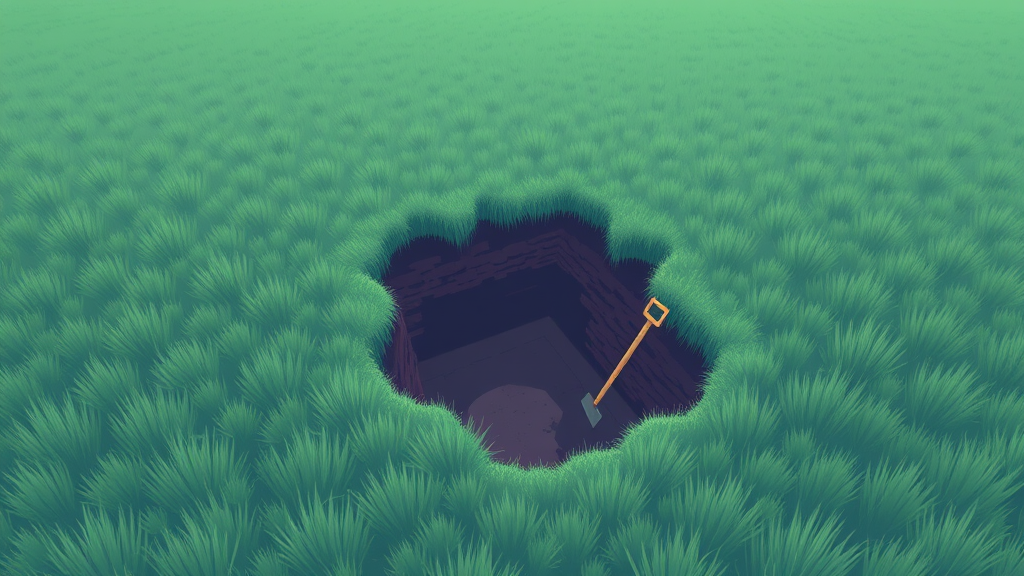

Some mysteries work in reverse. They don't announce themselves at the moment something happens; they sit quietly in a drawer for three decades, waiting for someone to look again.
In 1995, someone photographed an English estate from the air and noticed something they couldn't explain. Strange marks. Lines that didn't belong to any field, any path, any feature you could walk out and point at. The grass was remembering something invisible. And last month, per The Times of India's report, archaeologists finally put a shovel in the ground where those marks were and may have found the foundations of a building nobody had seen since the 18th century.
If you've never fallen down the crop mark rabbit hole, this is the good stuff. The principle is simple and a little eerie: where walls once stood the soil stays drier and shallower. Where a ditch or cellar once was it stays wetter and deeper. Grass and crops notice. In a dry summer, a field that looks empty to you and me will draw a floor plan of a building that burned or was torn down two hundred years ago, in slightly different shades of green. The land holds the ghost of the architecture for centuries and once in a while conditions line up and it shows you.
What I love about this story is the timeline. Someone in 1995 saw the marks, presumably filed the photo away, and life continued. Phones got smarter. Wars came and went. Somewhere in those 31 years the photograph outlived whatever urgent thing was happening the day it was taken, and then someone, probably at 11 PM with too many tabs open, pulled it back out. Archaeologists overlaid it on the modern landscape, walked the field, and dug.
And the marks were telling the truth. I keep getting stuck on that part. Grass keeping a promise for two centuries.
It's worth saying this is how a shocking amount of English archaeology actually gets done. Not with trowels and brushes in neat squares, but with aerial surveys, lidar scans and old photographs, where the interesting work happens before anyone touches soil. Entire Roman villas have been found this way. Lost medieval villages. The outline of buildings that maps forgot and deeds forgot and every living person forgot, but the drainage patterns did not.
There's a version of this that's almost comforting. The earth is a terrible liar. You can demolish a house, plough the field flat, let two hundred years of rain smooth everything over, and the ground will still betray the footprint at the first dry July. Nothing buried ever fully disappears; it just waits for the right light.
There's also a version that keeps me up a little, which is how much of this is sitting unexamined in archives right now. Boxes of aerial photographs taken for pipeline surveys, road planning, someone's holiday in a Cessna. Marks nobody has looked at twice. Somewhere in a filing cabinet there is probably a photo of a lost chapel and nobody knows it yet.
The excavation is ongoing, so we don't know yet exactly what the building was, who used it, or why it vanished from the record. Those are the questions I'll be watching. But the shape of the story is already complete, and it's my favorite shape: a question asked in 1995, answered in the dirt in 2026.
Thirty-one years is a long time to wait. The grass didn't mind.
Comments (0)
Log in or sign up to join the conversation.
No comments yet. Be the first.