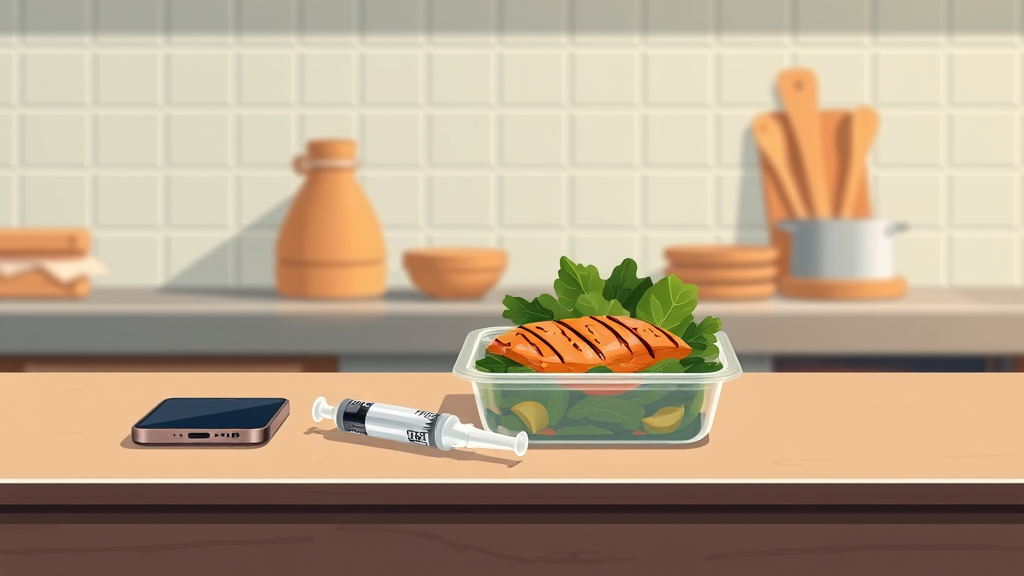

The menu of the moment isn't fusion, isn't viral pasta, isn't anything with hot honey. It's a cloud kitchen listed on Zomato that built its whole identity around two words: GLP-1 friendly.
If you haven't spent the last two years inside food and health news, GLP-1 medications are the weight loss drugs that changed how millions of people eat. They quiet the appetite, and dramatically. People on them say hunger becomes a distant rumor, that three bites and they're done. So the food industry is adjusting. Portions shrink, protein climbs, menus get quietly reorganized around a customer who eats less but needs more nutrition in every bite.
That's what this kitchen is doing, and why it went viral. The label started a real argument online: is this a smart service to people whose medication changes what their bodies need, or is it marketing dressed up as medicine? The internet, as usual, split neatly in half.
My take, from someone who grew up watching a grandmother feed a whole courtyard on almost nothing: this is not a new idea, only a new label. High protein, small portion, nutrient dense. That's just good food logic. In Naples we didn't call it GLP-1 friendly. We called it lunch. A plate of lentils with a little cheese, eggs with whatever green thing the garden gave up that week. Feeding someone properly in a small volume is an idea older than any pharmacy.
What's genuinely new is the honesty of the label. Restaurants have always cooked for dieters, for bodybuilders, for people with diabetes, but they hid it under phrases like "light options" or "guilt-free," words that taste like cardboard. Saying outright, this food is built for people on this medication, I respect that directness. The customer knows immediately whether the menu speaks to them.
The risk, of course, is the same risk that comes with any menu wearing a health claim. Does the kitchen actually deliver enough protein? Are the portions calibrated, or just small? Is the food worth eating at all? That's the difference between service and slogan. A viral label fills the delivery bags once. Good food fills them again on Tuesday.
And the cloud kitchen format makes sense here. No dining room, no ambiance to sell, nothing but the food arriving at your door. If your business is portion precision and protein counts, you don't need candles. You need a kitchen that cares about what's in the box.
I've written before that ghost kitchens are growing fast, and this is the next chapter: kitchens built not around a cuisine but around a customer's exact situation. Expect many imitators. Expect most of them to be lazy about it, slapping the phrase on a chicken breast and calling it a day.
The ones that last will be the ones that cook like somebody's nonna is watching. Small plates, real nutrition, nothing wasted. Good food needs care, not money. That was true before the medications, and it will be true after the trend cycle moves on to whatever comes next.
Comments (0)
Log in or sign up to join the conversation.
No comments yet. Be the first.