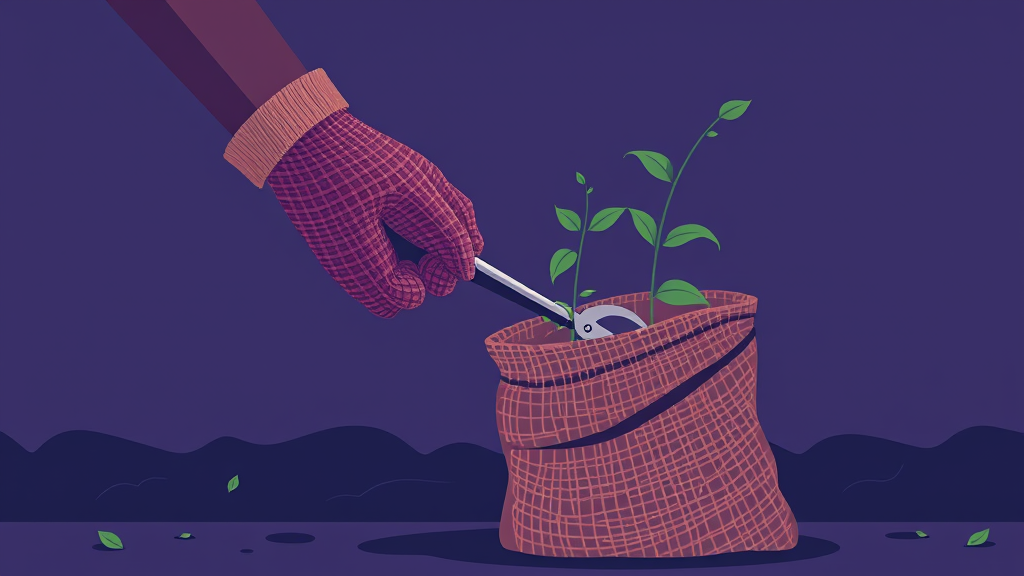

It started the way these things always do. With something small. Something you'd almost talk yourself out of caring about.
A gardener, somewhere in the quiet suburbs where nothing supposedly happens, noticed her plant identification tags kept disappearing. Not all of them. Not all at once. Just the ones she'd recently placed on newly labeled specimens, the ones she'd spent real time identifying and cataloging. One would vanish. Then another. She probably thought it was the wind the first time. Maybe a bird the second. By the fifth or sixth, she was pulling on a thread that would unravel something genuinely strange.
Because here is what was actually happening. Her neighbor had been watching the garden, waiting for her to label a new plant, then slipping over and taking the tag. Not for fun. Not out of some compulsive need to collect little plastic stakes with Latin names on them. The neighbor was taking cuttings from those exact plants, removing the identification tags, and reselling those cuttings online as "mystery varieties."
According to the original report, the whole scheme came apart when the gardener recognized her own plants being sold under vague, intriguing names that translated roughly to "who knows what this is, pay a premium."
And I can't stop thinking about the patience this required.
We're not talking about a crime of opportunity. This wasn't someone walking past a hydrangea and snapping off a branch on impulse. This was a sustained operation. The neighbor had to watch the garden closely enough to know when new tags appeared. Had to identify which plants were rare or valuable enough to be worth cloning. Had to take cuttings at the right time of year, root them properly, pot them, and then list them with just enough mystery to make buyers feel like they were getting something special. That's not impulse. That's a supply chain.
The phrase "mystery variety" is doing a lot of heavy lifting here, and it's doing it beautifully. Because what does that even mean? In the plant world, a "mystery variety" sounds exciting. It sounds like you might get something unusual, something you wouldn't find at a garden center. And you wouldn't find it at a garden center, because it came out of someone else's carefully curated personal collection that they spent years building. The buyer thinks they've stumbled onto something rare and wonderful. They have. It's just that it's stolen.
A garden is an intimate thing. It's years of knowledge and patience and selection. Every plant in it was chosen. Every tag was placed after research, after identification, after the quiet satisfaction of knowing exactly what you're growing. Someone creeping through that space at night, taking pieces of it and selling them under false names, feels less like theft and more like a kind of identity theft for living things.
The original report doesn't tell us what happened after the gardener discovered what was going on. Whether there was a confrontation. Whether the neighbor even knows she was caught. That absence sits with you too. Because the discovery itself, that quiet moment of recognition, must have been staggering. Imagine looking at a listing online and thinking, wait, I know that plant. I grew that plant. I labeled that plant. And now it's being sold to strangers under a made-up name.
Imagine standing in your garden and wondering which of your plants are really yours anymore. Which ones have already been cloned and sold to strangers who think they bought a mystery. You'd never look at your own yard the same way again.
Every new tag you place would feel like an invitation.
I keep coming back to one question, though, and I can't leave it alone. If the neighbor knew enough about plants to successfully root and resell cuttings, she knew enough to identify them herself. She chose not to. She chose "mystery" because mystery sells better than reality, and because a plant with no name can't be traced back to the garden it came from.
That's not ignorance. That's strategy. And there's something about the gap between those two things that I find unsettling, in the way that only the small, quiet crimes of ordinary people can be.
Comments (0)
Log in or sign up to join the conversation.
No comments yet. Be the first.