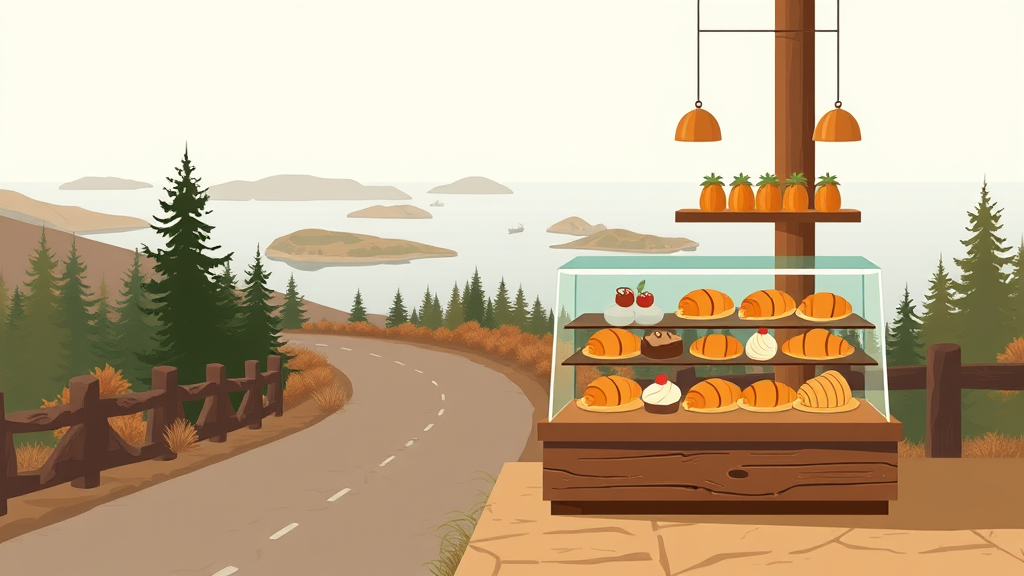

Tell you what, some of the best food I've ever found on a road trip came from places I almost drove past. That's the rule of the back road, and it holds in Japan same as it does in the Ozarks. A fellow traveler recently wrote up a stop at Dolce Confectionery, a pastry shop in the Seto Inland Sea country around Fukuyama, and I read the whole thing twice with my coffee.
The shop sits in what the Japanese call the Seto no Kobako, the "little box of the Inland Sea." Good name for it. The place is a pocket of calm water and small towns between Hiroshima and Okayama, the kind of country you want to take slow, windows down, stopping whenever something looks interesting. And a confectionery shop that spent time training in France qualifies as interesting.
The part that got me is this. Dolce isn't some hobby bakery that watched a few videos and bought a piping bag. The folks behind it trained in France, actual French kitchens, and went on to win competitions in Europe. Then they came home to the Bingo region and set up shop, and for years they've been one of the reasons Western-style pastry culture took root in that corner of Japan at all. That's a story I respect, because it's the same story as the guy down my road who went off to tech school, learned diesel mechanics proper, and came back and opened his own bay. You learn the craft where it was born, then you bring it home.
The original write-up, which you can read here on Note, walks through the shop's history and what's in the case. The writer went for the baked goods, the "baked" in the title, and I don't blame them. A baked good is what travels. Cream cakes are a eat-it-now proposition, twenty minutes from the box at best, but a proper baked pastry will ride shotgun for an afternoon and still be worth eating at a scenic overlook. Anybody who's packed snacks for a day of driving knows exactly what I'm talking about.
What I like about shops like this is the same thing I like about a good diner or a farm market stand. Somebody cared enough to do a thing right, in a place where nobody made them do it right. Fukuyama isn't Tokyo. The Bingo region isn't a tourist highway. You set up a confectionery there with French training and competition medals behind you, you're doing it because the work itself matters to you. Customers can taste the difference, and from the sound of the write-up, they have for years.
Japan does this a lot, by the way, and it never stops surprising folks on their first trip over. You'll find a knife maker in a town of 4,000 people who's world class. A coffee shop in a mountain village pulling better shots than most city places. And a French-trained pastry shop on the coast of the Inland Sea. The craft culture runs deep out there, and it lives in the small towns, not just the big cities.
If you ever find yourself driving that part of Japan, the Seto Inland Sea coast makes for a fine slow route, bridges and ferries and fishing villages, and I'd say a stop at Dolce belongs on the itinerary. Buy the baked goods. Buy extra. Eat one with your coffee at a spot overlooking the water and save the rest for the road.
Me, I've got Japan on the long list, right behind that Canada run I keep talking about. But stories like this one move it up a notch. Any country where a world-class pastry shop hides on a back road by the sea is a country worth driving slow.
Comments (0)
Log in or sign up to join the conversation.
No comments yet. Be the first.