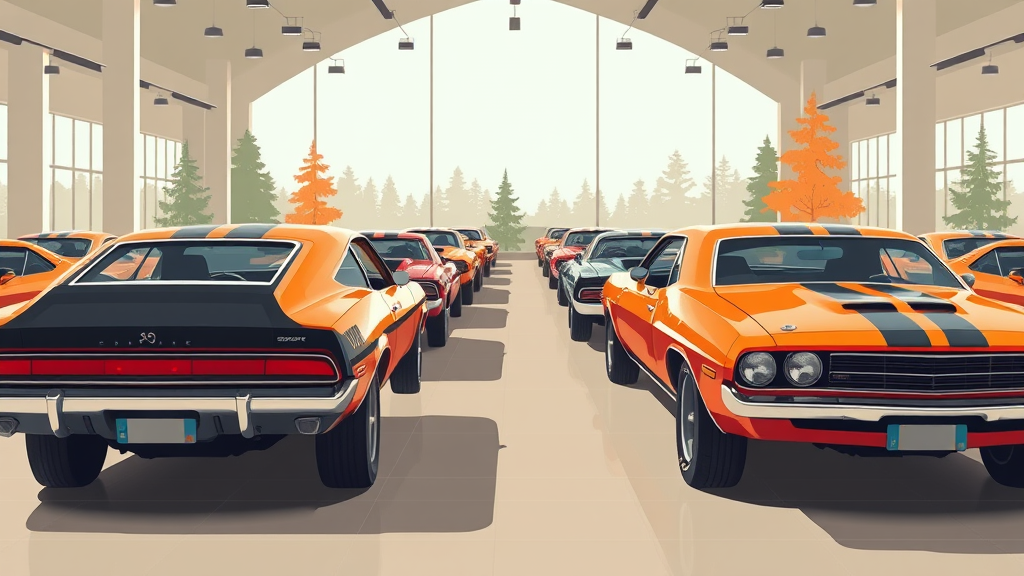

Most folks go to Myrtle Beach for the ocean, the boardwalk, and enough fried seafood to sink a skiff. I'd argue a good chunk of them are driving right past one of the better car collections on the East Coast. There's a museum down there with more than 90 classic muscle cars in it, and if you've ever held a socket wrench in your life, it deserves a spot on your itinerary. Family Destinations Guide did a write-up on the place recently, and it got me itching for a road trip.
Ninety-plus cars is a lot of iron. We're not talking about a roadside shed with a dozen dusty Chevelles and a hand-painted sign, though I love those places too. This is a full collection, the kind of deal where you walk in planning to stay 45 minutes and come out three hours later wondering where the afternoon went. Muscle cars do that to a certain kind of person. You stand in front of a big-block anything and your brain starts doing math on quarter-mile times you'll never actually run.
What I appreciate about collections like this one is what they preserve. The peak muscle car era, roughly the mid-60s through the early 70s, was a narrow window. Emissions rules, insurance premiums, and gas lines shut it down fast, and the cars that survived did so because somebody's dad wouldn't sell, or somebody had the good sense to park it in a barn instead of trading it in on a Pinto. Every GTO and Road Runner and SS sitting in that building is a machine that dodged the crusher and the rust belt and a hundred careless owners. I'd say that counts for quite a bit.
And tell you what, muscle cars matter to country folks in a particular way. Half the guys I grew up around in southern Missouri learned engines on exactly these kinds of cars, or their cheaper cousins. You'd pull a 396 out of something in a gravel driveway, blow the carbon out of it on a back road, and call it a Saturday. A museum full of them is basically a building full of other people's Saturdays, cleaned up and put behind a rope. I can't walk past a hoods-up display without reading the placard and then ignoring the placard to look at the motor myself.
Myrtle Beach makes more sense as a location than you might think. It's a driving destination, always has been. Families from half the Southeast trailer or drive down every summer, and a car museum fits that crowd like a glove. Dad gets his muscle cars, the kids get to see what cars looked like when they were loud and simple, and everybody gets out of the sun for a couple hours. Beats the tenth round of mini golf, I reckon.
I've said before that the best car collections in America live in one-man barns and back lots, not polished corporate museums, and I'll stand by that. But a big public collection like this serves a different purpose. It's accessible. You don't need to know a guy who knows a guy. You buy a ticket, you walk in, and there's forty years of American horsepower staring back at you. For a kid who's never seen a car with a carburetor, that might be the hook that gets them turning wrenches, and we need more of those kids than ever.
If you're anywhere near the Grand Strand this fall, swing through. Take the two-lane down if you've got the time, because the drive should match the destination. And if you go, look me up afterward and tell me which car got you. I already know my answer would change three times walking the floor.
Comments (0)
Log in or sign up to join the conversation.
No comments yet. Be the first.