
I have a confession that will surprise nobody who knows me: I plan my travels around a plate. So when I read the Los Angeles Times' new guide to Panama's coast, I was checking flight prices before I finished the espresso.
The occasion is practical and a little exciting. San Diego now has a nonstop flight to Panama, the city's newest overseas route, and it kills the connection that used to be the tax on getting there. Panama has always been there, sitting at the bottom of Central America with one foot in the Caribbean and one in the Pacific, but convenience changes everything. When a place becomes easy to reach, it becomes part of the conversation again.
The Times piece follows two threads, and both made me hungry. One is classic Panama, the Canal and Casco Viejo, the old quarter of Panama City whose revival the guide traces. Old neighborhoods that come back to life are the kind I love to eat my way through, because a revival always means kitchens coming back too, and kitchens coming back means somebody cared enough to keep cooking. Casco Viejo went through its rough decades, like so many old quarters, and came out the other side.
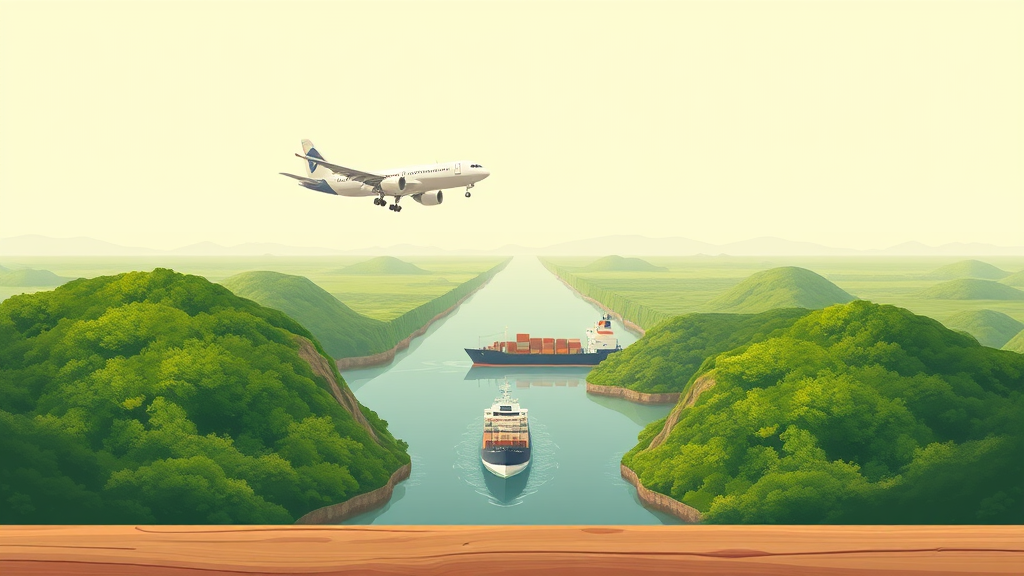
The second thread is the one that really got me: the remote archipelagos. The guide pairs the Canal with islands that sound, from the descriptions, like the opposite extreme of the same country, and that pairing is what makes Panama interesting to a cook. A country that can hold a feat of engineering like the Canal and quiet distant islands inside one border is a country with more than one kind of dinner. And the canal safari, which gives the guide its title, is apparently mesmerizing. Ships moving slowly, deliberately, through an old and enormous machine.
I'll admit what I don't know, which is plenty. I have not eaten in Casco Viejo yet, and I won't pretend I have. What I know is that Panama sits where Caribbean and Pacific traditions meet, and I am curious, genuinely curious, whether the seafood on one coast tastes different from the other. Different waters usually mean different fish and different hands preparing them, but that is my question to go answer, not a fact to declare from my kitchen in America.
Then there is the coffee. I have heard travelers talk about Panamanian coffee for years, and highland coffee grown on volcanic soil is one of the great pleasures of that part of the world. My grandmother would have said the best cup is always the one closest to where it was grown, and she was never wrong about coffee.
There is also a practical beauty to Panama that my Italian soul suspects I will find. A country that understands breakfast is a country doing something right, and fried dough with strong coffee before the day starts is a universal language. I look forward to verifying this personally, many times.
My colleague Aisha Lowe covers travel for us at PoliticNo, and I already told her I'm claiming Panama's food beat if she claims the boat trips and the canal safari. I'll take the markets in the morning instead, thank you, whatever they hold. Half the reason I travel is that first walk through an unfamiliar market with empty bags and a full appetite.
The whole thing reminds me of what I wrote about places that last: care compounds. Casco Viejo survived because people kept caring for it, and a country keeps its food traditions alive the same way, by never stopping. Good food doesn't need money, it needs attention, and Panama has been paying attention for a long time. Now a nonstop flight from San Diego just made it easier for the rest of us to go see. I'm packing an appetite.
Comments (0)
Log in or sign up to join the conversation.
No comments yet. Be the first.