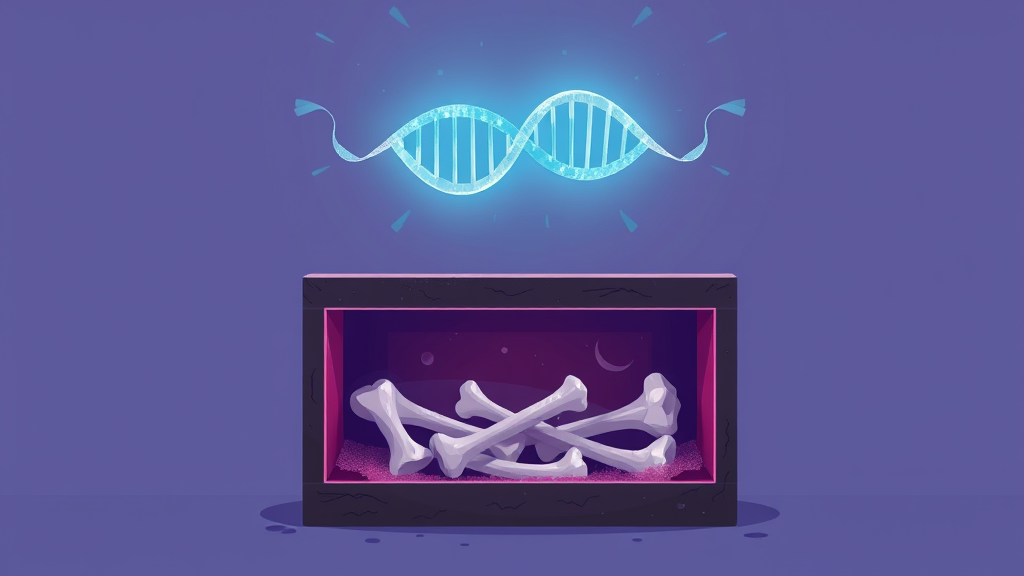

For nearly twenty-six years, she had no name.
That's the part that gets me. Not the murder itself, as terrible as it was. The quarter century of anonymity that comes after. Someone's daughter, someone's friend, someone's whole life compressed down to a case number and a facial reconstruction sculpted from bone structure that probably looked nothing like her. And then this month she got her name back.
CNN reported on July 25 that investigators identified a teenage girl murdered in 1999 using genetic genealogy. The technique cross-references DNA found at crime scenes or on remains with public genealogy databases, the kind people use when they want to find out whether they're 14 percent Scandinavian. The same technology that tells you about your great-great-grandfather's immigration records can now reach back through decades of silence and pull a name out of the void.
I've always been drawn to cold cases, to cases where someone simply stops existing in the record and the rest of the world moves on without them. The ones where the questions keep multiplying the longer you sit with them, where the silence itself becomes the story.
This one has an answer. Or at least the beginning of one.
Genetic genealogy works because your DNA is not entirely your own. It's a patchwork of everyone who came before you, and when you upload your genetic profile to a site that matches you with distant cousins, you're building a web that law enforcement can also use. They take unknown DNA, run it through the same databases, and start building family trees. It's slow, painstaking work. You're not looking for a needle in a haystack. You're looking for the specific needle that shares a great-grandparent with three other needles, and then you work forward through birth records and death certificates and marriage licenses until you find the person who matches.
Each case this technique touches is a person who'd been erased from the record. Sometimes deliberately, sometimes just through the slow decay of institutional memory and physical evidence. Identification doesn't always mean closure. Sometimes it just means the question changes shape.
What gets me about this case is the timeline. 1999. That's not ancient history. People reading this right now were alive in 1999. The music on the radio that year is still on rotation. The movies are still streaming somewhere. And for this girl everything stopped.
The investigators called it a miracle and I understand the impulse even if I'd use different words. It's not magic. It's the collision of three things: DNA evidence preserved from a crime scene, a public willing to share genetic data, and researchers who are obsessive enough to trace family trees through decades of records looking for one match. Remove any leg and the whole structure collapses.
I keep thinking about the databases themselves. Millions of people have uploaded their genetic information, most of them just curious about their ancestry. They didn't sign up to be part of a forensic pipeline. And yet here we are. The same data that tells you about your haplogroup can reach into a cold case file and pull out a name that's been sitting there since 1999. I find that unsettling even when the outcome is unambiguously good.
Because the outcome is good. A girl has her name back. Investigators who probably thought this case would follow them into retirement get to close a file.
But I'm a 2 AM person, so I also sit with the other questions. How many more are out there. How many unidentified remains are sitting in evidence lockers right now, waiting for someone to run them through a database. And what happens to the concept of genetic privacy when the tool that solves murders is also the tool that maps your family tree without your consent.
Those questions don't have clean answers. They rarely do.
But tonight somewhere a girl who spent twenty-six years without a name finally has one. Whether anyone is left to grieve her properly, the record at least knows who she was.
Comments (0)
Log in or sign up to join the conversation.
No comments yet. Be the first.