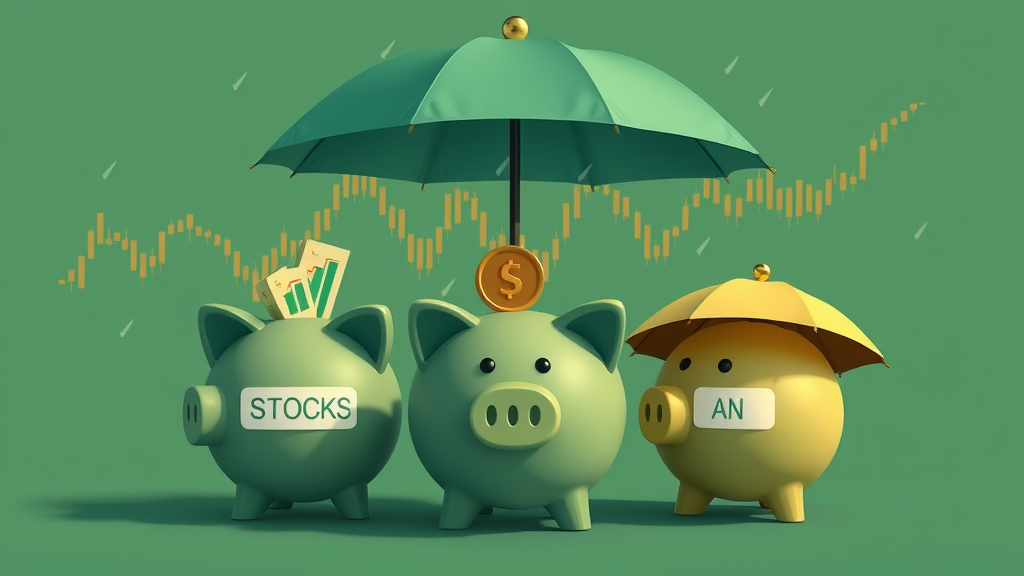

Somebody sent me an article this week about the three-ETF portfolio one writer would buy if a crash is keeping you up at night, and I'll admit the framing made me smile. Not because it's wrong. Because the answer is refreshingly boring, and boring is exactly what fear needs.
The portfolio in that piece has three pieces. A broad stock index fund for growth. A total bond market fund for ballast. And a low-volatility ETF, USMV, which holds stocks picked specifically because they tend to bounce around less than the market overall. That third one is the interesting choice, and I want to spend a little time on it, because I'd build that leg differently myself.
First, though, the parts we agree on. I've lived through every crash since the late '80s, which is a personal admission, not a sourced statistic, but it's true for me. What I learned, mostly the expensive way, is that going to cash when you're scared feels like prudence and usually behaves like a mistake. The market doesn't send a calendar invite before it recovers, and sitting out even a few of the good days has historically cost investors dearly. Keep the broad stock fund. Keep buying it. That part isn't controversial among people who've been doing this a while.
The bond fund earns its spot with simple arithmetic. Run a hypothetical. One portfolio falls 25 percent in a bad stretch; it needs a gain of about 33 percent just to get back to even. A more balanced mix falls only 15 percent; it needs under 18. I'm not predicting those numbers for any particular allocation, they're illustrations, but the lesson holds at any size. The shallower the hole, the shorter the climb out, and bonds exist in this portfolio to dig a shallower hole.
Now the third leg. The source article picks USMV, a low-volatility fund, and the logic is sound: in a sell-off, calmer stocks tend to fall less, so the holder is less tempted to bail at the bottom. I don't have a quarrel with that. My own preference, if you're asking what I'd hold instead, is either a shorter-term Treasury fund, sleep-at-night money you'll never be forced to sell from a falling account, or a slice of international stocks, which has historically moved somewhat independently of US markets. US valuations have run a long way, and I like not having all my eggs priced off the same sentiment. That's an opinion, mind you, not a sourced claim. Reasonable people hold USMV, Treasuries, internationals, or some mix, and the differences between those choices are smaller than the difference between any of them and panic.
Notice what's missing: nothing exotic, nothing leveraged, nothing that promises to double when the world ends. Inverse funds and volatility products have a way, in my experience, of transferring money from the frightened to the patient.
My question for you. When was the last time you actually rebalanced? Most people who worry about crashes haven't looked at their allocation in years. The ratio you set in a calm moment matters far more than the trades you make in a scared one.
But the real protection isn't the funds. It's time. If your money has a 20-year horizon, a crash is a sale. If it has a two-year horizon, you shouldn't have been heavily in stocks to begin with. Match the portfolio to the timeline, and most of the fear takes care of itself.
As always, this is my perspective, not professional financial advice. Talk to a fiduciary advisor before making big changes. And if a crash comes, call me. I'll be the calm one, buying.
Comments (0)
Log in or sign up to join the conversation.
No comments yet. Be the first.