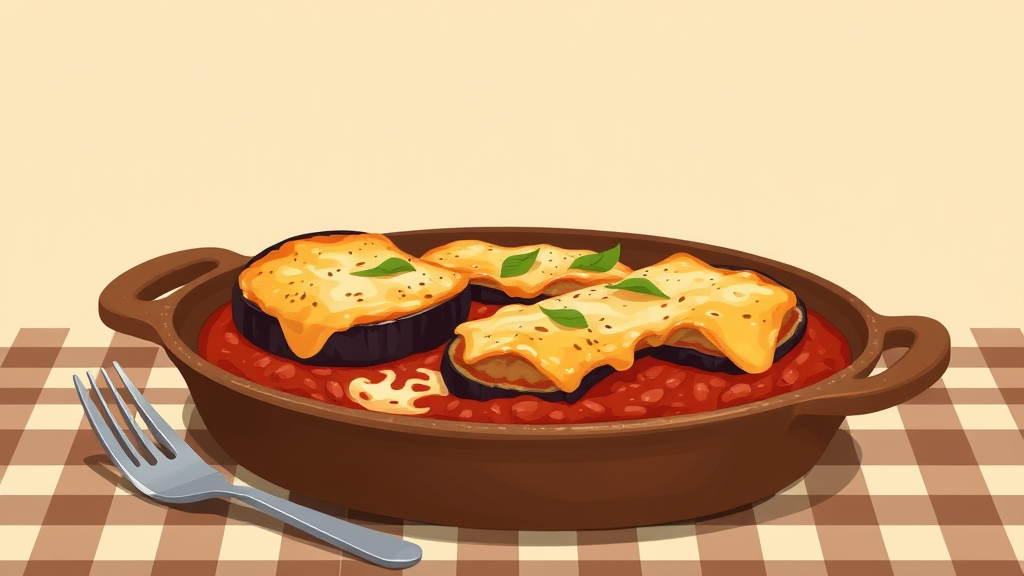

Let me tell you what the highest compliment in Italian cooking sounds like. Not a Michelin star. Not a critic's column. It's a truck driver from Idaho, just passing through, stopping for a meal he expected nothing from, and telling the kitchen that the eggplant parmigiana in front of him was the best he had ever tasted in his life.
That happened at Ever After in the Woods, a cozy Italian restaurant in Illinois that, according to the feature I read this week, is quietly building exactly the kind of reputation you cannot buy with marketing budgets. You earn it plate by plate, one passing stranger at a time.
I grew up outside Naples, and my grandmother would have understood this restaurant immediately. She had a saying about melanzane, that eggplant is a vegetable that forgives you nothing. You salt it wrong, it's bitter. You fry it in oil that isn't hot enough, it drinks the oil like a sponge and sits heavy on the plate forever. But when someone treats it with care, salting the slices, letting them weep, breading them thin, frying them golden, layering them with a tomato sauce that cooked long enough to lose its sharp edges, well, then eggplant becomes something else entirely. Soft inside, crisp at the edges, the sauce and cheese and eggplant melting into one another until you forget they were ever separate things.
When a man who cooks nothing for a living and eats on the road for one tells you that your version is the best, that means something. It's a compliment with no reason behind it except the food itself. A stranger passing through has nothing to gain by flattering you.
The menu, from what the piece describes, leans exactly where an Italian kitchen should lean: pizza and pasta, done with patience rather than theatrics. And this is where I'll repeat something I believe in my bones. Good Italian food does not need expensive ingredients. It needs a handful of things treated correctly. A pizza crust given time to rise. A sauce that simmered while someone did other things. Pasta cooked one minute less than the package says, finished in the pan. None of this costs much money. All of it costs attention.
What strikes me about places like this, and I've written about a few this year, from diners in Indiana to fish houses in Illinois, is that the setting is never the point. The word cozy gets used a lot in these stories, and it usually means small, warm, maybe a little worn around the edges in the good way. The plainest rooms cook the best food. I said that about South Carolina a couple weeks ago and I'll say it about Illinois now. If a restaurant spends its money in the kitchen instead of on the dining room, you can taste it.
There's a regional point worth making too, because I can't help myself. Italian food in America is not one thing. The eggplant parmigiana this truck driver loved is a Southern Italian dish at heart, peasant cooking from Campania and Sicily, where fried eggplant and tomato were cheap and abundant. A restaurant in Illinois making it well means someone back there in that kitchen either learned from family or learned properly. Either way, the roots are showing, and that's a compliment.
I keep a running list of places I want to visit, and it's getting long. Cardiff, New Bedford, Arizona. Add this one. An Illinois Italian restaurant where the eggplant parmigiana stopped a passing stranger mid-bite, worth a special drive as the original piece puts it.
If a place can make a man from Idaho fall in love with a Southern Italian vegetable somewhere on a road through Illinois, that is the whole argument for restaurants, right there. Buon appetito to whoever is in that kitchen. I'm coming for the melanzane.
Comments (0)
Log in or sign up to join the conversation.
No comments yet. Be the first.