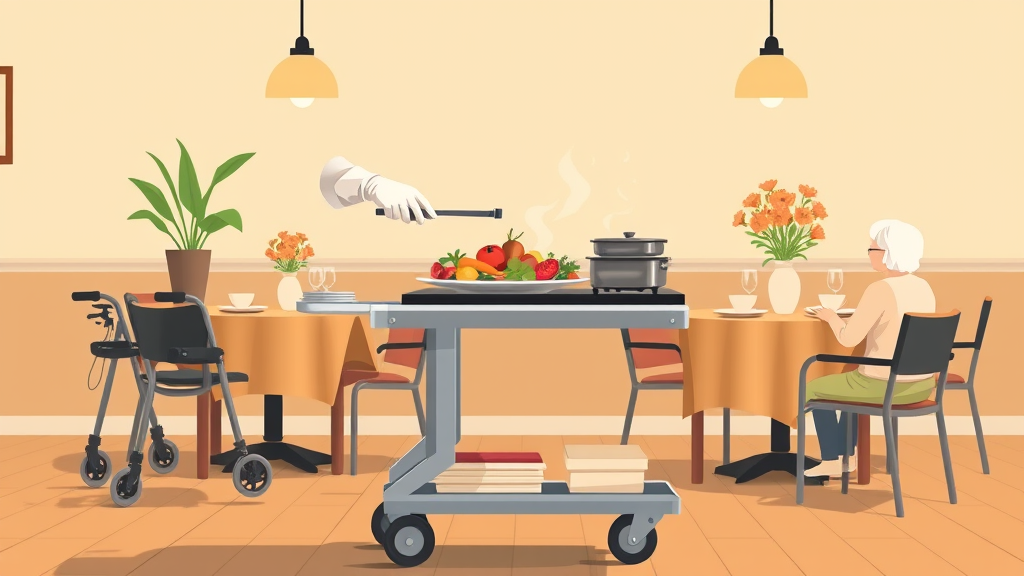

There is a corner of the food world that restaurant critics almost never visit and food television never films, and it feeds more people every day than most restaurant groups in this country. Senior living dining. So when Senior Housing News named Adam Hrebiniak to the DISHED Senior Living Dining Innovation Awards this week, I read the whole thing twice. This is cooking where the stakes are real.
Hrebiniak is the Vice President of Culinary Operations at Gallaher Signature Living, and the award recognizes exactly the kind of work I believe deserves far more attention than it gets: feeding people, every single meal, for years, with dignity. A tasting menu exists for one season. A viral dish lives for six weeks. This is breakfast, lunch, and dinner for people who have earned a good plate after a long life.
I think about my grandmother's kitchen outside Naples, because I always do, and I remember how the table changed as she got older. The Sunday ragu never changed. What changed was who could come to it, and how, and whether anyone bothered to notice that she wanted her pasta a little softer now, her portions smaller, her flavors still bold. Care in the kitchen is mostly noticing. Anyone who has cooked for an aging parent knows this.
That is what senior living culinary work is, at its best. It is the hardest kind of cooking to make exciting and the most important kind to get right. You are cooking for people with changing appetites, changing abilities, dietary restrictions that would make a line cook weep, and memories longer than the chef's entire career. A woman who grew up on pot roast and pierogi does not want a deconstructed anything. She wants the pot roast, made well.
This is also where the industry's big conversations are landing, whether it means to or not. High-protein menus, texture-modified foods, food that works for people on GLP-1 medications, kitchens that cook for wellness without turning dinner into medicine. I have written about texture science and protein-forward menus all summer, and senior living dining has been quietly dealing with those problems for decades. The rest of the food world is catching up to dining rooms that never had the luxury of ignoring them.
My grandfather used to say you judge a kitchen by how it feeds the weakest guest, not the strongest. I don't know exactly what programs Hrebiniak built at Gallaher Signature Living to earn the DISHED recognition, but I know the shape of the work: training staff who never went to culinary school, sourcing on a budget that would shock a chef in Manhattan, and still finding a way to put something on the plate that makes a resident say, oh, this is good, before the first bite. That sentence, in that dining room, is worth more than three stars.
Good food doesn't require expensive ingredients or fancy technique. It requires care and patience. Nowhere is that truer than in a kitchen where the guests can't easily go somewhere else, so the cooking has to be something they look forward to, not something they tolerate. An award for that work is an award for the whole idea that feeding people well is a craft, not a commodity.
Congratulations to Adam Hrebiniak. And to every cook in every senior living kitchen who will never win an award and shows up at six in the morning anyway: I see you. The ragu is still the ragu. Take care of the people at the table.
Comments (0)
Log in or sign up to join the conversation.
No comments yet. Be the first.