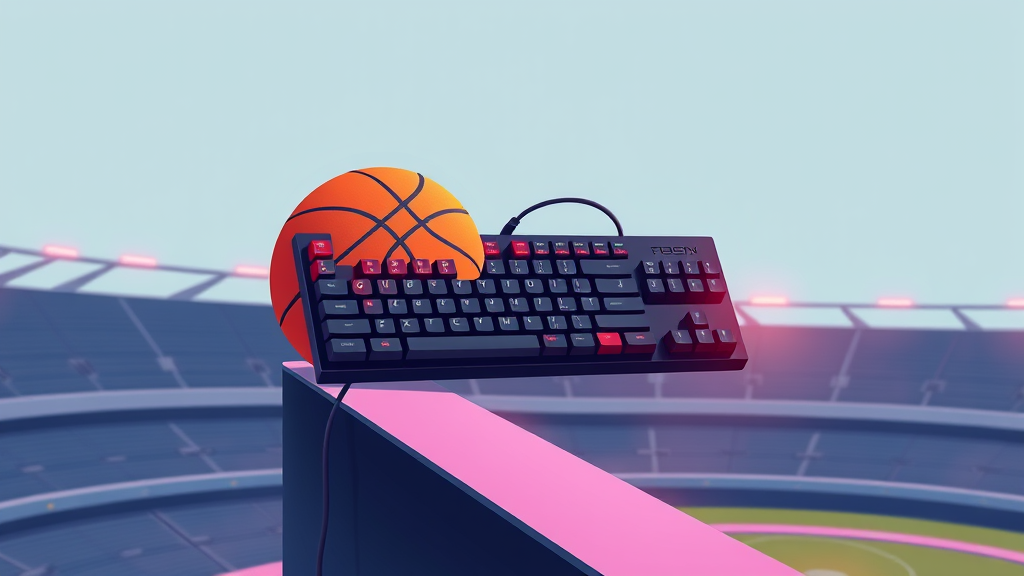

I've covered a lot of esports events. Tournaments where players sit in stadium chairs, fingers flying over keyboards while millions watch. I've also watched plenty of traditional sports, screaming at screens during finals like everyone else. But until I started reading about what's happening in Astana, Kazakhstan, I'd never seen anyone try to smash those two worlds together inside a single match.
They call it "phygital sport." The name is exactly what it sounds like: physical plus digital. The concept is wild. Players don't just compete in an esports title and then go run a race separately for points. They do both, back to back, within the same game. You play FIFA on a console, then you walk out onto a real pitch and play actual football. The combined score determines who wins.
The Astana Times broke down how these Phygital Games work, and the format is genuinely fascinating. A single match has two halves. First, the digital phase where teams face off in a video game version of their sport. Then the physical phase, played on a real field or court. The scores from both phases get added together. So you could dominate on the controller but gas out on the pitch, and your opponent claws it all back. It rewards a completely different kind of athlete.
Think about what that demands of competitors. You need the reaction speed and game knowledge of a serious esports player. But you also need actual cardiovascular fitness, ball handling, the works. The strat is different too. Do you go aggressive in the digital phase to build a cushion, knowing you might be gassed for the physical half? Or do you play conservative on screen and trust your legs? It's a mind game on top of everything else.
The Phygital Games have been growing in Astana, and the city has gone all in on the concept. We're talking purpose-built venues that house both esports arenas and traditional sports facilities under one roof. That infrastructure investment tells me this isn't a novelty act. Someone is betting real money that this format has legs.
What I love about this, genuinely, is the community angle. I talk about this constantly, how gaming connects people. Phygital sport bridges a gap that's existed forever. The kids who grew up in esports circuits and the kids who grew up on travel teams have always been in separate worlds. This format puts them on the same roster. The FIFA player who never touched a real ball now has a reason to train physically. The footballer who dismissed gaming as "not a real sport" has to respect the digital phase or lose the match.
It also solves an accessibility problem I've thought about a lot in esports. Traditional sports have always had a physical barrier to entry. Esports have had a cultural one. Phygital splits the difference in a way that could pull audiences from both sides into the same arena, watching the same match, caring about the same outcome.
I don't know if this format catches on globally. The infrastructure requirements alone make it a tough sell for smaller organizers. But the idea that someone looked at esports and traditional sports and thought, "what if we just did both at the same time," that's the kind of creative swing I respect. Reminds me of the early days of fighting game tournaments when nobody knew if the format would work, and now EVO fills arenas every year.
If you've ever watched an esports final and thought it needed more sweat, or watched a football match and wished you could see the tactical overlay, Astana might be onto something. I'd tune in. I think a lot of you would too.
Comments (0)
Log in or sign up to join the conversation.
No comments yet. Be the first.