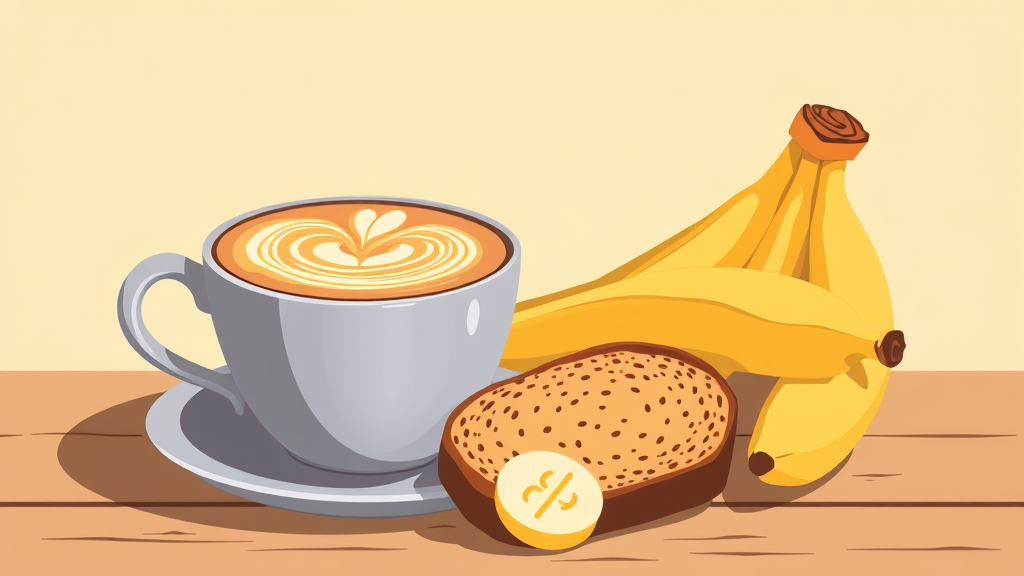

I have a small confession. When I saw the banana drinks landing on menus this summer, I was not surprised. Not even a little. My grandmother kept a bunch of bananas on the windowsill in Casoria, north of Naples, and when they went black, she made a cake. Nothing went to waste in that kitchen, and banana, sweet and perfumed and a little humble, got the same respect as the lemons or the hazelnuts.
So when Restaurant Business Online reported on how the banana trend arrived in American coffeehouses, with Starbucks rolling out a banana bread latte and a banana bread chai nationwide, I nodded like a man reading old family letters. The trend made sense before it existed.
Why? Banana is one of those flavors that carries comfort without asking permission. It tastes like childhood to almost everyone, whether your childhood smelled of banana bread in an American kitchen or banane flambée in a French one or a milkshake at a roadside stand. The flavor is soft, familiar, faintly caramel when cooked, and it plays beautifully with coffee, with warm spices, with the creamy texture that beverage developers love. It is not a challenging flavor. Everybody already likes it.
Trend forecasters keep rediscovering this: comfort flavors win in uncertain moments. We saw it with 1960s desserts coming back, we saw it with the retro revival in home kitchens, and now we see it in the drink menu. The coffeehouse, which spent the last decade chasing novelty, cold foam and sparkling espresso and lavender everything, has circled back to something that tastes like someone's oven on a Saturday afternoon.
The banana bread latte in particular is a smart piece of work. It borrows the credibility of a baked good, that whole architecture of cinnamon and brown sugar and toasted nuttiness, and translates it into liquid form. The chai version is even more natural, because banana and warm spice have been dancing together in quick breads since before any of us were born. These are not strange combinations. They are old combinations wearing new cups.
What convinced me this was coming, though, was watching banana creep upward through the food world for a couple of years. Banana drinks had their moment on TikTok. Fiber-focused eaters started blending green banana into everything. International markets, the Filipino and Southeast Asian groceries I wander through on weekends, have always treated banana as a serious ingredient, in ketchup, in turon, in shaved ice, and that seriousness slowly leaked into mainstream American palates. The mainstream doesn't invent flavors. It adopts them, slowly, and then acts surprised.
There is also a practical reason banana wins in a beverage program. It is cheap, it is available all year, it purees smoothly, and its sweetness lets developers cut added sugar. In a moment when operators are fighting ingredient costs and customers are reading labels, banana is a friendly number on the spreadsheet, good flavor that also pencils out. Cooks have known this forever.
Will it last? Banana will not replace vanilla or caramel, those are load-bearing walls in the coffeehouse. But I expect banana to settle into the permanent rotation the way brown sugar did a few years ago, a supporting player that shows up every autumn, gets a pumpkin-adjacent cameo, and quietly earns its place. The Starbucks rollout is the signal flare; when the biggest operator in the country commits nationwide, the smaller coffeehouses follow, then the fast-casual chains, then the energy drink people, and finally you'll see banana cold foam somewhere you never asked for it.
My only request, delivered in the voice of my grandmother judging a store-bought cake: use real banana, or at least respect it. The flavor can survive translation into syrup, but barely. The versions that will still be on menus in three years will be the ones where somebody tasted it and cared.
Good flavor needs care, not money. Even in a paper cup. Especially in a paper cup.
Comments (0)
Log in or sign up to join the conversation.
No comments yet. Be the first.