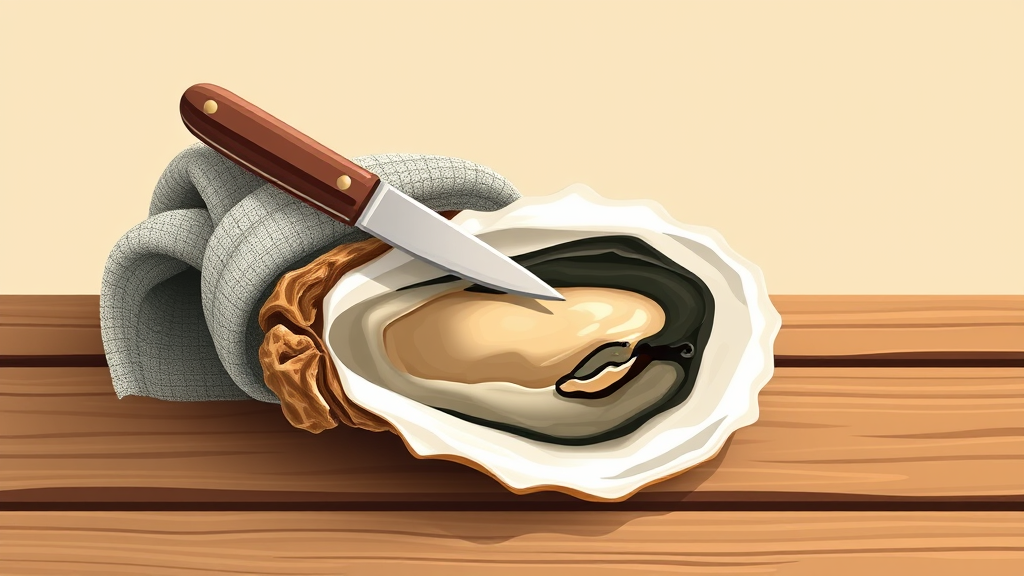

Oysters scare people. I understand this. That rock-hard shell, the knife that wants to slip and find your palm, the fear you'll grind the whole thing into gravel and serve your guests a plate of splinters. Even confident home cooks quietly avoid it.
But there is an easier way, and chef Brad Leone has demonstrated it, a gentle technique for opening oysters without breaking the shells or making a mess of your counter. Watch the video for his exact hand positions. What I can add here is the general best practice that shuckers everywhere agree on, the framework that makes a gentle technique like his work.
Everything comes down to patience at the hinge. Find the muscle that holds the two shells together, work the knife in with a twisting motion rather than a stabbing one, and let the shell open itself. The oyster is not your enemy; it is simply closed, and it wants a gentle argument, not a fight. When you pry at the edge or force the blade sideways, that is when shells crack and fragments end up in the liquor, and then in someone's mouth. Nobody wants that.
A few basics worth underlining, because they matter more than the knife itself. Use a folded towel or a shucking glove to hold the oyster, this is the one point everyone agrees on and it protects your palm from the blade. Keep the cupped shell down so the liquor stays in the cup when you open it. That liquid is half the pleasure of eating a raw oyster, and beginners pour it out without thinking. My nonna would have called that a small tragedy, though she never shucked an oyster in her life, near Naples we were a clams-and-mussels family, but she had strong opinions about wasting anything the sea gave you.
Once the shell is open, run the blade along the underside of the top shell to release the oyster completely, then check for any fragments. Ten seconds of care here separates a good experience from a crunchy one.
And then, practice. I keep coming back to this idea, that repetition is the road to mastery, not an obstacle on it. Your early attempts will be clumsy, everyone's are. Keep going and one day an oyster will open like it was waiting for you, and you'll wonder why you were ever nervous.
What I appreciate about a demonstration like Leone's is that it treats oyster shucking as a skill of care rather than force or expensive equipment. A modest knife and a kitchen towel will carry you a long way. Good food needs care, not money, and a half-shell oyster opened properly, sitting in its own cold brine with a squeeze of lemon, is maybe the purest proof of that in the entire kitchen.
If you have a barbecue coming up for the end of summer, buy a dozen, chill them well on ice, and give it a try. Shuck two before anyone arrives, eat them yourself in the kitchen, and by the time your guests show up you'll be ready. The sea did most of the work already. You just have to open the door politely.
Comments (0)
Log in or sign up to join the conversation.
No comments yet. Be the first.