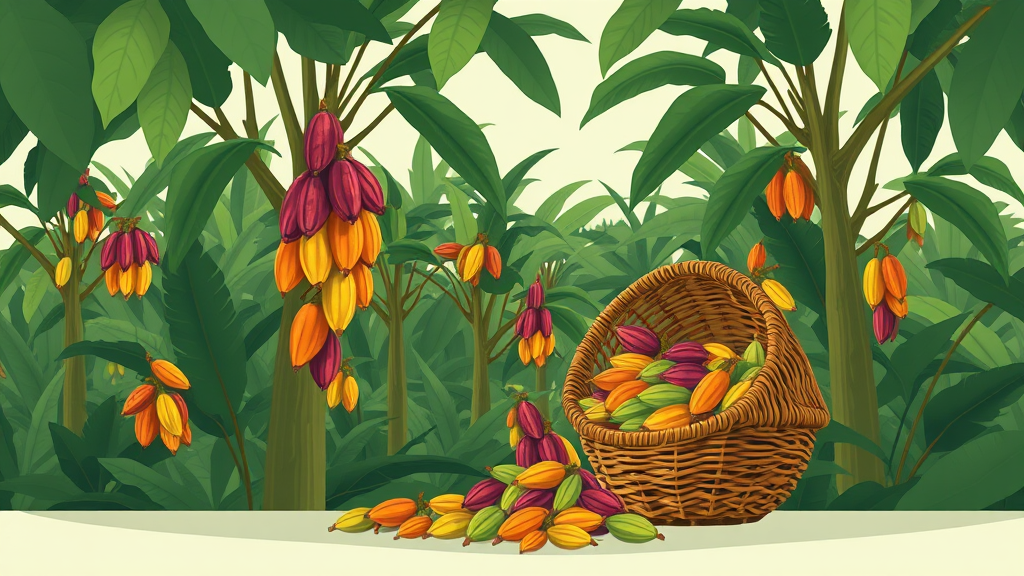

Chocolate comes from trees. I know, I know, obvious once you say it, but I spent 27 years not really thinking about it, and I'm guessing a lot of you haven't either. So when Reuters reported that Brazil is betting big on cocoa as a way to make the Amazon pay for itself, my first thought wasn't environmental. It was: this is a commodity bet, and commodity bets have a history of going very wrong for the people at the bottom.
The idea, in plain terms, is shaded cocoa. You grow cacao trees under the existing rainforest canopy instead of bulldozing it for cattle pasture or soy. The forest stays standing, the farmer gets a crop, and the world gets chocolate. Brazil used to be a major cocoa producer until a fungal disease called witches' broom devastated the industry, so this is partly a comeback story. The country currently produces a fraction of what Ivory Coast and Ghana pump out.
On paper, and I do love paper, this looks like the rare deal where the spreadsheet and the tree hugger agree. The pitch, as I understand it, is that cocoa can turn degraded land into productive land while restoring shade, soil, and biodiversity, and that a crop beats no crop for whoever's holding the deed. I can't verify the exact income math from where I'm sitting, so take that part as the argument rather than a number I'd put in my own spreadsheet. What I can say is that chocolate companies are desperate for supply, because climate problems in West Africa have made the commodity price swing like a memecoin. Demand is real. The money is real.
But the experts split on this one, and I think the skeptics deserve the microphone for a minute.
Whenever something growing under trees starts making serious money, someone eventually asks why they're sharing the canopy. The fear is that shaded cocoa becomes a gateway crop, the thing that justifies roads and clearing deeper into forest that was never touched before. Cocoa is also a boom-and-bust crop historically. Brazil's own witches' broom collapse took down an entire industry, and a whole lot of livelihoods with it. If thousands of smallholders go all in on cocoa and the price craters, or the fungus comes back, you've got broke farmers sitting on land whose best remaining asset is, well, timber.
That's the classic single-crop trap, and it's the same reason I side-eye anyone who tells you to put your entire portfolio in one stock. Concentration feels amazing on the way up and catastrophic on the way down. A farmer with cocoa, hardwoods, açaí, and some cattle is diversified. A farmer with only cocoa is a bet.
The difference between those two futures mostly comes down to enforcement and agronomy, which is a nicer way of saying whether the rules get followed and whether anyone teaches farmers the disease-resistant varieties and pruning techniques that keep a plantation alive past year ten. Reuters notes that the experts genuinely disagree on which way this tips. I don't have a prediction. I just have the pattern.
What I'll say from the money side: diversified income beats monoculture income the same way boring index funds beat the stock you can't stop checking. Brazil's cocoa bet can work, but only if it's structured like a real portfolio, not like a lottery ticket with leaves.
Also, fair warning, chocolate prices are already painful and West Africa's weather isn't getting calmer. If this works, your candy bar might survive the decade. If it fails, we'll all be reading about $20 chocolate bars while wondering why nobody planted more trees.
Warren will tell you this has nothing to do with personal finance. Warren is wrong. Smallholder income, commodity cycles, and concentration risk are the same lessons whether the asset is a cacao tree or an S&P fund. I just happen to find the tree version more delicious.
Comments (0)
Log in or sign up to join the conversation.
No comments yet. Be the first.