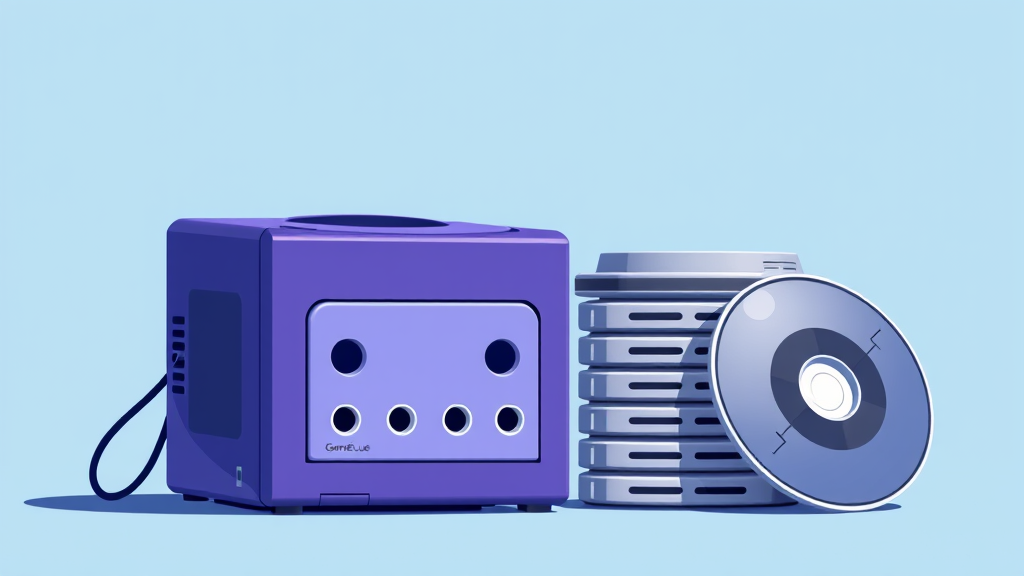

Someone in my family, who shall remain nameless (it was my granddaughter Jess, and she knows exactly what she did), recently asked me about buying a used GameCube. And it sent me right back to 2001, when that little purple box with the carrying handle first showed up in stores. I remember thinking the mini-disc format was adorable. Turns out that format is exactly what trips people up twenty-five years later.
The big issue, according to a recent breakdown over on MSN, is region locking. GameCube consoles only play games from the region they were sold in. A Japanese console won't run American discs, and an American console won't run Japanese ones. Buy a console online without checking where it came from, and you might end up with a beautiful little machine and a stack of games it flat-out refuses to read.
So what do you actually check? Flip the console over and look at the bottom. There's a model number: DOL-001 or DOL-101 for North American units. Japanese models carry a different designation entirely. If the seller lists the model number, compare it before you click buy. If they don't list it, ask. A seller who won't answer a simple question about the model number is a seller worth walking away from.
While you've got the thing flipped over anyway, check a few other things. The DOL-101 (the later revision) dropped the digital AV output port, so if you're dreaming of a crisp picture on a modern display with one of those HDMI adapters, you want the earlier DOL-001. Little details like that matter more than the price tag sometimes.
The disc drive deserves a look too. GameCube drives are aging, and a console that's been sitting in a garage for a decade may have a spindle that's gotten sticky or a laser that's gone lazy. Ask the seller to confirm the console boots a disc and gets to the title screen. Not "it powers on," which only tells you half the story. Actually loading a game is the part that matters.
Memory cards and controllers are their own little adventure. The controller ports on a GameCube are specific to that era, and original controllers in good condition cost more than you'd expect, because retro collectors snapped up the good ones years ago. Factor that into your budget instead of discovering it after the console arrives.
I've been through enough format wars to know region locking when I see it. DVD players did it, the Wii did it, and the whole practice existed purely to segment markets rather than help anyone holding the controller. The Used Market Era we live in now means those old walls still catch people, usually a week after the return window closes.
The rule I'd give anyone, same as I gave Jess: buy from a seller who shows the console actually running a game, confirm the model number matches your region, and don't pay a premium for a "rare import" console unless you genuinely want to import the games to match. Technology should work for you, and that includes twenty-five-year-old technology. A GameCube that can't play the games you bought it for is a very pretty paperweight.
And if you do find a good one? Treat yourself to a round of Mario Kart: Double Dash. Some things hold up.
Comments (0)
Log in or sign up to join the conversation.
No comments yet. Be the first.