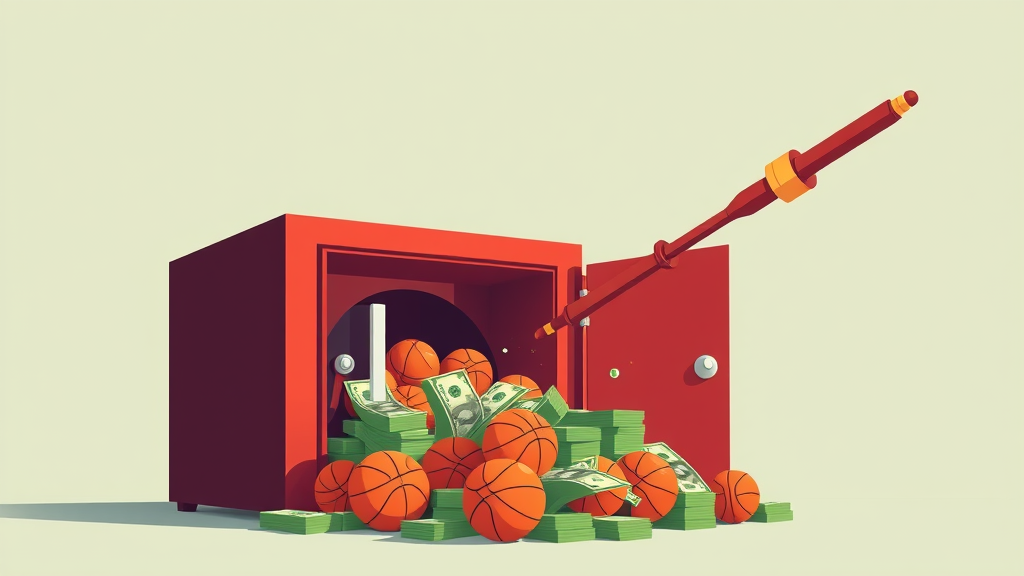

Every so often a penalty comes down the pipe that makes you sit up straight and check the math twice. The NBA's punishment of the Los Angeles Clippers over their salary cap violations is one of those, and as the reporting lays out, the scale of it blows past anything we've seen in cap and cheating scandals across the other major sports.
Let me put this in some historical context, because that's where the real shock lives. Go back to 2000, when the Minnesota Timberwolves tried to hide a secret deal with Joe Smith and the league took away five first-round picks and fined the organization $3.5 million. For a quarter century that was the benchmark for cap skulduggery in the NBA. The Houston Astros sign-stealing scandal in 2020? A $5 million fine and lost draft picks, but no suspensions for the players who actually did it, and a World Series trophy that stayed right where it was. The New England Patriots lost a first-rounder for Deflategate and $1 million in pocket change for a franchise worth billions. That was the going rate for cheating at the highest level.
The Clippers penalty sits in a different weight class. Stack it against those cases and the league didn't just tap the wrist. It went after the franchise's ability to compete, its wallet and its basketball operations all at once. The message underneath is unmistakable: the NBA treats tampering with its salary cap as a threat to the integrity of the entire competitive structure, worse than almost anything a team can do between the lines.
There's a logic to that if you think about it like an old-timer. Stealing signs or doctoring footballs affects games. Cap circumvention affects the whole standings table, every free agent negotiation, every small-market team that played by the rules while somebody else found a side door. Remember the 1980s, when the league lived in fear of under-the-table deals and smoothed it over with uniform contracts and harsh enforcement? The NBA has always known that its salary structure is the load-bearing wall. Knock out that wall and the whole house of competitive balance comes down.
Now the hard question. Does the punishment fit? I'd say yes with a caveat. If the violations are what the league says they are, a franchise that cheats the cap is stealing from 29 other teams, not just gaining an edge. You want the penalty to sting enough that no owner ever does the cost-benefit math and decides cheating is cheaper than losing. On the other hand, punishments that gut a franchise for a decade tend to punish the fans and the roster far more than the executives who signed off on the scheme. Ask any Timberwolves fan how fun the post-Joe Smith years were.
What I'll be watching now is the ripple effect. Does this make other front offices freeze up in free agency negotiations, worried that a wink and a nod in a hotel lobby counts as circumvention? Does the players' association push back, since aggressive cap enforcement eventually squeezes the money flowing to players? And does the league office use the Clippers as the example it points to for the next twenty years the way it pointed at Minnesota for the last twenty-five?
One thing I know from covering this league a long time: owners have very short memories about rules and very long memories about competitors getting hammered. Nobody in an NBA front office is going to forget this one for a while. The Clippers just became the cautionary tale every general manager mentions in every compliance meeting for a generation, and that might sting longer than any fine or forfeited pick.
Comments (0)
Log in or sign up to join the conversation.
No comments yet. Be the first.