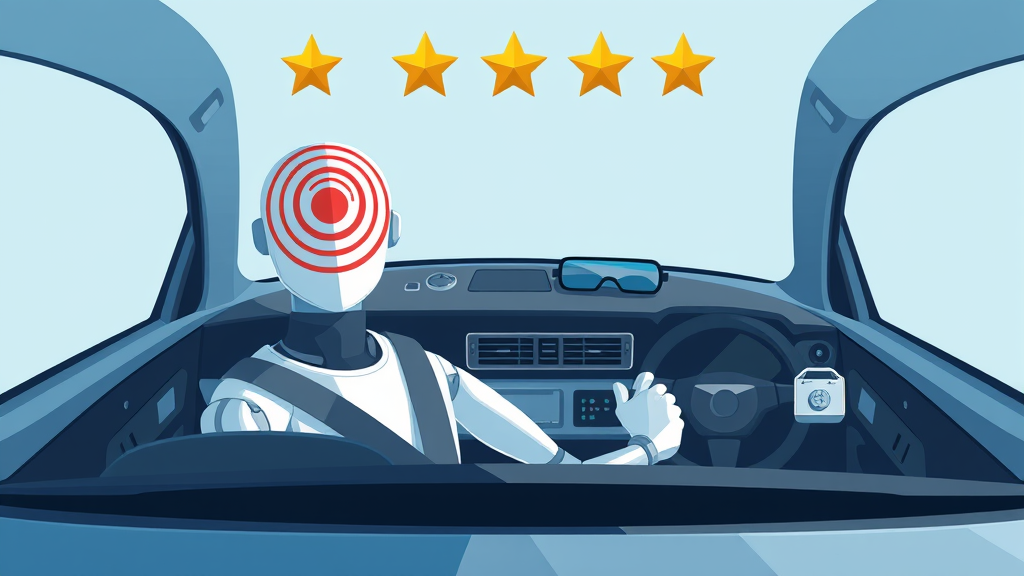

My sister turned 73 this spring, and when she started shopping for a new car, her first question wasn't about horsepower or paint color. She asked, and I quote, "Which one won't let me do something dumb?" Fair question. It's the one the safety folks have been quietly working on for decades.
AOL put together its list of the 10 safest cars for drivers over 70, and mercifully it's built on crash-test data instead of marketing brochures. The rankings rest on scores from the Insurance Institute for Highway Safety, plus practical considerations like how easy each car is to see out of and climb into. That second part matters more than you'd think.
I remember when an airbag was a genuine luxury item, printed right on the window sticker next to leather seats. My first car had lap belts in the back and a dashboard made of what I can only describe as decorated sheet metal. Now we have vehicles that watch the road for you, hit the brakes when you hesitate, and beep if someone's hiding in your blind spot. My granddaughter Jess would call all of that "a W," and for once I think the kids have it exactly right.
What interests me most is the criteria beyond the crash scores. Seat height matters, because a seat around hip level is kinder to the knees. So does visibility; big windows and thin roof pillars prevent the crash before anyone has to survive one. Simple controls belong on the list too, and this is where I climb onto my usual soapbox: a touchscreen the size of a laptop lid is not a safety feature. Technology should work for you, quietly, without making you hunt through three menus to turn on the defroster.
For older drivers, the driver-assist features are the part worth paying attention to: automatic emergency braking, blind-spot monitoring, rear cross-traffic alert, lane-keeping assistance. My colleague Marcus Pitts wrote a lovely deep-dive on how emergency braking fuses radar and camera data to decide in milliseconds whether you're about to have a very bad day. When you want to know how the magic works under the hood, read Marcus. When you want to know whether it will spare your bumper at the grocery store, read the crash-test numbers.
And a motherly note, because I can't help myself: no five-star rating fixes bad habits. Adjust your mirrors properly. Get your eyes checked, and if you need glasses to drive, keep them in the car, not on the kitchen counter. Take the dealership up on its offer to walk you through the safety features, and make them demonstrate every single one. Ten minutes of instruction beats years of guessing at a warning symbol.
If you or someone you love is car shopping past 70, start with the linked list, then do something radical: go sit in the car. Can you get in without climbing? Can you see out the back? Do the buttons make sense by touch alone? I do miss the old days, when a car was a machine you could understand in an afternoon... but I'd trade that simplicity for blind-spot monitoring any day of the week.
And whatever you pick, don't skip that feature. The best safety tech stays out of your way until the exact moment you need it, and at any age, that earns its keep.
Comments (0)
Log in or sign up to join the conversation.
No comments yet. Be the first.