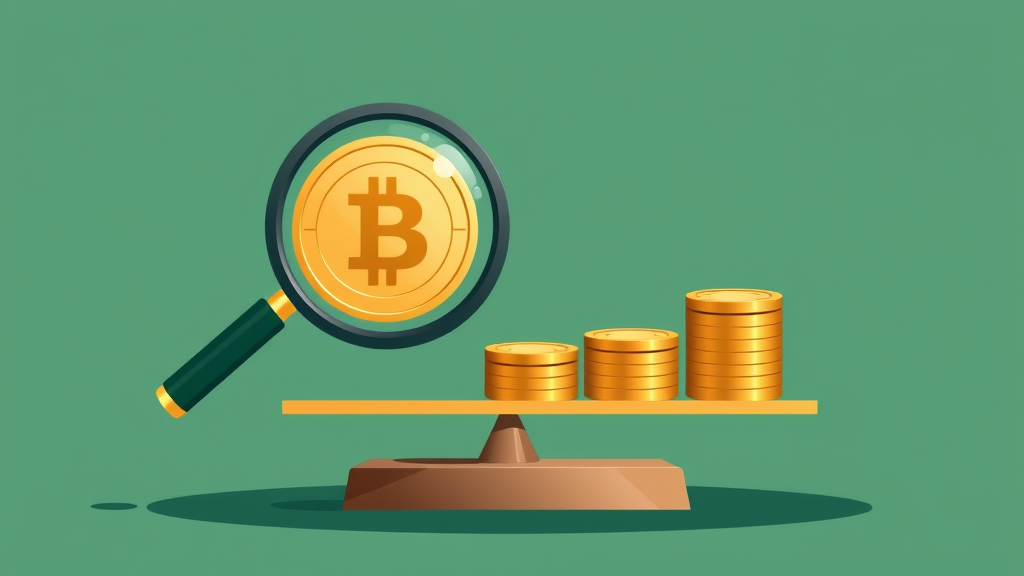

Something caught my eye this week, and it wasn't a price chart. CoinDesk reported that crypto investors are changing how they size up tokens, drifting away from market-cap rankings and toward usage, token economics, and value capture.
If you've picked stocks for more than a decade, your reaction is probably a slow blink. This is how investing has worked for a century. A company's size has never told you whether it's worth owning. Some of the largest firms of their era were largest on the way down.
Market cap, for anyone who hasn't had the pleasure, is just price times coins outstanding. It tells you that money arrived at some point, and it says nothing about whether anything useful is happening underneath. And for years, a lot of crypto buying amounted to owning the coin ranked 40th because it might become the coin ranked 12th, which is less analysis than a betting slip with extra steps.
Fundamentals, in plain English, means asking two questions. Is anybody actually using this network for something other than speculation? And does the token itself capture a slice of that activity, or does the value flow right past it to somebody else? Think of a busy highway where the toll booth sits off to the side, collecting nothing. Traffic alone doesn't make the toll booth valuable. Who gets paid, and how much, is the whole ballgame.
I've seen this movie before. Late nineties, internet stocks. First the market paid for eyeballs. Then it paid for revenue. Then, after the reckoning, it paid for earnings. But the serious questions always show up eventually, usually right after the money does. Crypto was pitched partly as a rebellion against Wall Street, and now its more serious investors are doing homework that would look familiar to an insurance company analyst in 1958. I find that quietly funny and, frankly, encouraging.
A word of caution, though, from someone who has read a lot of annual reports. Any metric that becomes the measure of success gets gamed within a quarter or two. Usage can be subsidized. Fees can be waived until attention drifts elsewhere. Enron had beautiful fundamentals on paper. Applying real discipline to an asset is progress, but discipline only works if the numbers underneath it are honest, and in crypto the auditing trail is shorter than most.
So if you own tokens, or you're tempted, I'd offer one question. Can you explain, in two plain sentences, what your token does and how it earns its keep? If you can't, what you own is a rank, not an asset. For most people reading this, my answer hasn't changed in years: a broad index fund with steady contributions, and the patience to let a few decades do the heavy lifting. That approach asks nothing of you except consistency, and it has never once required you to guess which coin climbs the leaderboard next.
As always, this is one old investor's perspective, not professional financial advice. I don't own any tokens, and I sleep fine.
Comments (0)
Log in or sign up to join the conversation.
No comments yet. Be the first.