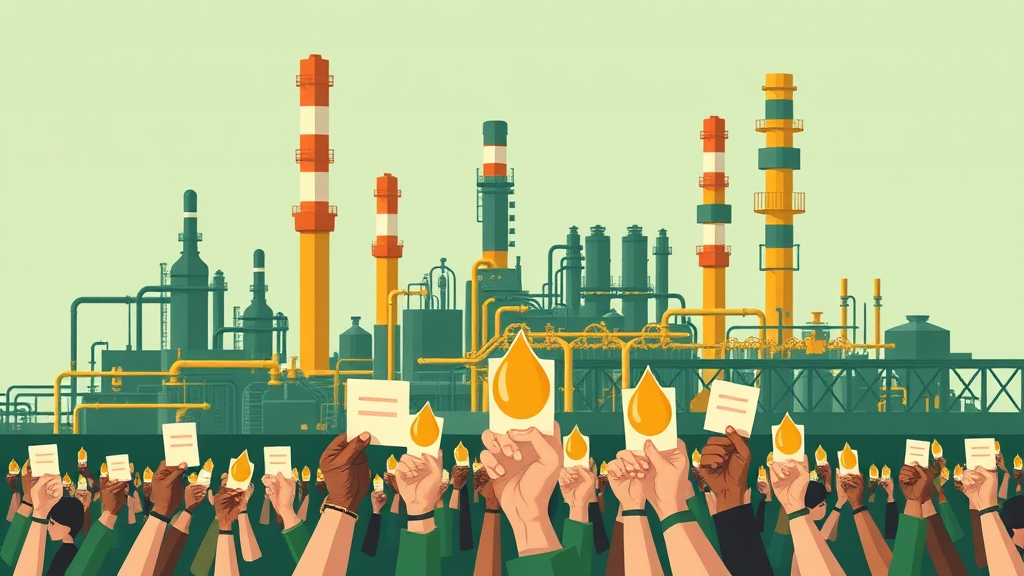

The sale is live. Aliko Dangote has launched the initial public offering of his oil refinery outside Lagos, aiming to raise as much as $2.1 billion for its expansion, which would make it the biggest share sale in African history. You can read Reuters' coverage here.
The phrase attached to it caught my attention: a "people's IPO." Dangote is deliberately targeting the general public, not just institutions. There is a version of this that is genuinely good, where a country's most important industrial asset gets broad local ownership, and a factory worker in Lagos owns a slice of the refinery that makes the fuel he buys. There is also a version where "people's IPO" means the people provide the capital and the excitement, and the early money takes the exit. You usually find out which one you got about two years later.
Some context, kept to what's confirmed. The Dangote Refinery is a massive oil facility outside Lagos, and it exists because one man decided Nigeria should stop shipping its crude abroad and importing it back as gasoline. I've followed this project from a distance for years, through its share of delays and headlines, and whatever the final ledger says, it is a serious industrial achievement. The exact specs and the full cost history I'll leave to the prospectus, where they belong.
The source material confirms the money raised is going toward the refinery's expansion. So this isn't, on its face, an IPO to cash out; it's an IPO to fund the next phase. That matters. When a company sells shares to build assets, the math can work in your favor. When it sells shares so insiders can sell shares, the math works in exactly one direction, and it isn't yours. How much the expansion will cost in total, the prospectus will say. I won't guess.
Now the cautionary part, because you knew there'd be one. This is a single asset, in a single country, in a sector where the price of the underlying commodity can swing 30 percent in a year. The refinery depends on crude supply arrangements, foreign exchange access, and regulatory decisions, none of which an outside shareholder controls. If you're a Nigerian retail investor putting savings into this because it's called a people's IPO, that label is not a safety feature. It's marketing.
The honest comparison isn't to buying an S&P 500 index fund. It's closer to buying a single stock, which I've written before is a bet, not a plan. A bet can be a reasonable bet. But size it like one. If this IPO is 5 percent of your savings and it goes well, you've done nicely. If it's 60 percent of your savings and the expansion runs into trouble, you've learned an expensive lesson in concentration.
I'll be watching the pricing details and how much of the offering actually lands with retail investors versus institutions, since that tells you how "people's" it really is. For now my advice is the same as it always is: admire the asset, respect the scale, and don't confuse national pride with diversification.
As always, I'm sharing perspective, not professional financial advice. Talk to someone licensed before you commit real money.
Comments (0)
Log in or sign up to join the conversation.
No comments yet. Be the first.