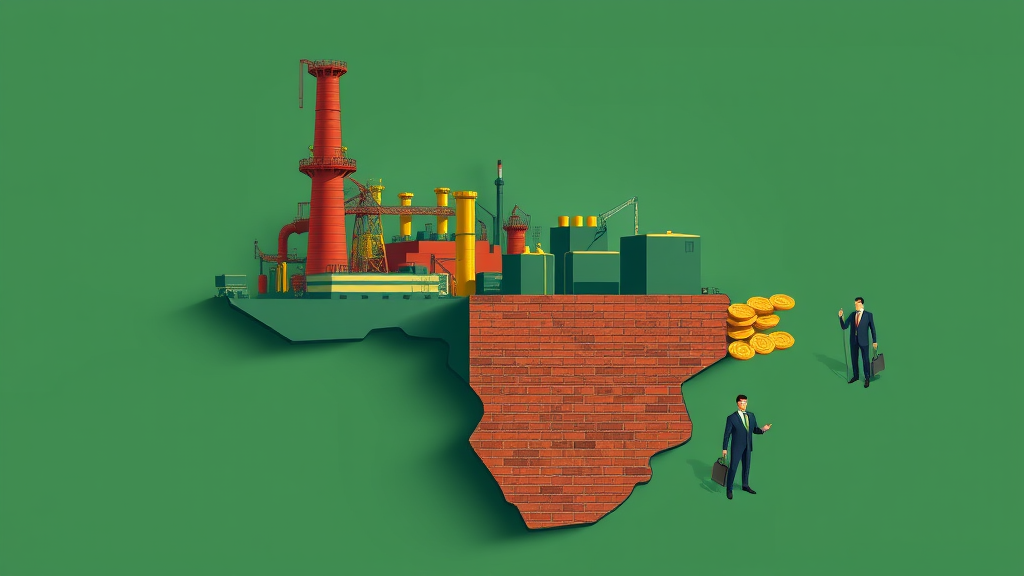

The Dangote refinery IPO was billed as Africa's moment. The largest debut in the continent's history, pitched as a chance for investors across Africa to own a stake in the continent's largest refining complex and finance its own industrial development. I wrote about the opening back in September and was glad to see it happen. Reuters now reports that the harder story came after: an investor in Kenya or Ghana or South Africa who wants a piece of it keeps running into walls.
The walls are boring, which is usually how walls are. Different exchanges, different custodians, different settlement systems, currency controls, registration requirements that assume you live where the stock trades. A retail investor in Nairobi with a brokerage account and a few hundred dollars may simply have no clean channel to buy a listing on the Nigerian Exchange. Not because anyone forbids it, exactly. The plumbing was just never built.
There's a lesson here that goes past Africa. Access drives portfolio outcomes more than most investors admit. Forty years ago, when I started with $200 and a library book, the practical menu for a small American investor was a handful of loaded mutual funds and whatever your broker deigned to sell you. Index funds existed. Getting into one cheaply was another matter. The spread of zero-commission brokerages and low-cost ETFs over the past two decades did more for the average person's returns than any stock-picking insight ever did. Cost and access, quietly compounding in the background while everyone argued about which stock to pick.
The cross-border version of that is where much of the world still lives. An engineer in Lagos can buy the Dangote listing at home. A teacher in Nairobi mostly can't, at least not without workarounds that carry their own risks, and I'd urge caution with any workaround involving unregulated intermediaries. Side doors into markets you can't otherwise reach are exactly where fraud tends to set up shop. I've seen enough of those doors over forty years to know what's usually behind them.
The maddening part is that the demand is clearly there. The offering was framed, by its promoters and by plenty of commentators, as a way for ordinary Africans to own productive assets rather than watch savings erode at local inflation rates. Whether that framing was the issuer's precise motivation or just good marketing, the appetite it speaks to is real. The Dangote refinery is a real business with real cash flows: diesel and jet fuel and gasoline that a continent of 1.4 billion people currently imports, getting refined at home instead. It's the kind of asset a long-term investor can understand in about a sentence.
Whether it's a good investment at the IPO price is a separate question, and one I can't answer from here. Refining is cyclical, capital-hungry, and sensitive to the same crude prices that made this project expensive to build. The valuation work matters. But the decision should be available to more of the people it was pitched to.
Reuters notes that reformers are pushing for regional integration, passport-style access across exchanges, harmonized settlement. That will take years, if it arrives. Meanwhile, some of this exposure will reach outside investors the boring way I keep recommending anyway: frontier and emerging-market ETFs that hold Nigerian listings for a small fee, no plumbing required on your end. Less exciting than owning the IPO directly, which is true of most things that actually work.
When the access finally gets built, more people will own more of their own continent's growth. I've watched that pattern play out before, and it has always been worth the wait.
As always, this is my perspective, not professional financial advice.
Comments (0)
Log in or sign up to join the conversation.
No comments yet. Be the first.