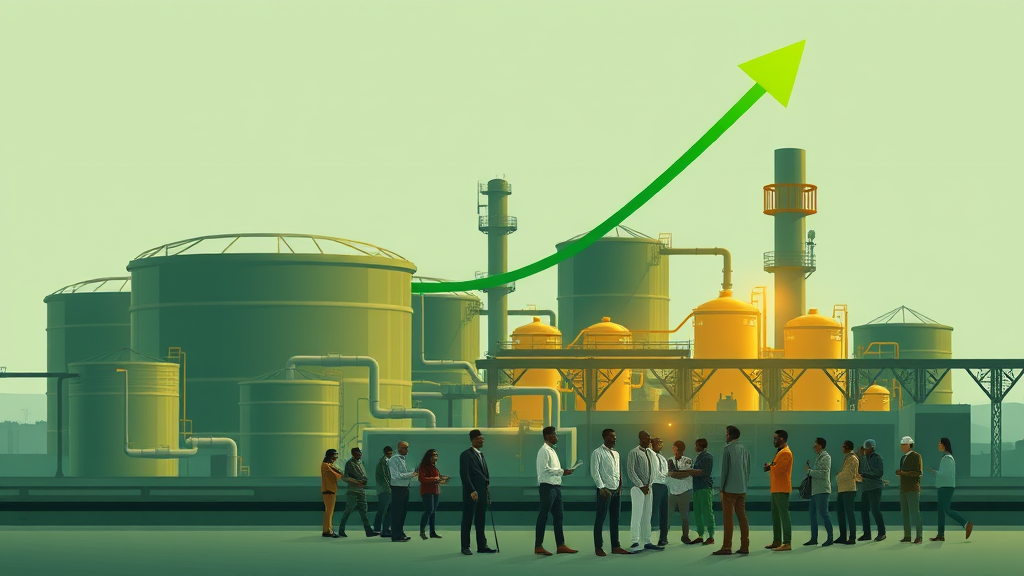

Aliko Dangote launched what he's calling a "people's IPO" on Monday, opening shares of his massive oil refinery to the Nigerian public in a sale valued at about $14.3 billion and aiming to raise as much as $2.1 billion to fund expansion. It's the largest share offering in African history, and that's worth pausing on, because records like this usually belong to exchanges in Johannesburg or Cairo, not Lagos (Reuters has the details).
Dangote is a name most American investors have never had to learn. In Africa, it's a different story. He built his fortune on cement, flour, and sugar, and the refinery outside Lagos is his biggest swing yet: a facility designed to process 650,000 barrels of crude a day. Nigeria, oddly enough, has spent decades exporting raw crude and importing refined fuel. The refinery is meant to close that loop.
Now the shares are going public, and the pitch is aimed at ordinary Nigerians rather than just institutions and foreign funds. Africa's biggest-ever share sale, priced for the general public, with the raise earmarked for expansion. The scale of it is genuinely something.
So what do I think, from my chair, forty years into watching markets? A few things, in no particular order.
First, the genuinely good news: broad share ownership is how regular people build stakes in productive businesses, and an exchange that lists its champions gives local savers options beyond real estate and bank deposits. Nigeria's pension system has been growing for two decades, and listings like this give it something to actually own. That's a real win regardless of how the stock trades next month.
Second, the caution, and you knew it was coming. When one man's company dominates an exchange, buying the index can mean buying one company, and concentration risk doesn't disappear because the listing is exciting. Any Nigerian investor putting savings into this IPO should think of it as a single-stock position, because that's exactly what it is, no matter how patriotic the framing.
Third, refineries are capital-hungry, cyclical beasts. The margins swing with crack spreads, the maintenance bills never stop, and the expansion this IPO funds won't produce returns for years. None of that is a reason to avoid it, just a reason to size it honestly. If the thesis is "Nigeria finally refines its own fuel and captures that margin," fine, but that thesis pays out on a decade's timeline, not a quarter's.
There's also a familiar pattern worth naming. "People's IPO" is a phrase with history, and it's usually rolled out when a listing needs retail enthusiasm to get over the line. Sometimes it works out wonderfully for the small buyers. Sometimes the institutions quietly exit into the retail bid. I have no reason to think anything improper is happening here, only a lifetime of watching retail investors get excited at exactly the moment excitement is most expensive. Ask yourself before you buy anything, anywhere: do I want this share, or do I want to be part of the story?
For readers here in the U.S., this matters mostly as a window into frontier-market investing. You can't buy this IPO directly, and frankly, you probably shouldn't want to. If Africa exposure appeals to you, a frontier or emerging-market fund spreads the operational risk across dozens of companies instead of betting on one refinery's execution. I've made this point about single miners and single stocks generally. One stock is a bet, and a bet is something you size deliberately, not a plan you build a retirement on.
I'll be watching how the subscription actually goes, and whether the retail tranche fills with genuine savers or flips quickly. That tells you more about Nigeria's investor base than any prospectus will.
As always, this is my perspective, not professional financial advice. Do your own homework, and size your bets like the future hasn't happened yet. It hasn't.
Comments (0)
Log in or sign up to join the conversation.
No comments yet. Be the first.