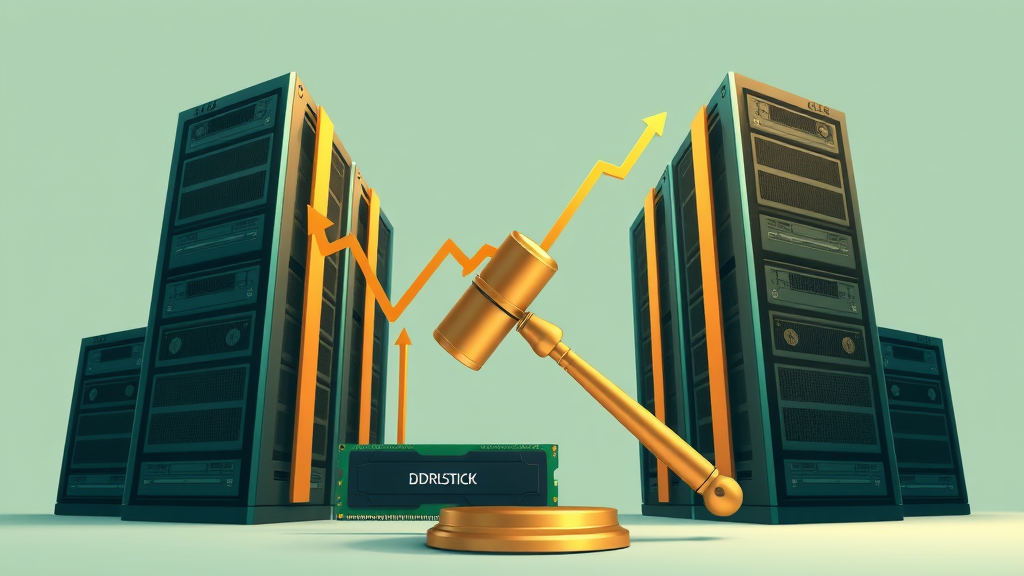

Super Micro Computer dropped about 4% Monday morning to $38.40, and Dell slipped roughly 3%, after a patent dispute over DDR5 memory landed on the AI server builders. 247 Wall St has the details, and the short version is that a legal fight over memory technology is now leaking into the stock prices of companies that assemble the machines.
The boring part first, because it matters. A 4% move in Super Micro is a Tuesday. This is a stock that has swung 10% in an afternoon more times than I can count over the past few years. The size of the drop isn't the interesting thing. What it's responding to is, because patent litigation is one of those risks that never shows up on a price-to-earnings ratio.
Here's the mechanics in plain English. DDR5 is the memory standard inside modern servers. If a patent holder wins a fight over that technology, the companies building servers around it face two bad outcomes: they either pay licensing fees that squeeze already-thin hardware margins, or they deal with supply disruptions while the lawyers sort it out. Neither is fatal. Both are annoying in a business where the difference between a good quarter and a mediocre one is a couple points of margin.
Server assembly has always been a tough way to make money. You're buying processors, memory, and drives from a handful of big suppliers, bolting them into racks, and selling to customers who will absolutely switch vendors over a nickel. When I started investing in the late '80s, hardware makers were the glamour names. Then the market figured out that the money flowed to whoever owned the technology, not whoever screwed the boxes together. IBM learned it. Sun Microsystems learned it. The lesson hasn't changed.
AI servers changed the calculus a bit. Demand got so hot, so fast, that even assemblers saw their margins expand, and stocks like Super Micro went vertical. But demand-driven margin expansion is a loan from the market, not a gift. When competition catches up, or a legal bill shows up, or a component gets more expensive, that margin gives back what it gained. A patent fight over DDR5 is exactly the kind of friction that tests whether those margins were structural or cyclical.
If you own these names directly, ask yourself a question: did you buy them because you understood the server business, or because the chart went up? Be honest in the privacy of your own head. There's no wrong answer, but there is a different risk profile attached to each. The chart buyer needs an exit plan. The business buyer can ride out a 4% Monday.
If you own them through a broad index fund, which is how I'd guess most of you have exposure to this sector if you have any at all, then nothing here requires action. A patent dispute affecting two companies you own tiny slices of is noise. Your job on days like this is the same as it is on boring days: nothing, mostly.
I've watched legal fights rattle hardware stocks since the Intel-AMD battles of the '90s. Some of them ended careers. Most of them ended in settlements nobody remembers. Time usually tells you which kind you're dealing with, and time is the one thing a long-term investor has in surplus.
As always, this is my perspective, not professional financial advice. Talk to a qualified advisor before making decisions with your money.
Comments (0)
Log in or sign up to join the conversation.
No comments yet. Be the first.