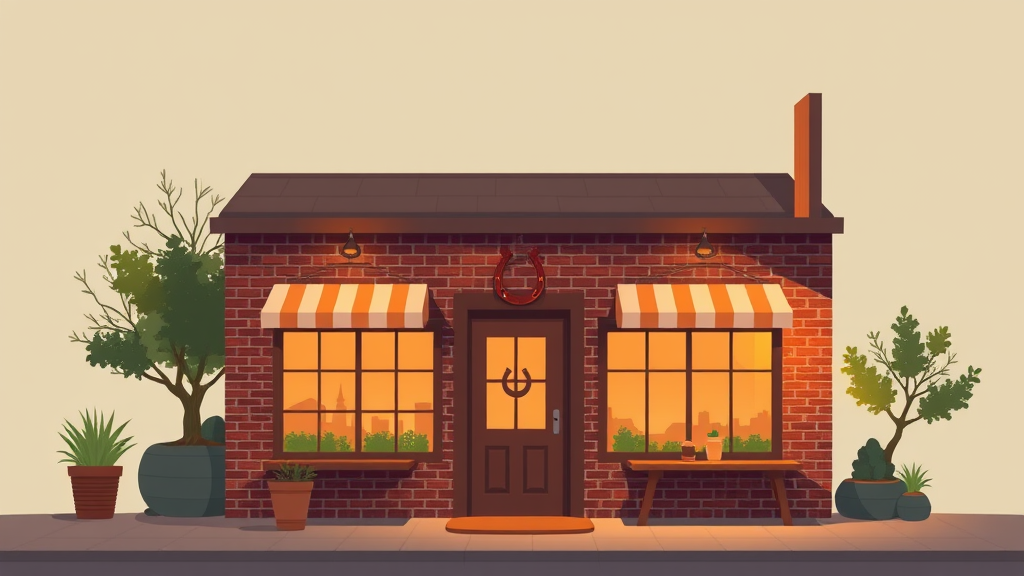

There is a bar in Denver that has been serving since 1873, and if you drive past it looking for a name on the building, you will drive right past it. There is no sign. There never has been, as far as anyone can tell. You find the place by the horseshoe over the door and the knowledge that everyone else in the neighborhood seems to carry. Family Destinations Guide wrote it up recently, and I have been thinking about it ever since.
My Brother's Bar sits in a little brick building in the Highland neighborhood, and the building has worn a few lives. It opened in 1873 as a bakery, believe it or not, then became a grocery, then Sigmund's, then finally the bar we know today. Same walls, same bones, roughly a century and a half of Denver walking through one door or another. The current name goes back to the 1960s, and the no-sign policy stuck around with it, partly by stubbornness and partly because, at this point, the absence of a sign IS the sign.
My grandmother ran her kitchen outside Naples with a similar philosophy, though she'd never have put it that way. She didn't advertise. People came because people came, because their mothers came, because the ragu was worth the walk. When I first moved to America I was confused by how loudly everything announced itself, the neon, the mascots, the giant plastic food on the rooftops. I have come to love that chaos, sincerely. But a place that trusts itself enough to stay quiet, that still gets me right here.
The interior backs up the restraint. Wood worn smooth by elbows, a jukebox, green chili and a famous cheeseburger, and tamales in winter. The burger has a cult following, and the green chili is the kind of thing Denver locals argue about with real passion, the way we argue about ragu back home. Jack Kerouac apparently drank here in the fifties, scribbling at the bar, and Neal Cassady before him. The walls remember more than the menu lets on.
What I keep learning, and keep needing to relearn, is how longevity actually works in this business. The bars and restaurants that survive a century and a half don't survive because of clever marketing. They survive because somebody in every generation decided the cheeseburger still had to be good, the room still had to be warm, the regulars still had to be greeted. That is the entire job, and it is not a small one. Good food and good rooms don't require money or spectacle, they require care, and care is the only thing that compounds over 150 years.
Colorado has been good to me as a subject lately. I wrote a few weeks back about eleven Colorado restaurants still cooking from recipes their great-grandparents wrote down, and this fits the same pattern: the plainest-looking rooms, the ones that don't shout, usually hold the best of what a place is. I'll say it again because it keeps proving true. If a restaurant looks like nothing from the street, sit down immediately.
So if you find yourself in Denver, go looking for the bar with no name. Ask anyone nearby, they'll point you uphill toward Highland. Order the cheeseburger with green chili, sit where you can see the door, and think about all the people who did exactly that before cars, before neon, before any of us. It's tempting to call it a hidden gem, but after 153 years, Denver knows exactly where it is. The bar simply never needed to say so.
Comments (0)
Log in or sign up to join the conversation.
No comments yet. Be the first.