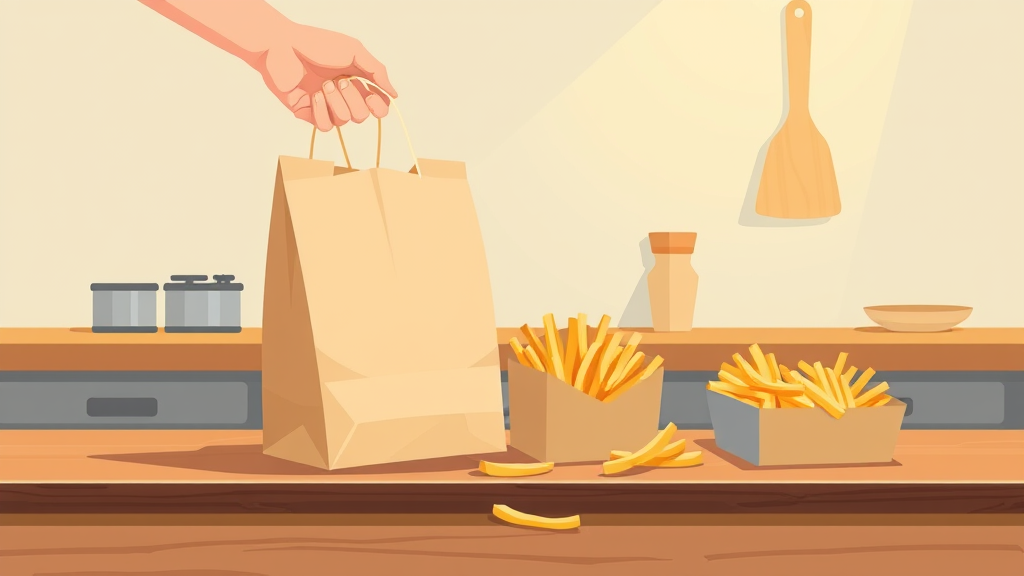

DoorDash told investors something that probably doesn't surprise anyone who has stood in their kitchen at 8 PM on a Tuesday, tired, hungry, staring at an empty refrigerator. People are still ordering delivery. A lot of it.
The company forecasted strong third-quarter growth in both gross order value and core profit, driven by demand that refuses to cool off across food, grocery, and convenience deliveries. This isn't some post-pandemic spike slowly deflating. It's a behavior that stuck.
And I have thoughts about this, because of course I do.
My grandmother would have looked at food delivery with deep suspicion. Not because she didn't believe in feeding people quickly when they were hungry. She would feed anyone who walked through her door, sometimes before they even sat down. But the idea of someone else's kitchen sending food to her family, in a car, wrapped in plastic, cooling on a passenger seat while a stranger navigated traffic? That would have broken her heart a little.
Food arrives best when it lands on a table that's already set, when the steam is still rising and the person who cooked it can watch you take the first bite. That's the ideal. I know this. I grew up inside this philosophy. But I also live in the real world, and the real world has changed.
What DoorDash's numbers tell me isn't that people have given up on good food. The definition of convenience has expanded, and restaurants are paying attention. The taqueria that used to serve only the neighborhood can now reach customers three miles away. The family-run Thai place that nobody outside a five-block radius knew about is suddenly doing volume they never imagined. That matters.
Grocery delivery is the part that interests me most. People are ordering ingredients now, not just finished meals. Someone out there is getting home from work, unpacking a bag of groceries that arrived on a scooter, and cooking dinner with their own hands. That's not the death of home cooking. That's a new doorway into it.
Delivery has a cost that goes beyond the service fee. Hot food in a sealed bag loses something. The crust softens. The fries go limp. The bowl of pho that should be scalding and fragrant when you lift the lid arrives warm, which is a tragedy. Temperature is flavor, and every minute between kitchen and table is a minute of loss. Restaurants that design their delivery menus with this in mind, choosing dishes that travel well and hold their texture, those are the ones that will survive this era.
The businesses losing the plot are the ones treating delivery as an afterthought, shoving their full dine-in menu onto an app and hoping for the best. A beautiful plated dish that arrives looking like it was kicked down a staircase helps nobody.
DoorDash's projection is a business story on the surface, but underneath it's a story about how we eat now. We want food faster, from farther away, with less friction. The craving hasn't changed. The path from kitchen to mouth just got longer and more complicated, and somehow we're making it work.
Me, I still cook when I can. But last Sunday I ordered lamb biryani from a place twenty minutes away that I never would have discovered without an app, and it arrived perfect, the rice still fragrant, the meat still tender. I'm not going to pretend I didn't eat every grain.
Good food finds its way to hungry people. It always has. Sometimes that path runs through my grandmother's kitchen. Sometimes it runs through a phone screen. The hunger is the same.
Comments (0)
Log in or sign up to join the conversation.
No comments yet. Be the first.