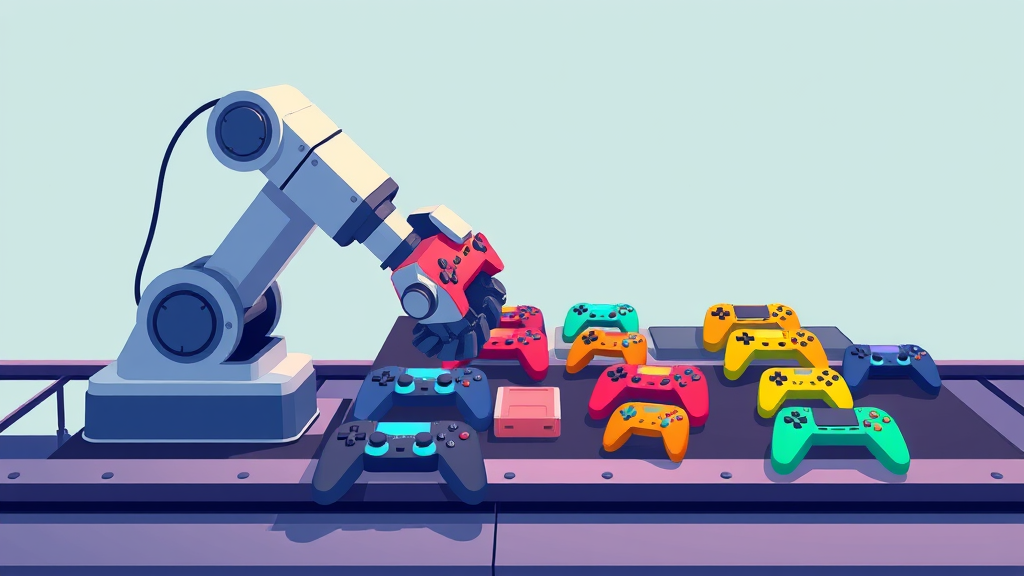

Elseland has dumped 20 original games onto its platform, and every one of them was built with artificial intelligence involved at every stage of production. Not just concept art, not just code assistance. The whole pipeline, per the original report.
My first reaction was a groan, and I'll own that. Forty years of playing games will do this to you. I still remember the shareware flood of the mid-90s, when CD-ROM compilations stuffed a hundred sloppy clones onto one disc and hoped you'd find Wolfenstein among them. The phrase "20 games at once" has historically meant "zero games worth your time." My brain reaches for that pattern immediately, and I don't think I'm alone in that.
But I try to be fair here, and the fair read is more complicated. Tools have always changed who gets to make games. When ROM hacking opened up in the late 90s, we got fan translations of games like Final Fantasy V years before an official one existed, and some of those patches were better than what companies shipped later. RPG Maker, Game Maker, Unity, each one lowered the wall a little and each one got the same "this will flood us with garbage" panic. The garbage came, sure. So did Undertale, built by one person in Game Maker, and a whole generation of developers who never would've cleared the old barriers.
AI is a different animal and I'm not going to pretend otherwise. There's a real difference between a tool that automates grunt work and a system that generates the creative substance itself. When the art, the writing, the code, and the design all come out of a model, you have to ask who the author actually is, and whether anyone involved played the game to see if it's fun. That question matters more than any legal one. Plenty of human-made games are soulless too; I've reviewed enough licensed drivel to fill a landfill. The difference is I can name who cut the corners.
What the report doesn't tell us is anything about the games themselves. No titles I can point to, no standout anyone's talking about, at least not that I've seen. Read into that however you want; I read it as a bet on volume over showcases. These 20 are joining an existing AI-game catalog on the platform, so this is a deliberate push to normalize the pipeline rather than a one-off experiment. Watch that part. If even two of these twenty are genuinely good, someone will argue the ends justified the means. If all twenty feel like procedurally generated oatmeal, the catalog becomes a cautionary exhibit.
What I keep coming back to: a game earns my time through intent. Somebody wanted a moment to exist and built toward it. The opening of Final Fantasy, airships over Prelude, Squaresoft in 1987 making a last-ditch game that became a dynasty. Intent is the thing, and it's also the thing AI can't want on its own. Someone still has to want it. Whether anyone at Elseland wanted anything here, or just wanted volume, is the whole question.
I'll probably play a few of these out of professional stubbornness. Nina will tell me I'm wasting an evening I could spend in Eorzea, and she might be right. But somebody has to check, and I've got the scar tissue for it.
Comments (0)
Log in or sign up to join the conversation.
No comments yet. Be the first.