
I have a soft spot for air conditioning that probably goes back to growing up without it. My family's first house had one window unit, in the living room, and on the really brutal summer nights we'd all drag our bedding in there and camp out on the floor like it was some kind of indoor slumber party. So when I tell you air conditioning is one of the greatest inventions of modern life, I mean it from the bottom of my heart.
But the way we cool our homes has an environmental catch, and I think about it more now than I used to. Traditional air conditioners rely on chemical refrigerants, and when those leak out, they're terrible for the planet. We're talking chemicals with serious global warming potential. The problem has been known for a long time but the solution has been elusive, because these refrigerants are really good at what they do. They absorb and release heat efficiently, and replacing them without making AC units wildly expensive or ineffective has been a tough engineering challenge.
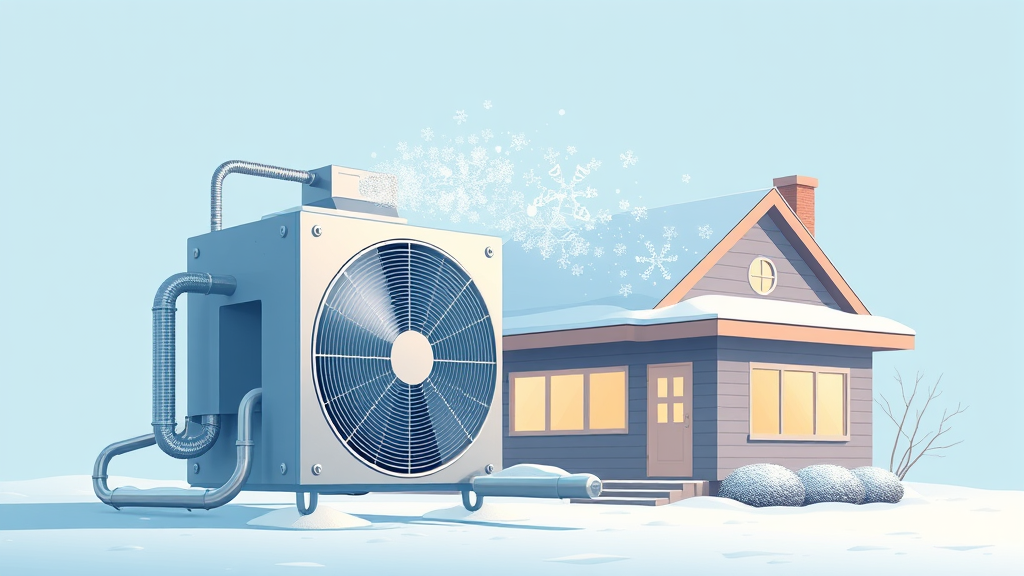
Now researchers in Europe have developed an approach that could change the whole equation. They've found a way to cool air using only electricity. No chemical refrigerants at all.
The technology is based on what's called the elastocaloric effect, which is one of those scientific concepts that sounds intimidating but is actually pretty elegant when you break it down. Certain materials, when you physically stretch or compress them, change temperature. They heat up when deformed and cool down when released. If you cycle that process and capture the cooling, you get refrigeration without ever needing a drop of chemical refrigerant.
Marcus could explain the thermodynamics of this far better than I can, and I'll point you toward his work if he covers the underlying physics in more detail. But the practical takeaway is what matters to you and me. These systems don't rely on fluids that can leak into the atmosphere and do environmental damage. They run on electricity alone.
The European research team built a prototype that demonstrates the concept working at a scale that could eventually be practical for real-world cooling. And when I say "eventually," I want to be clear that we're not talking about something you can buy at Home Depot next summer. This is early-stage work. But it's the kind of early-stage work that tends to move faster than people expect once the proof of concept is solid.
I've watched a lot of technologies go from lab bench to living room over the years. LED lighting felt exotic and expensive in the early 2000s, and now you can buy a four-pack at the grocery store for ten bucks. Solar panels, heat pumps, electric cars, all of them followed a similar arc from "interesting prototype" to "why would I buy anything else." Cooling technology could be next.
The thing I appreciate about this particular approach is that it solves the actual problem instead of just reducing it. We've had low-emission refrigerants for a while, and they're better than the old ones, but they're still chemicals that can escape into the air. An electricity-only system removes that issue entirely. Technology should work for you by solving real problems, not by swapping one headache for a slightly smaller one.
My granddaughter Jess asked me last week why I get so excited about stuff like this, stuff that won't even be available for years. I told her it's because the good stuff is always coming, and paying attention to what's happening in labs today means you understand why your house feels different tomorrow. She rolled her eyes, naturally. She's 19. But she'll remember this conversation when she's buying her first home and choosing a cooling system that doesn't use refrigerants at all.
I'll be following this research as it develops, because if the elastocaloric approach scales the way early tests suggest it can, we could be looking at a fundamental shift in how homes are cooled. And that matters for your electric bill, for the planet, and for anyone who has ever camped out in the one air-conditioned room on a hot July night.
Comments (0)
Log in or sign up to join the conversation.
No comments yet. Be the first.