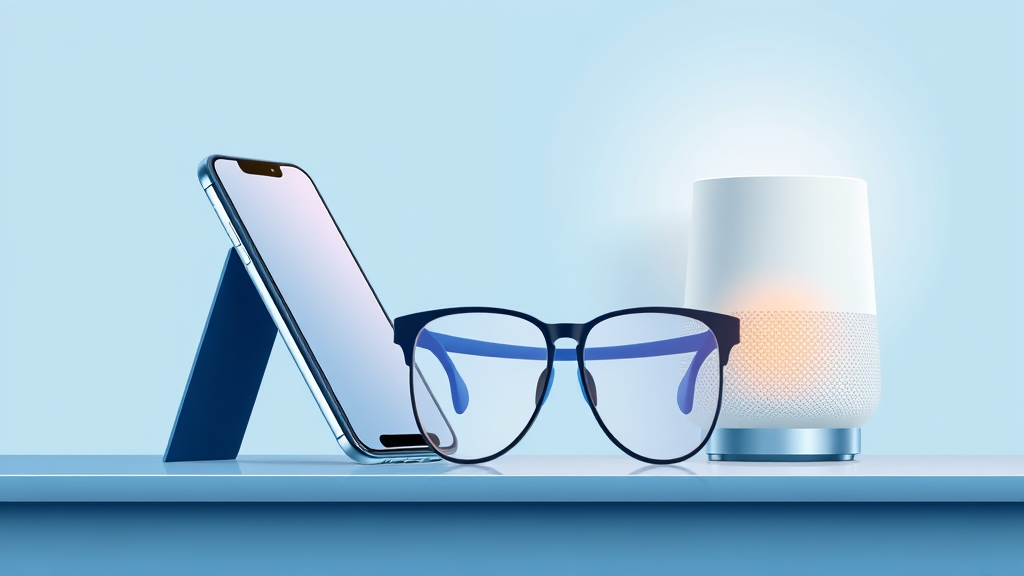

I've been watching gadget trends long enough to be skeptical of anyone who claims to know the future. I remember when 3D televisions were going to change living rooms forever, and when smartwatches were supposedly the end of the phone as we knew it. Neither quite worked out that way. So when a piece like this Forbes roundup on where gadgets are headed crosses my desk, I read it the way I read weather forecasts: interested, but keeping an umbrella nearby.
Still, some of these trends are hard to argue with, because they're already happening. Here's what actually feels real to me, and what I'd file under "we'll see."
Foldables are quietly becoming normal. This is the one I'd bet on. I've covered Samsung's Fold and Flip lines for years now, and the creases are getting shallower, the batteries bigger, the prices (slowly, painfully) coming down. The hinge engineering alone has come so far that I've stopped thinking of foldables as a gimmick. They're not the future of every phone. But for people who want a tablet that folds into a pocket, they've already arrived.
AI is moving into the gadgets themselves. This is the big one, and it's moving faster than I expected. The chatbot era is behind us, or at least expanding into something more useful: devices that understand context. Your earbuds that can translate in real time. Your glasses that can tell you what you're looking at. And as AI capability gets cheaper by the year, it can live in inexpensive gadgets, not just flagship ones. Regular people benefit when the price finally makes sense, and we're getting close.
Smart homes are getting less annoying. Can I get a little personal here? My smart home journey started with a hub that required six apps and a prayer. Today the good stuff runs on Matter, talks to each other, and actually, you know, works. The trend I'm cheering for is the boring-but-important one: standards. Because technology should work for you, solving actual problems, and nothing in your house should need a firmware update just to turn on a lamp. A good smart lock that does one job and does it well is a perfect example of the kind of thing I mean.
Wearables are heading toward health. The next wave of watches and rings isn't about counting steps anymore. Sleep apnea detection is already shipping on today's smartwatches, while blood pressure and glucose tracking remain the stuff companies are still working toward, not something you can buy this weekend. The trajectory is real even if some of the claims get ahead of the science. And for those of us with a few decades of wear on the chassis, a watch that nags you about atrial fibrillation is genuinely valuable.
Now, what I'd take with a grain of salt: anything promising a "revolution" in the next eighteen months. The metaverse headsets, the fully ambient computing home, the phone replacement that isn't a phone. I sat through the dot-com hype and the smartphone hype and the crypto hype, and the pattern never changes. The real changes creep in quietly, the way streaming killed the CD rack before any of us noticed we'd stopped buying CDs.
If I had to sum it up: the gadgets worth getting excited about are the ones that disappear into your life instead of demanding attention. The foldable that fits in your pocket, the lock you never think about.
The future of gadgets, if the industry is smart, is less fuss. And after forty-some years of watching this business, I'll take less fuss over more magic every single time.
Comments (0)
Log in or sign up to join the conversation.
No comments yet. Be the first.