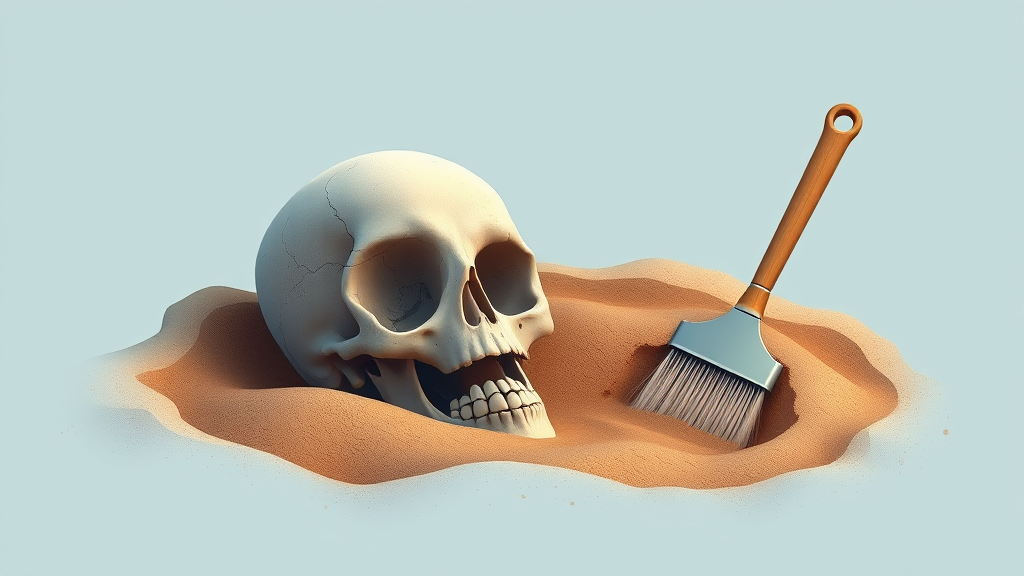

Every so often a science story crosses my desk that makes me put my coffee down and just sit there for a minute. This is one of those. Researchers have identified fossil remains of a completely new species of ancient human, published this week in PNAS, and it's reshaping how scientists think about our own family tree.
Now, I cover gadgets and phones most days, so you might wonder why I'm writing about fossils. But I've always believed science stories like this one matter just as much as any phone release, maybe more. This is the story of us, and every new branch we discover tells us something about why we are the way we are.
The remains were found in Africa, which is where every human origin story ultimately begins. My granddaughter Jess asked me once, after a school project, why all these discoveries keep happening there, and I told her it's simple: that's where the family album is kept. Africa holds the deepest layers of human history, and paleoanthropologists keep finding new pages.
What makes this find genuinely exciting is that it doesn't fit neatly into any known category. The fossils show a mix of traits, some familiar from other ancient human species and some researchers haven't seen before. That combination is what earned it status as a new species rather than a variation of one we already knew. When Marcus reads papers like this, he goes straight for the methodology; me, I go straight for the wonder of it. Though I did peek at the dating work, and it's careful stuff.
I remember when the news broke about Homo naledi back in 2015. My late husband and I watched the announcement livestream in the kitchen, and he said something I've never forgotten: "We keep thinking we've finished the puzzle, and then somebody finds the box had more pieces all along." This discovery feels like that again. The human family tree was never a tidy ladder, it's a bushy tangled thing, and this new species is another branch we didn't know was there.
The fossils give researchers new insight into how ancient humans lived, moved, and adapted to their environments millions of years ago. Every trait that doesn't match expectations is a clue about how evolution actually worked on the ground, in real time, for real populations trying to survive. It's easy to forget those fossils were once people, in the loosest sense. They had days and struggles and, presumably, opinions about the weather.
The full findings are worth reading, even if the technical sections get dense. The researchers lay out their case carefully, and the peer review process at PNAS means this discovery has been poked and prodded by other experts before it reached the rest of us.
So what does this mean for you? Probably nothing you'll notice tomorrow. Your phone will still update, your smart lock will still open the door. But our understanding of where we came from just got a little richer, a little stranger, and a lot more interesting. In a world of incremental phone upgrades, a genuine, honest-to-goodness new chapter in human history might be the best kind of new release I can think of.
Comments (0)
Log in or sign up to join the conversation.
No comments yet. Be the first.