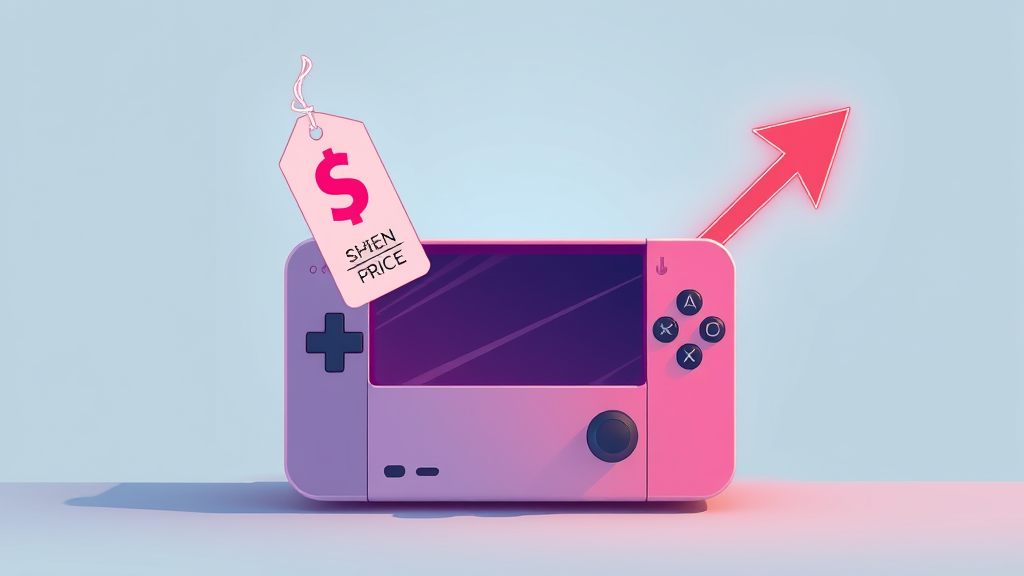

Nintendo and Microsoft are pulling the industry in two directions at once, and neither one puts more money back in your pocket. A new report over on MSN lays out where things stand: Nintendo has moved to variable pricing on its first-party games, so there's no single standard price anymore, and Microsoft keeps shifting more of its new releases onto Game Pass as a subscription play rather than a traditional sale.
Variable pricing sounds reasonable until you think about who holds the lever. The pitch is that not every game should cost the same, that a small 2D platformer shouldn't carry the price tag of a hundred-hour epic, and that's fair on paper. My worry, and it's a worry, not a report, is that in practice this tends to run one direction. I don't expect the mid-sized games to come in cheap. I expect the marquee titles to test new ceilings. Once a publisher proves an audience will pay more, that number doesn't walk itself back down.
I wrote a piece recently arguing that $80 games aren't actually inevitable, and I still believe that. But believing it requires publishers to feel resistance, and resistance only works if enough people push back with their wallets. The danger with variable pricing, as I see it, is that it fragments that resistance. When there's no standard price, there's no standard line to hold. Every release becomes its own negotiation, and the publisher sets the opening bid.
The Microsoft side is its own flavor of the same math. Game Pass day-one releases genuinely are a good deal if you play a lot of games, and I've said before that the service earns its keep as a risk-free second-chance library more than for any single marquee launch. But a subscription model quietly changes what games get made and how they're built. Recurring revenue favors recurring play. Daily login rewards, seasonal passes, retention hooks. I covered how login bonuses went from MMO gimmick to entire business model, and that pipeline runs straight through subscription economics. When the game isn't the product but the retention vehicle, you feel it in the design whether you can name it or not.
My old-man framing, and I've earned it: I remember walking into a Funcoland with birthday money and knowing exactly what a cartridge cost. Sixty bucks, maybe seventy for the big RPGs with the fancy boxes. Expensive, don't get me wrong, and by most inflation estimates that's somewhere north of a hundred dollars today. But you owned the thing. It worked forever. Nobody was patching the price upward after the fact or renting your save file back to you monthly. Squaresoft never once asked me to check in daily for my Final Fantasy VI login bonus. Kefka showed up and ruined the world whether I was engaged or not.
The counterargument is real, so let me say it fairly. Development costs have ballooned, and modern games routinely give you hundreds of hours for that launch price before you spend another cent. A Nintendo first-party release still ships finished, no battle pass, no storefront. There's a version of variable pricing that could reward smaller games with smaller prices, and if Nintendo actually uses it that way, I'll eat a Famicom cartridge. Being skeptical doesn't mean being wrong on every count.
What I'd watch instead of the sticker price is the value curve. More money for less content, games shipping thinner with the rest sold back as DLC, single-player campaigns shortened because live service needs the body count. I can't prove the trend line with a chart, but it's sure how the last several years have felt from this chair, and I don't think I'm alone. The price on the box is just the most visible symptom.
My rule hasn't changed in forty years of this hobby: never pre-order, wait for the reviews, and make publishers earn the extra ten dollars every single time. They only get away with what we hand them.
Comments (0)
Log in or sign up to join the conversation.
No comments yet. Be the first.