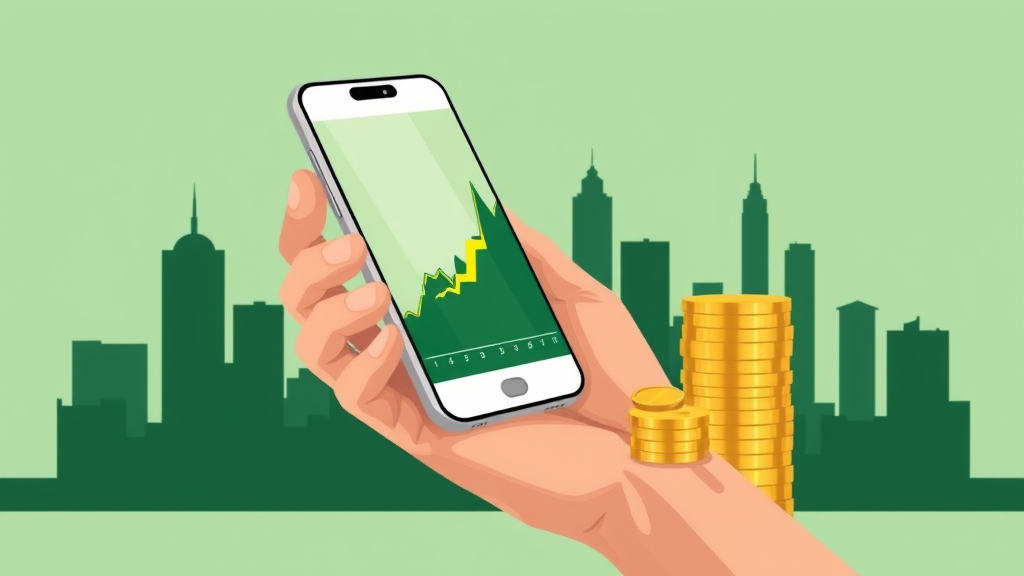

The most interesting thing happening in investing right now is happening well off Wall Street, in places where the stock market used to be something other people did. GCash, the Filipino e-wallet, has simplified registration for its GStocks PH feature, which has been around for a few years now. The update lets users open a brokerage account with AB Capital Securities in a matter of minutes and start buying local stocks with as little as 500 pesos, which is under ten American dollars. Business Mirror has the details.
Let me explain why this matters to me, a 62-year-old who writes mostly about Vanguard funds and dividend reinvestment. Access is the whole ballgame. I've said before that the hardest part of investing is getting started, and the barriers are rarely about intelligence. They're about friction. Paperwork, minimum balances, the vague sense that markets belong to people with suits and connections. Every time a platform removes a layer of that friction, more ordinary people get a shot at compound interest.
The math works the same in Manila as it does in Minneapolis, so let's do it plainly. If a 25-year-old Filipino worker puts the equivalent of $20 a month into a broad basket of local stocks and earns 8 percent a year, which is a reasonable long-run assumption for an emerging market though not a promise, they'd have roughly $45,000 by age 60. That isn't retirement money by itself, but it's a real sum built from amounts small enough that most people wouldn't miss them. Small amounts, long horizons, and patience. That has always been the quiet engine of this business.
Now the caveats, because there are always caveats and anyone who skips them is selling something. The Philippine stock market is narrower than what most American investors are used to. Fewer listed companies, more concentration in a handful of large conglomerates, and more volatility when foreign money flows in and out. Buying individual stocks there with P500 at a time is fine as a way to learn, but the same rule I apply everywhere applies with extra force: one stock is a bet, not a plan. If GStocks users treat this as a doorway into diversified, steady investing, good. If it becomes a slot machine on a phone, and e-wallets do make tapping feel weightless, that's a different story.
The other thing worth watching is participation. My general sense, and I'll frame it as my characterization rather than a hard statistic, is that in many emerging markets only a small single-digit percentage of the population owns stocks directly. That's a lot of household savings sitting in cash, earning nothing, while inflation does its slow work. Mobile-first brokerage is probably the only realistic way that number moves, because the traditional branch-office model never reached most people and wasn't going to. I've seen this pattern before. The brokerages that made onboarding painless captured an entire generation of first-time investors, and the ones that demanded a notarized signature and a minimum deposit watched that generation walk past them.
There's also a familiar risk in making investing feel as easy as paying a phone bill. Easy in should not mean careless in. My hope is that GCash pairs the simplified registration with plain-English education, because the first market downturn these new investors see will be the real test. The ones who understand that 20 percent drops are part of the deal will stay. The ones who thought stocks only go up will close their accounts at the bottom, and that's the expensive lesson.
Still, my overall reaction is positive. Anything that turns "someday" into "this afternoon" for a first investment deserves credit. The best portfolio in the world is worth exactly nothing to the person who never opens the account.
As always, this is my perspective, not professional financial advice. Your money, your country, your call.
Comments (0)
Log in or sign up to join the conversation.
No comments yet. Be the first.