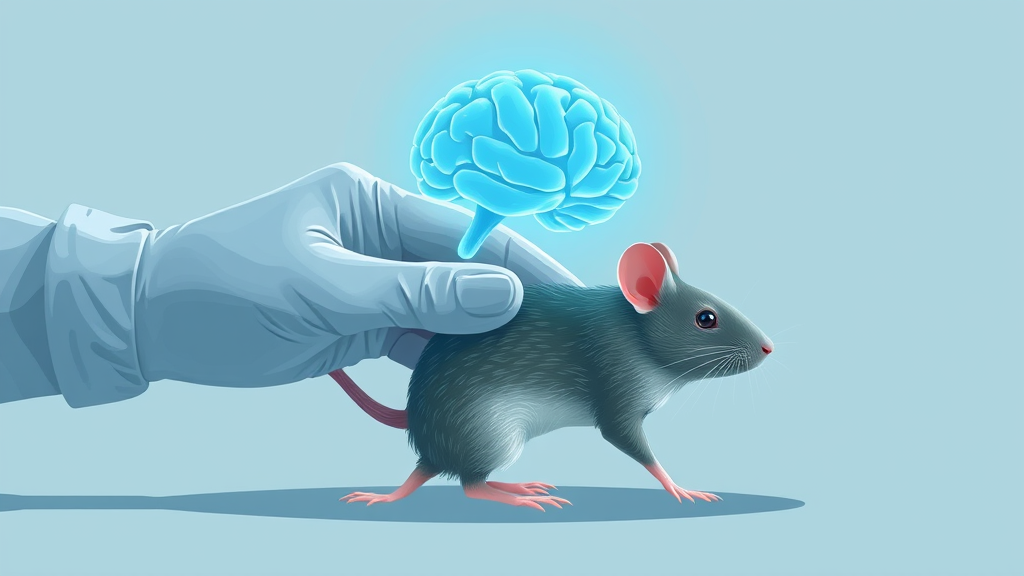

Every so often a science story crosses my desk that makes me set down my coffee and say, wait, what? This is one of those. Researchers have found that applying gentle, controlled compression to a leg bone can trigger the release of protective signals that help the brain heal after an injury. You can read the full writeup over at Gadget Review, and I'd recommend it.
Let me back up and explain, because I know how that sounds. Bones are not inert scaffolding, the way we all sort of assumed back when I was young. Your skeleton is actually a busy little endocrine organ pumping out chemical signals all day long. Scientists have known for a while that bone tissue responds to mechanical pressure by releasing molecules into the bloodstream. What nobody expected was that some of those molecules are neuroprotective, meaning they help shield brain cells from damage.
So the researchers did something wonderfully simple. They applied steady, controlled squeezing to a leg bone in animal models with brain injuries, and recovery outcomes improved. The compression prompted the bone to release those helpful signals, which traveled through the body and apparently gave the injured brain a better environment for healing.
I love this kind of research for a very Elizabeth reason: it's elegant. No new drug, no fancy implant, no billion-dollar machine. Just pressure, applied thoughtfully, to a part of the body nowhere near the injury. Everything in the body is more connected than we give it credit for, and there's a motherly lesson in there somewhere. My granddaughter Jess teases me that I say that about everything from gut health to why she should wear sunscreen, but in this case the science actually backs me up.
Now, the necessary caveats, because I'd be doing you a disservice otherwise. This was animal research. The gap between "mice recovered better" and "we squeeze your shin in the emergency room" is a long one, measured in years of clinical trials, dosing questions, and safety studies. Nobody should go pressing on their leg bones after a concussion and expect a miracle. Please don't. If you have a brain injury, you see a doctor, full stop.
But the direction is genuinely exciting. If researchers can identify the exact signals the bone releases under compression, there's a path to turning that mechanism into an actual therapy, maybe even a drug that mimics the effect without the squeezing. For people recovering from traumatic brain injuries, strokes, and other neurological damage, that would be a very big deal. Current treatment options are frustratingly limited, and families who've been through it know that better than anyone.
It also fits a pattern I've watched develop across the science coverage this year: the most interesting breakthroughs keep coming from unexpected connections between body systems. We wrote recently about a giant genetic study that finally took severe morning sickness seriously as a real biological condition rather than a nuisance to be managed with crackers. Same spirit here. Every so often somebody stops long enough to listen to what the body has been saying all along.
I'll keep an eye on this one, and if human trials follow, you'll read about it here. In the meantime, be kind to your skeleton. It's apparently doing more for you than holding you upright.
Comments (0)
Log in or sign up to join the conversation.
No comments yet. Be the first.