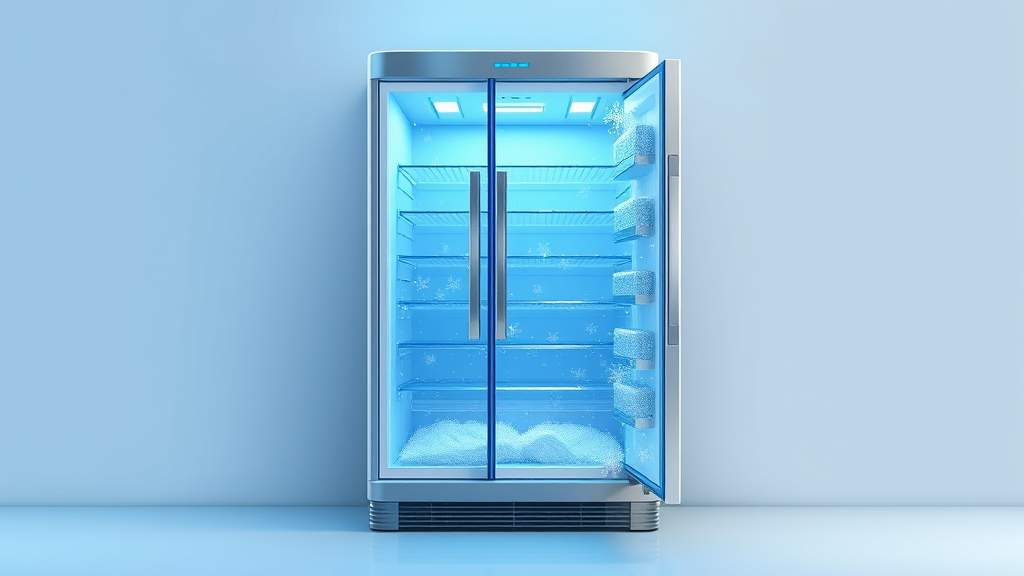

Some news makes me want to call my grandkids, and this was one of those weeks. Researchers at the Hong Kong University of Science and Technology have announced what they're calling the world's first zero-degradation cooling device, and if you've ever cursed at your refrigerator in July, you'll want to hear this. You can read the full announcement over at Mirage News, and I'd encourage it, because that "world's first" phrasing comes from the announcement itself.
First, a little context, because context is what makes this matter. The refrigeration we all rely on today mostly runs on vapor-compression technology, and per the HKUST announcement, those systems are energy-intensive and carry complications of their own with the refrigerants they employ. A fluid absorbs heat inside your fridge, gets compressed, and dumps that heat out the back. It works wonderfully. It's just not cheap on electricity.
So scientists have been chasing alternatives for decades. The announcement points to elastocaloric cooling as the direction this team pursued, and here's the plain-English version I'd give my neighbor asking about her new thermostat: you take a special material, put it under stress, and it heats up. Release it and it cools down below where it started. Run that in a cycle and you can pump heat out of a space without the same refrigerant approach used today. For my fellow nerds, Marcus Pitts explains the physics under the hood better than I ever could, but the short version is mechanical cooling without a traditional compressor.
Now, the part the researchers are most excited about. According to the announcement, the device is zero-degradation, meaning the cooling performance doesn't fade the way this kind of technology has tended to in the past. Materials under repeated stress generally wear down, and cooling systems built on them lose their edge over time. If this device truly holds steady, that's the piece that made me sit up straighter. Think how rare that is. Your car loses pep, your phone battery fades, even my beloved vintage stereo needed a recap after twenty years. Things wear out. That's just physics. Except here the researchers say they've found a way around it.
Why should you care if you're not a materials scientist? Because cooling is quietly becoming one of the biggest energy demands on the planet. More air conditioners come online every year as summers get hotter and more of the world can afford them. If this approach can be scaled up and manufactured affordably, and that's still a big if, we could be looking at cooling far kinder on electricity than what's humming in your kitchen right now.
Now for my usual caution, delivered with love. Lab announcements and kitchen-counter products are separated by years of hard engineering, cost reduction, and manufacturing scale. I remember when solid-state batteries were "two years away," and I'm still waiting. And I haven't independently verified the team's claims beyond their own announcement, so take the "world's first" framing with the appropriate grain of salt until other researchers weigh in. Still, if the zero-degradation claim holds up to scrutiny, it changes the conversation.
I'll be watching for the next milestone: a prototype cooling something real. A drink cooler, a server rack, anything. When one of these units keeps something cold out in the real world, I'll be back with an update. Meanwhile, be a little kind to the old compressor humming in your kitchen. It's been doing its job faithfully for a long, long time.
Comments (0)
Log in or sign up to join the conversation.
No comments yet. Be the first.