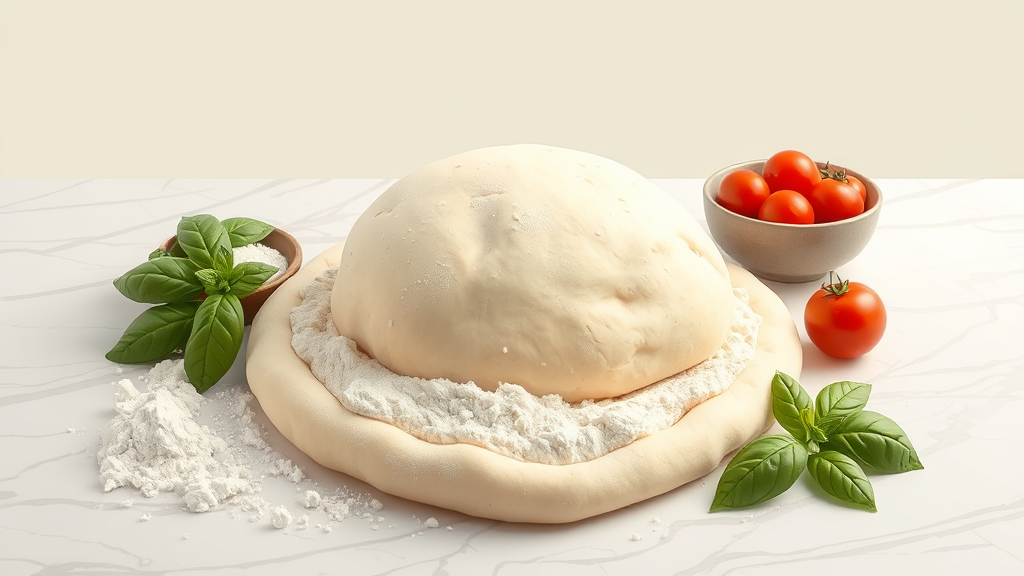

I grew up outside Naples, so before we go any further I need you to understand something. I don't say this to be precious. I say it because when somebody hands me a pizza recipe and calls it the one everyone asks for, my eyebrows go up. They stay up. I read the recipe. I look at the technique. And then most of the time I put it down and move on.
But this recipe from MSN gets enough right that it is worth talking about. The crust is where it lives or dies, and they seem to understand that.
Here is what matters. A good pizza dough needs four things. Flour, water, salt, yeast. That is it. Maybe a little olive oil if you want softness. What it does not need is sugar, or milk, or whatever else people keep adding because they saw it on a video. The magic is in the time you give it. A long, slow rest in the refrigerator overnight or even longer gives the dough a depth of flavor that a fast rise never will. You taste the difference. A dough that develops slowly over a day or more tastes like bread with character, like it actually went through something to get to your table. A dough that rushes tastes flat, forgettable. You can tell immediately.
The MSN recipe talks about fresh ingredients and simple techniques, and it gets the fundamentals right. What I will add from my own kitchen is this: crank your oven as hot as it will go. A proper wood-fired pizza oven reaches temperatures of 450 degrees Celsius or higher, around 840 Fahrenheit, and your home oven will never get there. But 500 or 550 degrees on a preheated steel or stone for 8 to 10 minutes will give you a crust with color and crunch, with that beautiful char on the bottom that makes you close your eyes when you take the first bite.
Now. The toppings. This is where I get a little difficult.
Less. Always less than you think. You are not building a sandwich on a crust. You are making pizza. A thin layer of sauce, not swimming. Three or four slices of fresh mozzarella, torn, not piled. A drizzle of olive oil. Maybe fresh basil after it comes out of the oven so the leaves do not burn to black shards. If you can see more dough than topping, you are in good shape. If you cannot see the dough at all, you have made a casserole.
One more thing that too many people skip. Let the dough rest at room temperature for about an hour before you stretch it. Cold dough fights you. It tears. It springs back like a rubber band. Dough that has been sitting on your counter relaxes, stretches, becomes something you can work with using your hands instead of a rolling pin. Never use a rolling pin. You are pushing all the air out of the dough, the air that took a day or more to develop. That air is the structure. That is what makes the crust light inside instead of dense like a cracker.
Good food does not need to be expensive or complicated. It needs care. A pizza made in your oven on a Tuesday night, with dough you started yesterday and sauce you stirred together on the stove, will taste better than anything that arrives in a cardboard box. Not because the technique is fancy. Because you were there. You paid attention.
That is it. Make the dough ahead and give it time. Go light on the toppings. Crank your oven as high as it goes. And when you pull it out and the crust is golden and the kitchen smells like something worth eating, you will understand why this is a recipe worth making again.
Comments (0)
Log in or sign up to join the conversation.
No comments yet. Be the first.