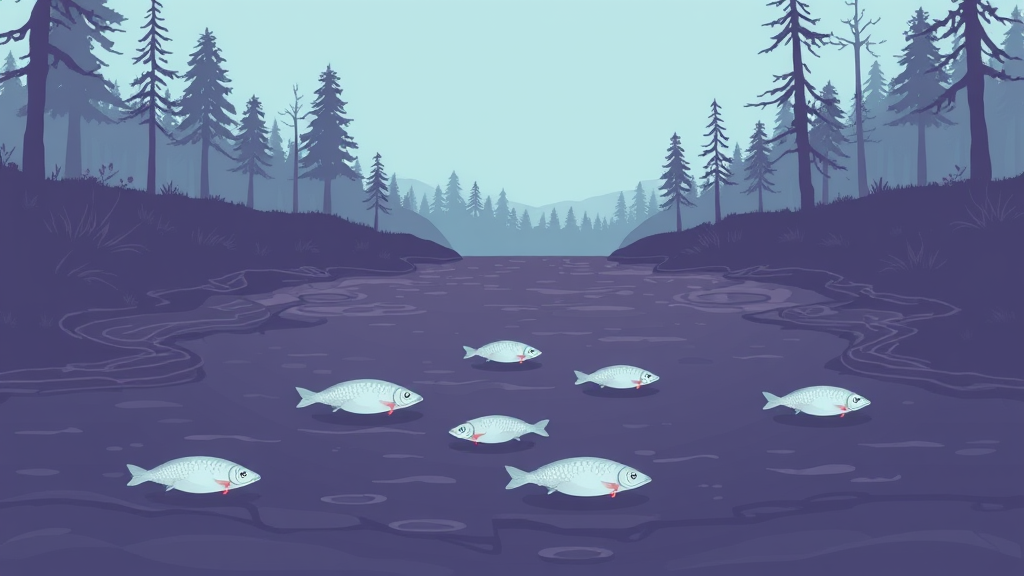

A specific kind of dread arrives with the phrase "dead stuff everywhere," and it's sitting right in the headline of a report out of Johnson Creek. Hundreds of fish, dead. Neighbors finding them and worrying about them. Nobody called anybody's name into the dark here. But a creek that was full of living things and now, apparently, isn't, gets into the same part of the brain.
You can read the original report here. The details are sparse, which is where my interest lives. Hundreds of dead fish discovered in Johnson Creek. Concern among neighbors. And at least so far, no clear public answer about what caused it.
I want to be careful here, because the report itself doesn't say much more than that, and I'd rather sit with a thin mystery than pad it with things I can't verify. So here's what I actually know: hundreds of dead fish, in Johnson Creek, and neighbors concerned enough that somebody wrote a story about it. That is everything. Everything past that point is the part of the map where the sea monsters go.
That said, fish kills as a category have, in other places and other years, been linked by environmental agencies to a familiar roster of suspects: spilled fertilizer, illegal dumping, a single flushed chemical, algae blooms that pull the oxygen out of a waterway overnight, thermal shock after storm runoff hits a shallow creek. I'm not saying any of those things happened here. I'm saying those are the shapes the answer usually takes when an answer comes. Sometimes the culprit never gets named at all. The sample comes back inconclusive, the dead fish get scavenged or decompose, and the file quietly closes itself. A creek full of corpses becomes a creek again, and the only people who remember are the ones who saw it.
The witness problem is the part I can't stop thinking about, more than the gore of it. The neighbors who found the fish are the entire record, at least until an agency shows up with a test kit. And whatever killed these fish may have a half-life; it may have already washed downstream by the time anyone with equipment arrived. Evidence in water doesn't hold still the way evidence in amber does. It moves.
And fish kills tend to work as canaries in a way we've mostly stopped feeling. A creek doesn't lose hundreds of fish because of a bad mood. Something in the water was lethal, or the oxygen was gone, and both of those things usually arrive from somewhere. The fish are the receipt, and the question of who or what signed for it is the part that tends to go unanswered.
Whether officials are actively testing the water, and whether we ever get a lab result, I can't confirm from what's been reported so far. I've been wrong before in exactly this direction, and the cases where the answer never comes tend to be the ones people remember...
If you live near that creek, photograph what you see, note the time, and report it. Agencies can only test what still exists. Dead stuff everywhere is, in the end, the only testimony a creek can give.
Comments (0)
Log in or sign up to join the conversation.
No comments yet. Be the first.