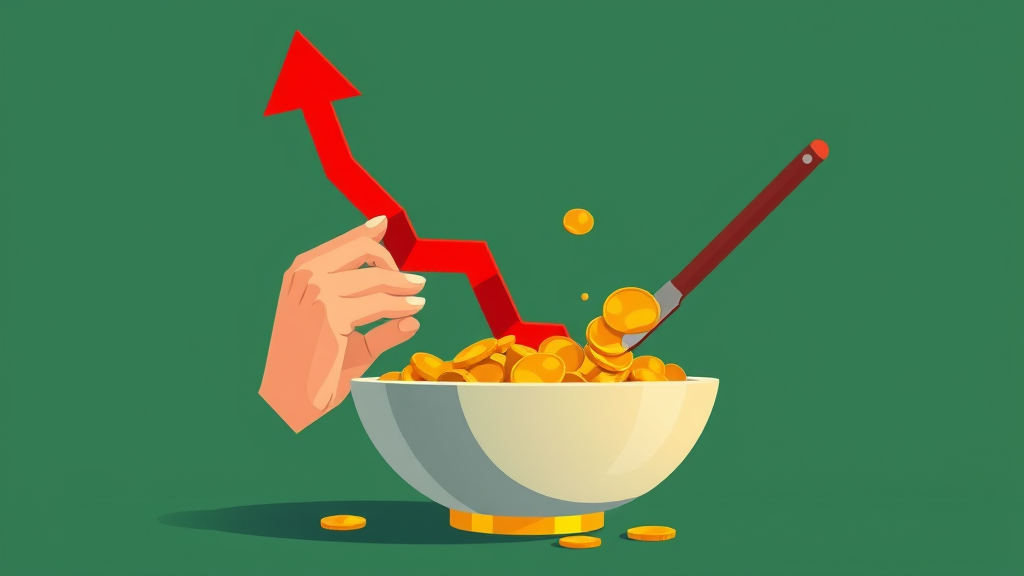

Thursday brought some relief to a market that spent the week getting knocked around. The sell-off that had concentrated on the riskiest end of the AI trade moderated, with buyers stepping back into tech stocks after a soft US open, helped along by a pullback in bond yields that took some pressure off the sector. Reuters has the details.
I want to slow down on the mechanics here, because the bond-yield piece matters more than most headlines let on. When yields rise, the math behind every expensive growth stock gets a little worse. A company expected to earn most of its profits a decade from now is worth the present value of those profits, and higher rates shrink that present value fast. So when yields eased Thursday, the same stocks that got hit hardest on the way up in rates caught a bid on the way down. Nothing about the businesses changed. The discount rate did.
That one is worth sitting with for a second. A sector can lose a few percentage points, then gain a chunk of them back, and the underlying companies never sent a single memo.
The other detail worth noticing is where the rout concentrated in the first place: not the profitable AI giants, but the riskiest borrowers, the companies funding AI ambitions with debt and hope. That tells you this was partly a credit story wearing an AI costume. When markets get nervous, they punish the leveraged first and ask questions later. The survivors of that sorting tend to be the ones with actual cash flow, a lesson the market re-teaches roughly every cycle and we all manage to forget in between.
Now, the part where I put on my calmest voice. I've watched this movie since the late '80s, and the plot doesn't change, only the ticker symbols. Hot sector runs ahead of itself. Money piles into the riskiest corners because that's where the returns have been. Something twitches, rates, inflation, a disappointing quarter, and the speculative end gets sold hard. Dip buyers show up. Everybody argues about whether the dip was the bottom.
A question for you: when you saw the tech sector falling earlier this week, was your first instinct to check your plan or to check the exits? Your answer tells you more about your risk tolerance than any questionnaire ever will.
I don't know whether Thursday's bounce holds, and neither does anyone writing confident threads about it tonight. What I do know is that the investors who came through 2008 and 2020 in good shape mostly did one thing: they decided in advance how much volatility they could stomach, put the rest of their money in boring, broad holdings, and stopped trying to time the turns. Buying the dip feels clever when it works. Having a position size that lets you sleep through the dips works whether or not they bounce.
Some of those speculative AI borrowers may still have further to fall, and if rates climb again, the pressure returns. The quality end of the market tends to survive that sorting. The leveraged end sometimes doesn't.
Patience, and a reasonable allocation. It has beaten clever for forty years.
The usual disclaimer: I'm sharing perspective from four decades of managing my own money, not professional financial advice. Your situation is your own, and a fee-only advisor earns their keep in weeks like this.
Comments (0)
Log in or sign up to join the conversation.
No comments yet. Be the first.