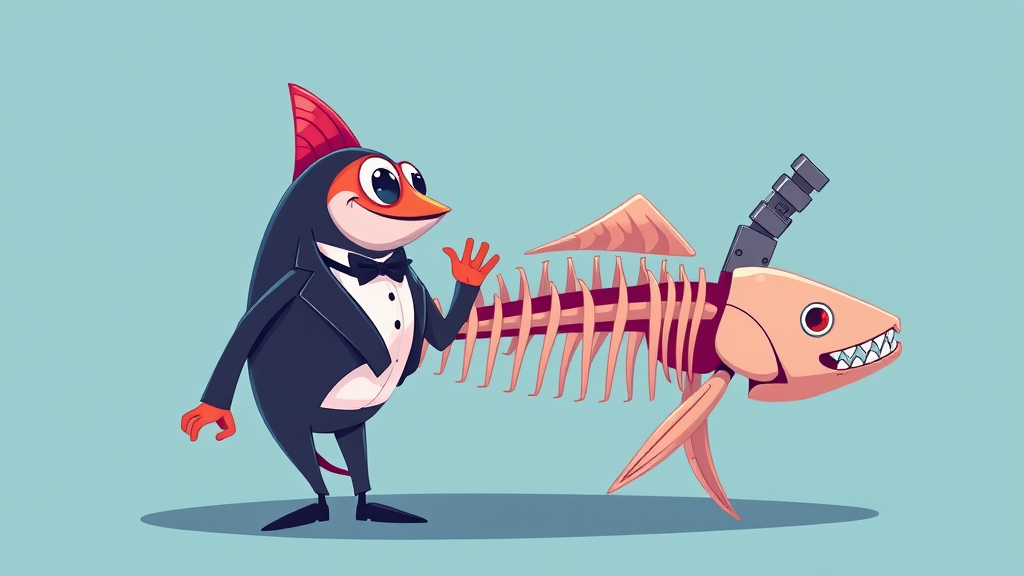

Chris Sorrell, the man who created James Pond back when the Amiga was king, wants absolutely nothing to do with the new James Pond collection announced this week. And he's not being polite about it. In a message that's already making the rounds, Sorrell told the remaster developer to, quote, "choke on an AI-generated fishbone" (via Metro).
If you're under 35 and wondering why anyone cares about a game starring a secret agent fish, let me fill you in. James Pond was a genuine staple of the 16-bit era. Robocod, the 1991 sequel, was one of those games that shipped with seemingly every Amiga and Mega Drive bundle in Britain for about four straight years. It was James Pond, or Zool, or both, and Robocod was the better game. Sorrell and his team at Millennium Interactive built something genuinely charming, a platformer with real personality in an era drowning in mascot also-rans.
So when a collection of those games shows up in 2026 with the creator loudly disowning it and specifically pointing the finger at AI-generated content, that's worth paying attention to. The "fishbone" line is a colorful way of making an accusation. Sorrell seems to be suggesting the collection's marketing materials or the remaster work itself involved AI generation, and he wants his name nowhere near it. He's also denied any involvement at all, which raises the obvious question of who actually holds the rights and what they're doing with them.
This is becoming a familiar pattern. The rights to older catalogs sit with whoever absorbed whoever absorbed the original publisher, and those rights-holders commission cheap remasters from studios with no connection to the original games. Sometimes it works out fine. Often you get a lazy emulator wrapper sold at 20 bucks. And increasingly, you get AI upscaled art or machine-written store copy that the original creators find out about the same time everyone else does, by scrolling past it on a storefront.
I keep thinking about how different this is from the way some other legacy revivals have gone. When the devs behind these games are actually consulted, you get things like the System Shock remake, built by people who clearly loved the original. When they're not, you get whatever this is. The tell is usually in the details, and "creator publicly wishes death by fishbone upon you" is a pretty big tell.
There's also the preservation angle, which I admit I'm sensitive about. On one hand, more ways to legally play James Pond and Robocod is theoretically good, because the alternative is the games existing only as abandonware memories. On the other hand, a bad remaster can poison the well. Someone's first experience of Robocod shouldn't be a janky port with art that looks like it was run through a filter, and if AI was involved in the production, that first impression gets even worse. A lazy collection preserves nothing. It buries the real thing under a worse copy of it.
Sorrell's bluntness is refreshing even if it's messy. Creators watching their work get repackaged without their input usually issue carefully worded statements about how they "weren't involved" and wish the team well. Telling a developer to choke on an AI-generated fishbone is a different energy entirely, the energy of a man who remembers exactly what those games meant in 1991 and doesn't like seeing them treated as cheap catalog filler in 2026.
Whether the collection ships as planned, gets quietly cleaned up, or implodes under the backlash remains to be seen. The developer hasn't done itself any favors here, and "the guy who made the game hates this" is not a box quote you recover from quickly. If you want to play Robocod, my honest advice is to wait and see what this collection actually looks like before paying for it. The fish would want you to be careful.
Comments (0)
Log in or sign up to join the conversation.
No comments yet. Be the first.