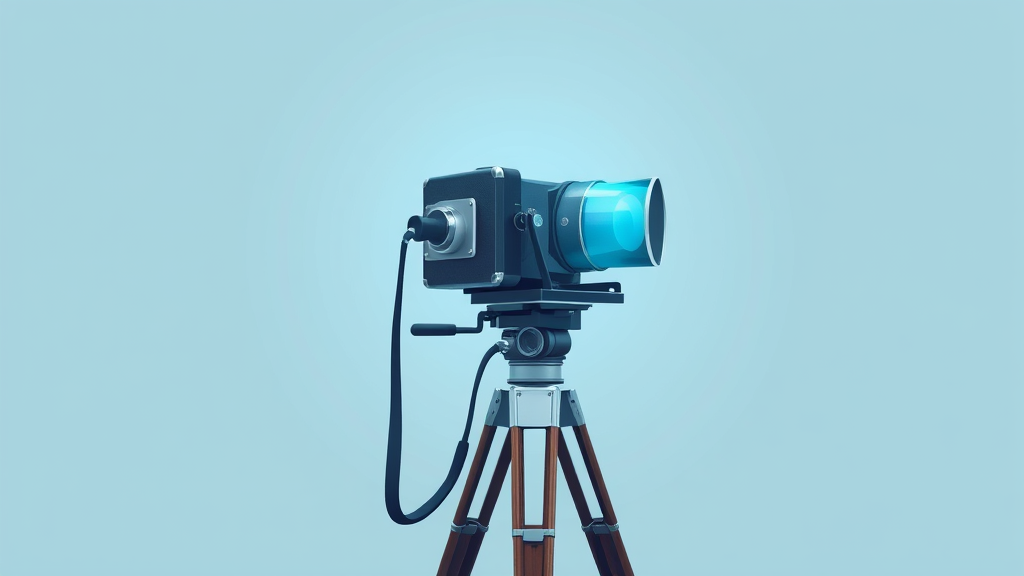

Every once in a while a story comes along that makes me want to shove everything off the kitchen table and spend the whole afternoon on a project. This week it was a piece from PCMag, where a writer picked up a large format camera from the mid-1950s and learned to use it without spending a single dime on film. Let me tell you, I have been thinking about it for two days straight now.
In case your whole photographic life has happened inside a phone, let me explain what large format means, because it's genuinely wonderful. These cameras shoot sheet film, one frame at a time, in sizes like 4x5 inches. You compose the image on a piece of ground glass at the back of the camera, where everything appears upside down and reversed, with a dark cloth over your head, like a photographer out of 1865, so you can actually see it. Then you slide a film holder in, pull the dark slide, and make exactly one exposure. One. A 4x5 negative has about fifteen times the light-gathering area of a full-frame camera sensor, and hundreds of times what's tucked into your phone. The detail you can pull from a sheet that size has to be seen to be believed.
The catch, and the reason most of us never try it, is money. Old view cameras themselves are cheap, believe it or not. Estate sales and used-camera shops are full of beautiful press cameras and monorails from the middle of the last century, often for a couple hundred dollars and sometimes less. The expensive part is feeding them. Sheet film prices have climbed and climbed, and that's before you factor in chemistry and a place to develop. So the film bill is the wall between curious people and this whole hobby. The PCMag writer found a way over the wall without paying the toll, and did it with what was already lying around instead of fresh film. I won't spoil the entire walkthrough here because it deserves a full read, but the spirit of it is pure make-do-and-mend, my favorite kind of ingenuity.
The whole thing gave me a fit of nostalgia, so forgive me a paragraph of it. When I was a kid, film was the budget item even on little 35mm cameras. You dropped the roll at the drugstore counter, chose single prints or doubles, and waited. Sometimes a whole week. My mother rationed us to one roll per vacation and she meant it, so every frame got thought about, before anyone pressed anything. You'd hear the click and think, well, that one's spent. There was a discipline in that, and I'd be lying if I said I don't miss it, even while I happily let my iPhone fire off a dozen frames and pick the best one for me.
And that's the real appeal here. Large format is the philosophical opposite of computational photography. Your phone brackets and merges before you've even lifted your finger all the way. A view camera asks you to slow down until the picture becomes a decision instead of a reflex. There's even a piece of optics magic called the Scheimpflug principle, where you tilt the lens and the plane of focus tilts along with it, so a fence running away from you can stay sharp from foreground to horizon. If you want to truly understand why that works, that's Marcus Pitts territory; I just know that it does, and that it looks like wizardry. When was the last time you made one photograph on purpose, instead of taking forty and hoping?
A motherly note before you go hunting for your own seventy-year-old camera: check the family closets first. Grandfathers and great-uncles tucked these things away everywhere, and half the time nobody living knows they're up there. That beats a marketplace listing any day, and the story attached is worth more than the shutter. The kids apparently call this analog revival "a vibe" now, or maybe "aesthetic"; my granddaughter Jess tried to explain the difference to me and I have already lost it. What I do know is that gear built to be repaired, with brass and steel and cloth bellows, working just fine seventy years on, is the best kind of technology. It works for you, decade after decade, and asks very little in return except that you show up.
The smell of the darkroom in my high school, the red light, the paper curling in the tray... I can still call all of it up out of nowhere. The PCMag piece did that to me, and I suspect it'll do it to you too, whether you ever shot film or not. Go read the walkthrough, then go look in that closet. And if you find a camera up there, I want to hear about it.
Comments (0)
Log in or sign up to join the conversation.
No comments yet. Be the first.