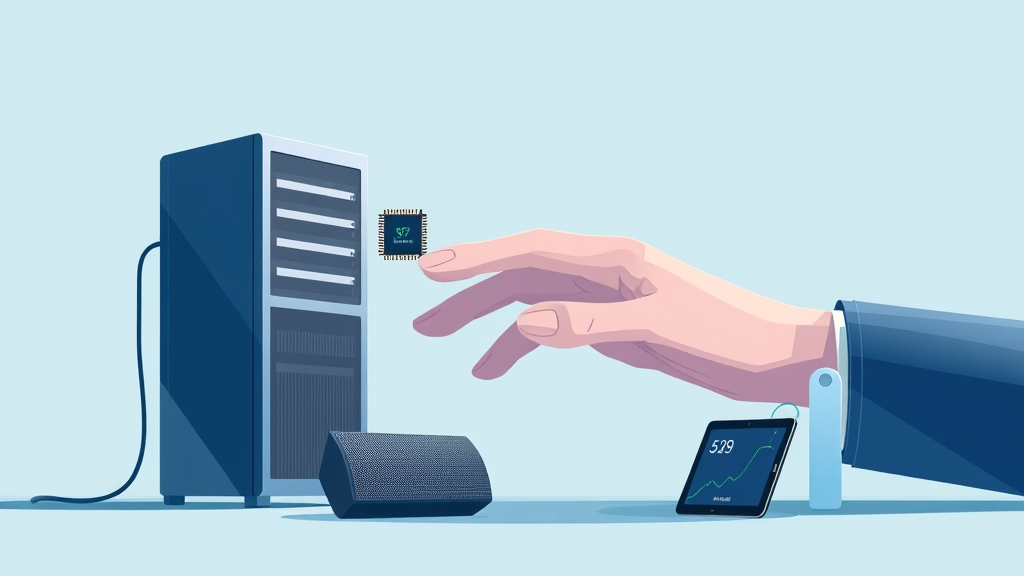

Well, friends, the bill for the AI boom is starting to arrive, and it's landing in our shopping carts. A global shortage of memory chips, the DRAM and NAND storage that live inside basically every gadget you own, has gotten bad enough that Amazon has quietly raised prices on some of its devices. That's the news reported by Onlinekhabar, and if you'll indulge me for a minute, I'd like to explain why this matters to you even if you never think about memory chips at all.
Data centers building out AI systems are gobbling up memory supply at a pace the chipmakers simply can't match. When the big cloud companies start buying something by the shipload, the rest of us pay more for what's left over. It's the oldest story in the book. I've lived through memory price swings before, going all the way back to the late eighties when a RAM upgrade cost more than my car payment, and the pattern always rhymes: supply tightens, prices climb, and eventually capacity catches up. I can't tell you exactly when this round ends, and I won't pretend to. Some things in tech never change, they just wear new clothes.
Amazon being one of the first big names to pass the cost along to shoppers tells you something. Amazon is not a company that raises prices on its own hardware lightly, because those Echo speakers and Fire tablets exist to pull you into their ecosystem. When a company willingly makes its front door more expensive, the pressure behind that decision is real.
So what else gets affected? Practically everything with a memory chip inside, which is, well, everything. Smartphones, tablets, laptops, smart TVs, wearables, game consoles, even those little smart home gadgets I keep telling you about. Solid-state storage (that's the NAND side) is part of the squeeze too. And in my experience, budget devices tend to feel these crunches the hardest, simply because the memory inside them is a bigger share of what you're paying for. That's my read of it, not a forecast, but it's held true through every shortage I've watched.
As for how long this lasts, I'll be straight with you: I don't know, and neither does anyone else with certainty. Building chip manufacturing capacity is famously slow, measured in years rather than months, so a quick fix seems unlikely to me. But I'm not going to hang a specific timeline on it without something solid to back that up. If you were already thinking about a tablet or a smart TV for the holidays, my motherly advice is simple: buy sooner rather than later, and don't count on Black Friday miracles this year. Retailers can't discount what they're overpaying for.
My granddaughter Jess asked me just last week whether she should upgrade her phone now or wait. Ordinarily I'd say wait for the fall launches, but this year I told her that if her current phone is on its last legs, the waiting game might actually cost her money. That's a strange thing for me to admit, after decades of telling people patience pays.
One silver lining, if you can call it that: this is a good moment to squeeze more life out of what you already own. A phone that feels slow can often be fixed with a battery replacement and a storage cleanup, for a fraction of a new device. Technology should work for you, and the gadget in your pocket working another year is the cheapest gadget there is.
I'll keep watching how the device makers respond over the coming weeks, and I'll flag any price jumps worth knowing about before you click buy. In the meantime, if something's been sitting in your wishlist for a while, this might be the week to stop sitting on it.
Comments (0)
Log in or sign up to join the conversation.
No comments yet. Be the first.