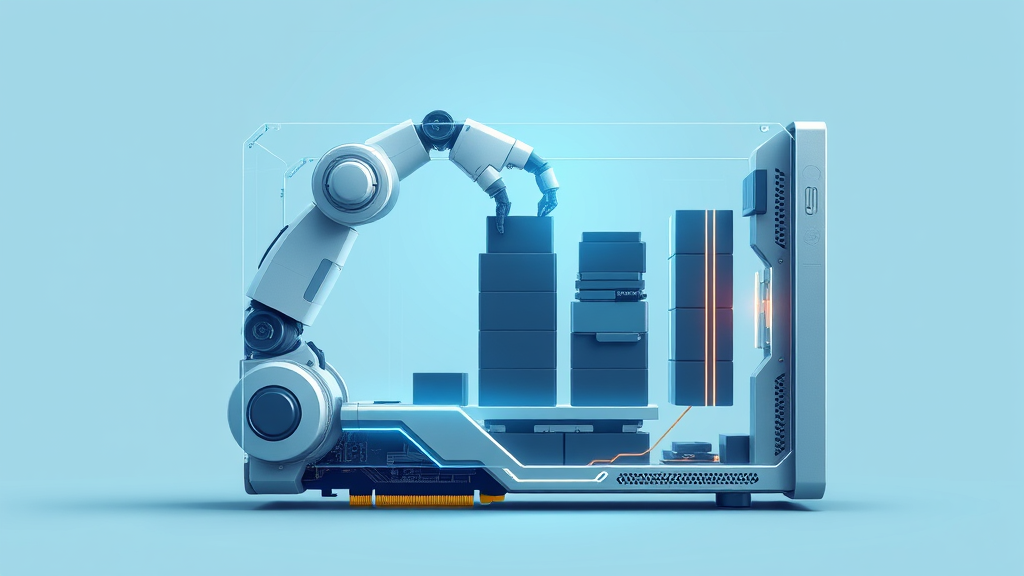

Meta just dropped something genuinely cool for anyone who likes running models locally. Muse Glimmer 30B is a 30-billion-parameter model built specifically to fit on a single 24GB VRAM GPU. It's aimed at people who want to build autonomous agents and multi-step planning pipelines without sending data to a cloud API.
That VRAM target is not a coincidence. The 24GB tier is basically an RTX 3090 or 4090, and that's become the sweet spot for serious local AI work over the past couple of years. A lot of open-weight models either barely squeeze into that memory budget or require aggressive quantization that degrades output quality. A 30B model designed from the ground up to live in that footprint is a different proposition. You can run agentic workflows on the same hardware a lot of developers and researchers already own.
The focus on autonomous agents and multi-step planning is what sets Muse Glimmer apart from the general-purpose chat models that dominate most local AI conversations. Think of a standard LLM as a really talented engine sitting in a parked car. It can generate text, answer questions, summarize documents. An agent framework is the steering wheel and the navigation system bolted onto that engine, letting the model break a task into steps, decide which tools to call, evaluate intermediate results, and adjust its approach. Muse Glimmer has those workflows baked into its training. That should mean fewer hallucinated tool calls and better task decomposition out of the box.
I spend my days writing code and my lunch breaks reading whitepapers, so the practical appeal here is obvious. When you're prototyping an agent pipeline, the iteration loop matters enormously. You tweak a prompt, rerun the task, check the output, adjust the tool schema, rerun again. Doing that against a remote API adds latency and cost to every single cycle. Running locally, you can hammer the model dozens of times in a few minutes and the only thing you're spending is electricity. A model tuned for agentic tasks that fits on your desk changes the math on what's worth prototyping.
As Geeky-Gadgets notes, the natural comparison point is Qwen 3 and similar open-weight models in that parameter range. Qwen has been the go-to for a lot of local AI practitioners. It'll take some careful benchmarking to see whether Muse Glimmer's agent-specific training actually translates to better real-world performance on multi-step reasoning and tool-use tasks, or whether a strong generalist model still wins on breadth.
The thing I want to see is how it handles context length when you load it at the quantization levels needed to fit comfortably under 24GB with room left for KV cache. Agent workflows eat context fast. Every tool call result, every intermediate reasoning step, every system prompt adds tokens. A model that fits in VRAM at 4-bit but then chokes on a 32K context window because there's no room for the cache is a lot less useful than the parameter count suggests.
Still, the signal from Meta is clear. Local agentic AI is mature enough to warrant purpose-built models, not just repurposed chatbots with a function-calling prompt stapled on top. I'll be downloading the weights the moment they're available and putting it through its paces on my own machine.
Comments (0)
Log in or sign up to join the conversation.
No comments yet. Be the first.