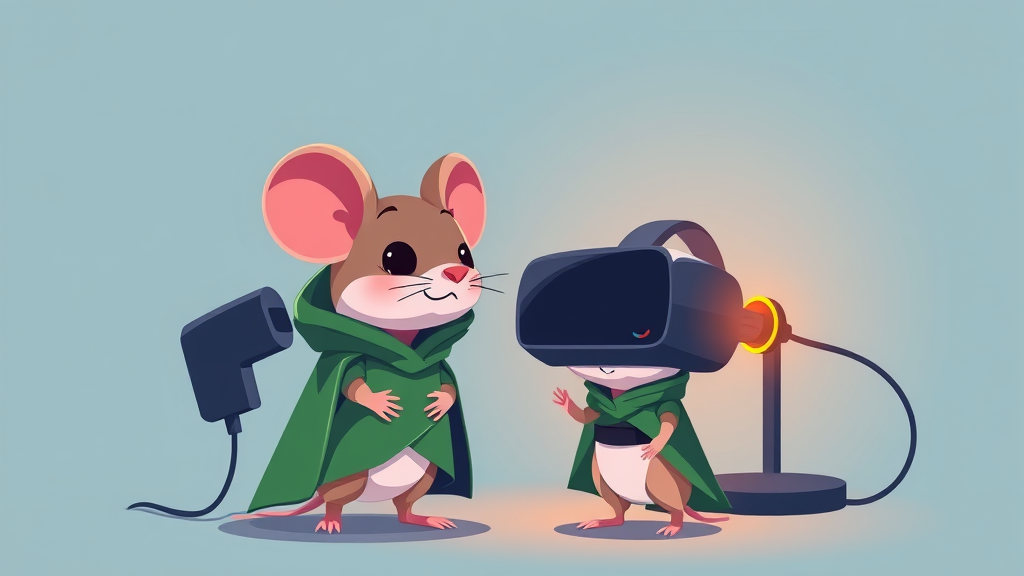

Polyarc, the Seattle studio behind the Moss series, has closed its doors after almost 12 years. If the name doesn't ring a bell, the little mouse in the green cloak should. Moss and its sequel Moss: Book II remain two of the best arguments ever made for VR as a storytelling medium, and now the studio that made them is gone.
The report doesn't dress it up, and I won't either. Almost twelve years, an award-winning franchise, and a reputation as one of the friendliest VR studios in the business. Still wasn't enough to keep the lights on.
For those who skipped the VR wave, Moss put you in the role of a spirit guide watching over Quill, a tiny mouse heroine on a fantasy quest. You weren't controlling her from inside her body; you hovered over dioramas, moved pieces of the world, and occasionally reached in to bend reality for her. Storybook platforming with a presence that flat screens couldn't fake. The first time I leaned in close to a Moss level and watched Quill actually react to me, I remember thinking this was the trick VR had been promising since the headset hype started. It felt like playing a living picture book. Have you played it? If not, that moment is still waiting for you.
The craftsmanship mattered too. Polyarc was founded in 2015 by former Bungie devs, people who knew how to make a world feel authored rather than assembled, the way Squaresoft's worlds felt authored, every screen placed by someone with intent. Book II pushed the formula further with combat variety and a darker story, and the studio kept supporting VR platforms across the board: PSVR, PSVR2, Quest, PC. They were platform-agnostic true believers in a space where most studios bet on one headset and prayed.
That's probably part of what did them in. VR never became the mass medium the 2016-era predictions promised. The audience is dedicated but small, the hardware install base grew slowly, and the middle tier of VR developers, the ones too big for a two-person itch.io project but too small to survive on Meta's content funding, has been thinning out for years. Polyarc lasted longer than most. Nearly twelve years in this business is a run to be proud of, not a failure to apologize for.
It's the same squeeze I keep watching from the AA side of the industry. Studios that make genuinely distinctive work, don't chase live service, and stay a reasonable size are the ones getting crushed right now, while the money pools around a handful of giants and whatever AI-flavored clone factory can ship fastest. The Moss games weren't for everyone because nothing is, but for a lot of people they were the reason a headset came off the shelf at all.
If you own a VR headset and never played Moss, fix that soon. The games should remain playable on existing hardware, but VR storefronts have a shorter institutional memory than anyone wants to admit, and I've been burned before by games quietly vanishing when a platform pivots. Book I and Book II frequently go on sale for pocket change. They're short, they're beautiful, and they're the kind of thing you can hand to someone who "doesn't like games" and watch them turn into a person who likes games.
Rest easy, Polyarc. Quill earned her place in the pantheon a long time ago, and unlike a lot of studio closures, this one leaves behind work worth keeping.
Comments (0)
Log in or sign up to join the conversation.
No comments yet. Be the first.