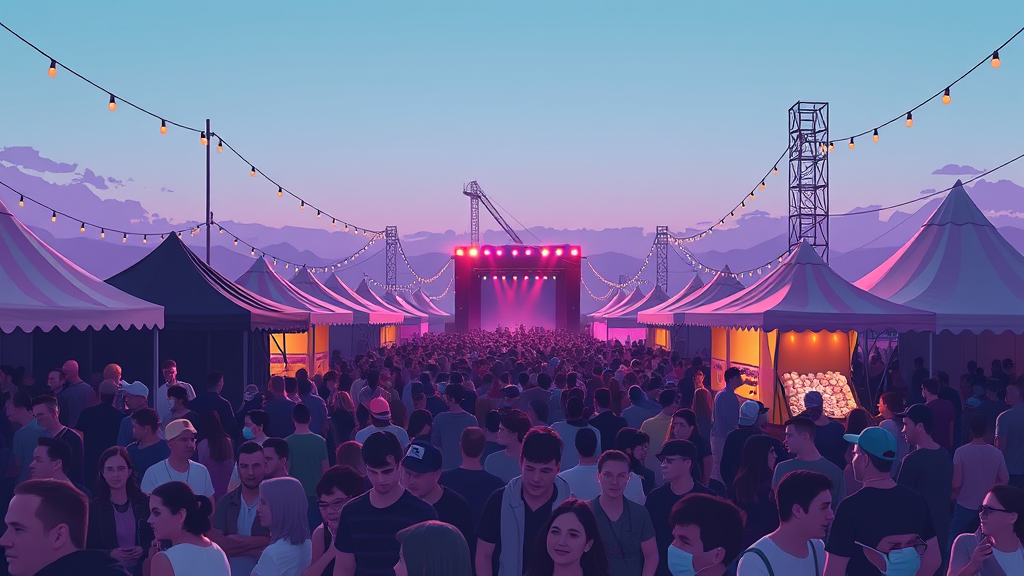

I don't normally write about festivals. Festivals are Phoebe's territory, sunshine and funnel cakes and people wearing flower crowns in photos I scroll past at 3 AM while reading about Soviet bunkers. But a crowd of over a million people gathering in one Pennsylvania city for ten days straight does something to my brain, and I couldn't stop pulling on the thread.
Musikfest 2026 is officially over. Bethlehem has emptied back out, the stages are coming down, and according to The News on the Net, this year's edition landed among the top three most-attended Musikfests ever run. Ten days of music, plus a preview night, plus comedy, art, food, and the specific sweaty joy of a community deciding, en masse, to stand outside together in August.
Sit with the scale for a second, because the scale is the part nobody actually feels when they're inside it. Musikfest has run since 1984. It draws performers across hundreds of shows, free stages and ticketed ones, spread through a historic steel town that has somehow converted its industrial skeleton into one of the better festival footprints in the country. You walk through the ruins of a blast furnace to get to a concert. Nobody would design it that way today and it works precisely because nobody planned it as an aesthetic. The 19th century just left the set dressing where it fell.
And the crowd is the thing I keep coming back to. A gathering that size is one of the strangest temporary structures humans build, and it has no physical existence at all. There's no artifact. When it's over, it's over. The attendance figure exists only because someone counted entrances, and next year the same streets will hold a completely different million-person organism with no memory of this one. A city-sized creature that lives for ten days and dies on a Sunday night, and everyone just... goes home and does laundry.
The festival itself is a survivor, which is its own quiet weirdness. Musikfest launched the same summer as things I've covered in darker moods, and it just kept going, through recessions and weather and the years when nobody was gathering anywhere at all. Forty-plus years of an institution whose entire job is to make a town briefly contain more people than it can structurally hold. Ranking top three all-time means 2026 was one of the biggest swells that creature has ever produced.
What pushed it there, per the reporting, is the usual and unrepeatable alchemy: a lineup that hit, weather that mostly cooperated, food vendors doing numbers, and the comedy and art programming pulling people who weren't there for the headliners at all. That's the part I find genuinely mysterious about festivals. You can book the same acts in two cities and one crowd shows up and the other doesn't. Nobody fully understands why. The best rabbit holes are like that, the structural answer sits right there in the spreadsheet and the functional one stays fog.
If you went, you were part of a top-three organism. You'll never meet most of the other cells. Some of them stood next to you for two hours at a show and you'll never know their names, and next year the whole thing reassembles differently, or doesn't. Attendance records are just the fossil record of a creature that refuses to leave one.
I read the numbers again before writing this. Then I read them a third time. There's a version of me seventeen tabs deep right now comparing Musikfest's all-time attendance curve against every other American festival, looking for the year everything spiked, wondering what was in the air. I closed the laptop instead. Some questions you leave for the next 3 AM.
Comments (0)
Log in or sign up to join the conversation.
No comments yet. Be the first.