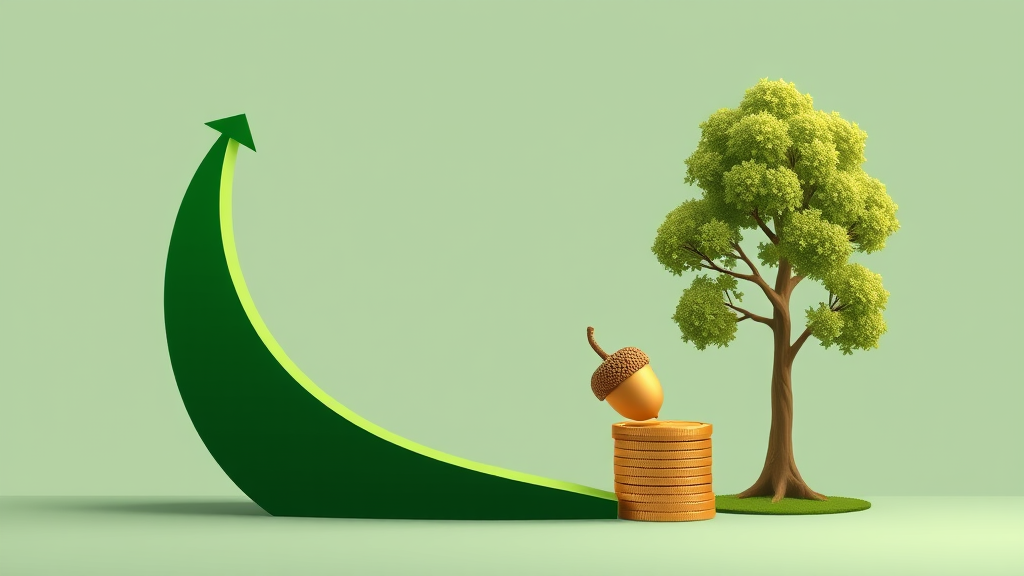

The Motley Fool asked a question this week that I get in my inbox about once a month: if you could only buy and hold one ETF for the next 20 years, which would it be? Their answer, laid out in full, traces the history from Vanguard's first S&P 500 index fund 50 years ago, which you could only trade once per day, to the ETF wrapper most of us use now.
I'll save you the suspense, because their answer and mine land in the same place: a total market index fund, the kind that owns roughly the whole U.S. stock market in one ticker. I've written before about why Vanguard's Total Stock Market ETF is still the best first investment most people can make, and I haven't changed my mind since. Boring, I know. But boring is what compound interest looks like from the outside.
The simple math does the persuading. The U.S. market has returned about 10 percent a year over long stretches, call it 7 percent after inflation. Put $500 a month into a total market fund for 20 years at 7 percent real, and you end up with roughly $260,000, of which about $140,000 is what you actually contributed. The other $120,000 is the market paying you to sit still. Nobody at a trading desk will ever sell you that pitch, because there's no commission in patience.
The 50-year history matters here, and not merely as trivia. When Vanguard launched that original fund in 1976, plenty of professionals dismissed the whole idea, and the fund went on to beat most of them anyway, decade after decade, at a cost of pennies on the dollar. The ETF version, which trades all day like a stock, just made a good thing more convenient. It didn't change the underlying idea: own everything, pay almost nothing, wait.
Now, one honest caveat, because I'd be a poor mentor if I skipped it. As I wrote just yesterday, your S&P 500 or total market fund is heavier in tech than you probably realize. The biggest companies dominate the index, and right now the biggest companies are the AI giants. That's a reason to know what you own, and maybe to hold some international exposure alongside it if that concentration keeps you up at night, rather than a reason to abandon indexing.
Also worth saying: one fund doesn't mean one decision. You still have to keep buying when the market drops 30 percent, which it will, probably more than once over 20 years. I've watched every crash since the late '80s, some from closer range than others, and the investors who came out ahead weren't the clever ones. They were the ones who kept contributing through the ugly parts.
So if you're asking me the same question The Fool asked, there's my answer. One broad, cheap, total market ETF. Set the contributions on automatic. Then go live your life and let the decades do the heavy lifting.
As always, this is my perspective, not professional financial advice. Talk to a fiduciary advisor before making decisions about your own money.
Comments (0)
Log in or sign up to join the conversation.
No comments yet. Be the first.