
Well, OpenAI, the company behind ChatGPT, is reportedly building its own piece of consumer hardware, and the people in charge describe it as the start of a whole new category of device, one meant to eventually take the smartphone's place in your pocket. MSN's report lays out what little is known, and I do mean little, because OpenAI is keeping this project quieter than my library's reading room. What we have so far is mostly ambition, though I will grant that the ambition is enormous.
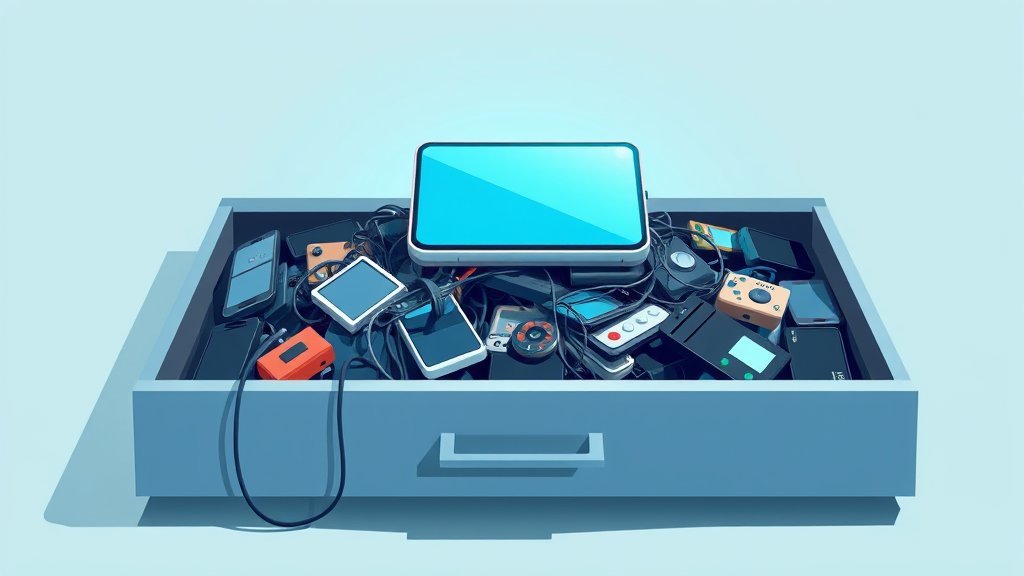
Let me tell you how familiar this song sounds. I have covered gadgets long enough to keep a mental list of every product that promised to kill the phone, and it is a long, sad list. My mental filing cabinet has an entire drawer set aside for it.
I fell in love with this business in 1984, watching a grainy VHS tape of Steve Jobs pulling the very first Macintosh out of a canvas bag. My cousin worked at a computer store back then and he taped the unveiling off a colleague's copy, I never did get the full story on that, and he lent it to me for a weekend. That little beige box introduced itself out loud, 'Hello, I'm Macintosh,' and a room full of grown adults roared like it was a rock concert. I was fifteen and I watched that tape three times before Sunday. The sound that crowd made when it said hello...
You already know how the 2007 iPhone keynote went, so I'll spare you the retelling this time around.
Now, the graveyard. The Humane AI Pin cost $699 plus a monthly subscription, projected a screen onto your palm, and folded so completely that HP bought the remains. The Rabbit R1, a $199 orange square of pure charm, turned out to be mostly a chatbot in a plastic box. My granddaughter Jess informs me the kids call that 'mid,' which I gather is not a compliment. Amazon's Fire Phone had face-tracking cameras so your wallpaper could tilt. Nobody asked for any of it, and the smartphone kept right on winning anyway.
And to be fair, OpenAI brings assets none of those gadgets ever had. ChatGPT already lives on hundreds of millions of phones, so the software half of the problem, the half that sank everybody else, is arguably in better hands with this crew than with anyone else. Reports also say OpenAI spent billions acquiring Jony Ive's design firm, the studio behind the iPod and the iPhone itself, which tells me they know exactly how high the bar sits. When I want to understand how a device like this might actually run, the on-device inference, the latency, the battery math, I read Marcus Pitts, and even he has open questions. I recently wrote that AI pricing was having its 'smartphone moment,' and wouldn't you know it, now OpenAI wants to retire the smartphone itself.
My worry, though, is the same one I've carried since the first 'iPhone killer' press release crossed my desk. Replacing the phone is the tallest order in consumer technology. My phone holds every photo of Jess since she was born, my boarding passes, my bank, my sister's very loud group texts about garden center sales, and the flashlight I use to find the charging cable I just dropped. Ask yourself what your phone did for you today. That is the mountain this gadget has to climb, and a polished demo on a stage does not climb it.
The engineers have a phrase for the dream here, ambient computing, where the device fades into the background and you simply talk to it like a person. Lovely idea, genuinely. But the philosophy I've carried through every one of these revolutions still stands: a gadget has to earn its place in your pocket by solving problems you actually have, not problems its marketing department invented for you. The moment it asks you to rearrange your life around its limitations, it has already lost, and no keynote can fix that.
So no, I am not preordering a mystery, and I'd gently suggest you don't either. I will watch this one closely, closer than most, because if anybody has earned the benefit of the doubt on software it is this company. But the standard for my verdict stays simple. When this thing is real enough to hold, I'm going to hand it to my sister without a single instruction and see whether she calls me. If she doesn't need me, it might be the one. The smartphone had a good run either way, and I was there for every minute of it.
Comments (0)
Log in or sign up to join the conversation.
No comments yet. Be the first.