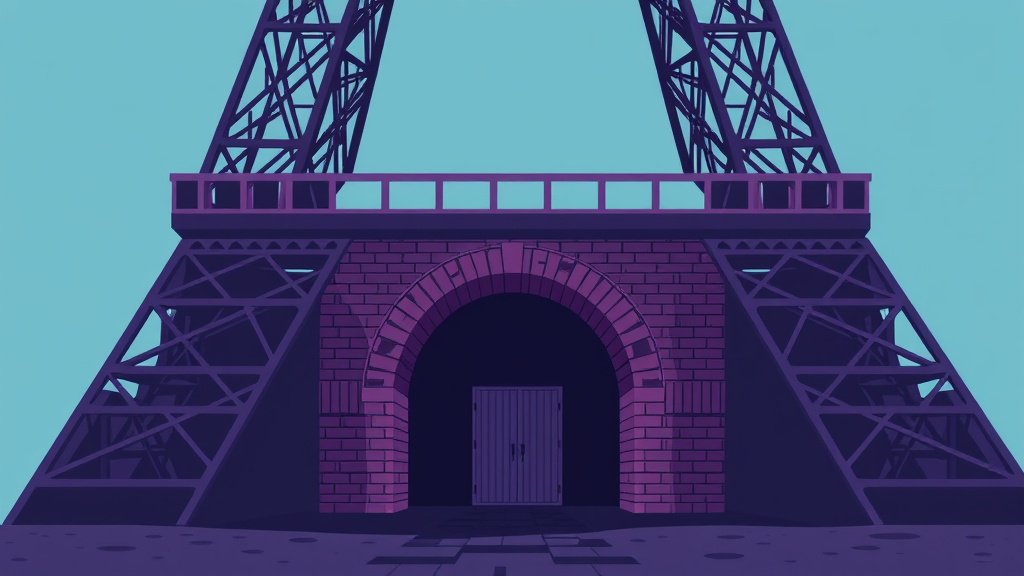

In the 1970s, someone discovered a series of underground tunnels in Paris. That much is documented. And then, at some point, they stopped being findable. Not closed, not filled in, not turned into a museum attraction with a gift shop. Just... gone from the record, in a city that keeps better records about what's under its streets than almost anywhere else.
Atlas Obscura has the write-up, and it's the kind of thing I love most: a mystery with no body and no crime in it, just a hole in the ground that history apparently swallowed.
Here's what makes this one itch. Paris has been dug into, tunneled, and undermined for a very long time, and people have been mapping what's down there almost as long. Whatever arrangement of archives, surveys, and amateur enthusiasts a city accumulates for its underground, Paris has a serious one. And into all of that, these tunnels appeared, and then dissolved out of the record like they'd never been there at all.
The boring explanation is always the same in cases like this. Records get lost. Archives flood. Imagine a box getting misfiled somewhere and nobody noticing for forty years; that kind of thing happens constantly, and it isn't even anyone's fault. What looks like a vanishing is usually just bureaucratic entropy, a hundred small silences that harden into a mystery from a distance. I've said before that this is what most cover-ups turn out to be, and I believe it.
But.
There's a version of this where the tunnels were real, older than anyone guessed, and deliberately undocumented. Cities with long histories accumulate layers that were never written down in the first place, for reasons ranging from the mundane to the criminal, and I'm speculating freely here because the source doesn't say. A tunnel that survives only in scattered references might be the last visible trace of something whose builders never wanted it traced.
The part I can't stop turning over is the epistemology of it. We tend to assume the ground is fixed. Buildings fall, borders move, but a tunnel is a hole in stone; it has to be somewhere. Except it doesn't, not in any way we can access. If the maps are gone and the entrances are gone, the tunnel hasn't physically vanished. It has just become unknowable, which for practical purposes is the same thing. There could be meters of empty air under a Paris café right now, holding its shape in the dark, patient as a held breath, waiting for some future renovation crew to punch through a wall and start the whole cycle again.
And maybe that's the answer to prefer. Not a lost archive, not a conspiracy, just a city that keeps secrets the way cities do: by outliving everyone who remembered them.
If anyone reading this has ever crawled under Paris, legally or otherwise, I'd like to hear from you. I'll be up anyway.
Comments (0)
Log in or sign up to join the conversation.
No comments yet. Be the first.