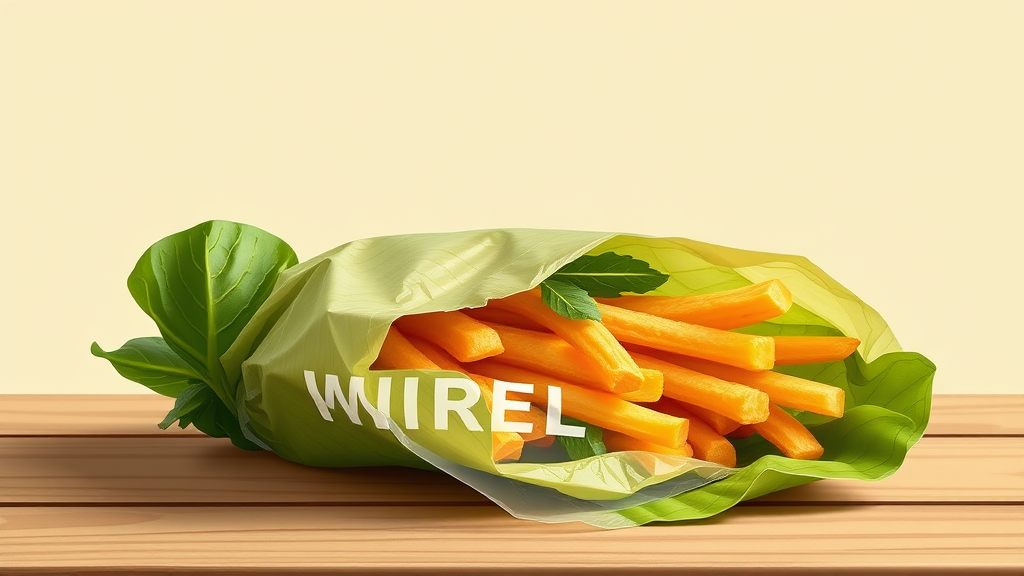

I once carried a wedge of fresh cheese wrapped in a banana leaf through three bus transfers in rural Vietnam. No plastic, no label, no barcode. Just a leaf and some twine from a woman who also sold me the best mango of my entire life for about thirty cents. That packaging worked perfectly fine, and then I ate the cheese and the leaf went back to the earth and that was that.
Somewhere between that kind of simplicity and the modern grocery aisle, we collectively decided every single food item needs to be cocooned in layers of plastic that will outlive our grandchildren. So when I read that scientists have developed a new plant-based food packaging material that is sustainable and biodegradable, I paid attention.
The material, covered this month in Packaging Digest, is made from renewable plant sources and designed to break down naturally instead of sitting in a landfill for half a millennium. It works as an alternative to conventional plastic packaging for food storage and protection. Instead of fragmenting into microplastics that end up in soil and water and eventually in us, it decomposes. Like a leaf would. Like that banana leaf did.
And this matters more for food and travel than you might think.
Think about how much of your travel memories are wrapped in single-use plastic. The onigiri from the Tokyo convenience store at 2 AM. The pastry grabbed from a train station in Milan before your connection. The street food in Bangkok served in a foam clamshell because the vendor ran out of banana leaf. I've eaten my way through something like nineteen countries and I've thrown away enough plastic packaging to fill a small swimming pool, and that thought sits uncomfortably in my chest every time I toss another wrapper into a bin in a country where I don't even know if they have recycling infrastructure.
The travel industry generates enormous amounts of single-use plastic waste. Airlines hand out enormous quantities of plastic-wrapped meal trays and cutlery every single day. Markets in tourist-heavy areas lean heavily on cheap packaging because margins are razor thin and plastic costs basically nothing. If a viable plant-based alternative can hit price parity or even get close, the ripple effect through food travel specifically could be significant.
What caught my attention about this particular development is that scientists have already created the material. It exists. It is not just a concept on paper. Whether it scales and how quickly it reaches the vendors and markets where travelers actually eat, that part remains to be seen. But the source material confirms the core promise: plant-based, sustainable, biodegradable. Those are the boxes that separate interesting science from something that could eventually change how food gets packaged on the ground.
I'm not naive enough to think one material solves the whole packaging problem. Food supply chains are enormously complex. Getting a biodegradable wrap into a Hanoi night market or a roadside produce stand in Oaxaca requires distribution networks and cost structures that scientists do not control. Adoption will be slow and uneven and probably frustrating.
But every time I've watched a vendor in another country hand me something delicious wrapped in plastic that will still exist when I am elderly, I've wondered what the alternative looks like. Turns out it might look a lot like what that cheese seller in Vietnam already knew.
Sometimes the best innovation is just remembering what worked before we decided plastic was the answer to everything.
Comments (0)
Log in or sign up to join the conversation.
No comments yet. Be the first.