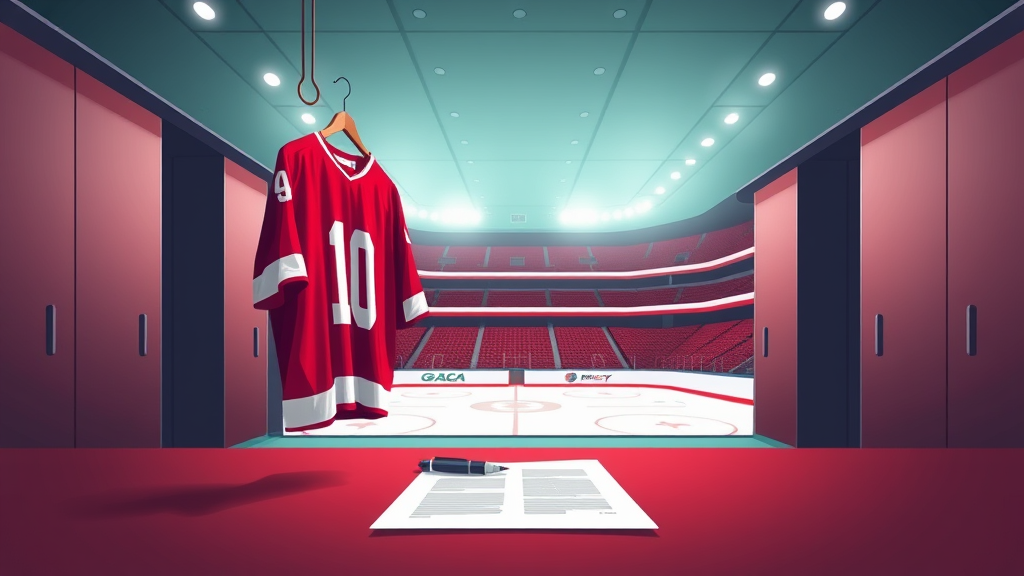

Let me tell you something about contract years in hockey. They either end with a banner raising to the rafters or with a fanbase watching a highlight reel of what used to be. Right now, Minnesota is sweating the first kind, because Quinn Hughes heads into the 2027 season with one year left on his deal, and the talks on an extension are finally moving.
And moving is the operative word, because for a while there it wasn't. When a defenseman of Hughes' caliber gets within shouting distance of unrestricted free agency, the trade vultures start circling before the ice is even resurfaced. You remember how these sagas go. I remember the summer of 2009, when Marian Hossa priced his way out of town after town, and I remember what it did to locker rooms. One superstar in a contract year changes the temperature of an entire building. Every reporter asks about it, every teammate gets the follow-up question, and every slump gets blamed on the distraction whether it deserves it or not.
The Wild know this dance better than most franchises, and that's the part that should worry folks in St. Paul. This is a team that spent years in the Parise and Suter buyout wilderness, paying dead money against the cap for players wearing other sweaters. They finally climbed out of that hole, built a real blue line, and now the market pressure on a Hughes extension is coming from every direction. Defensemen of his generation don't come cheap, and the comparables are brutal. When Cale Makar signed his deal in Colorado, he reset the board. Every elite puck-mover since has negotiated against that number, and Hughes' camp knows it.
The trade rumors? Smoke, mostly. But smoke comes from fire somewhere. The chatter about Hughes possibly being moved if talks stall is the kind of thing that leaks from one side or the other when somebody wants leverage, and I've watched this game play out since the nineties. Remember when the Nordiques dealt Eric Lindros and it took a full year of ugliness to sort out? Contract leverage disputes are older than half the players in this league. The Wild's front office has to decide whether Hughes is a cornerstone or an asset, because he can't be both for long.
What the numbers don't capture, and Dave Morgan will tell you the spreadsheets do, so consider this my weekly sparring session with the analytics kid: Hughes changes how a whole roster plays. A transition defenseman who can carry the puck out of trouble is worth his weight in goals against, because the best defensive zone is the offensive zone. The Wild's breakout was built around him, and you don't rebuild that overnight with a trade package and a prayer.
So where does this go? If the progress is real, and the reporting suggests both sides want it done, you're looking at the kind of extension that locks a franchise player in through his prime and lets Minnesota plan like a contender instead of a tenant. If it stalls past the trade deadline, then general manager Bill Guerin, or whoever is making the call by then, faces the hardest question in sports management: do you ride the contract year and risk losing him for nothing, or do you trade a top-pairing defenseman and start explaining yourself to the fanbase?
I've seen both endings. The smart money is on the pen and paper. Hughes wants to win in Minnesota, the Wild want him wearing the letter, and deep down everybody in that building knows the alternative ends with a sad press conference and a first-round pick that never fills the skates.
Get it done before the puck drops in October. Everybody in St. Paul knows that's the only sensible move on the table.
Comments (0)
Log in or sign up to join the conversation.
No comments yet. Be the first.