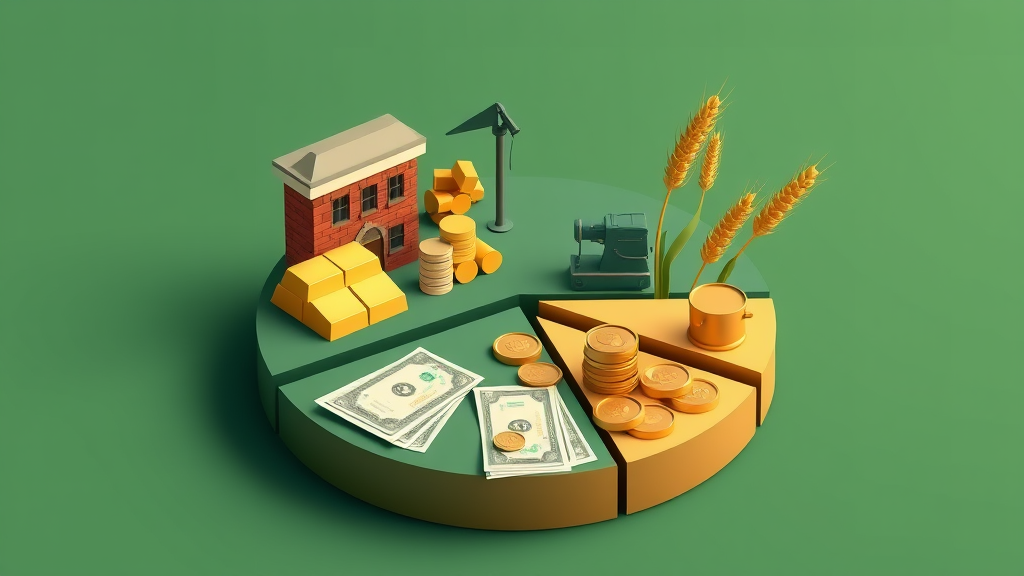

US News put out a piece this week on what real assets actually are, and it's a question worth slowing down for. The phrase gets thrown around a lot and means less than people think. Real assets are things you can point at: buildings, land, timber, infrastructure, commodities. Stocks and bonds are claims on future cash. Real assets are the stuff itself.
The attraction is straightforward. Real assets tend to hold their value when inflation picks up, because rents rise, commodity prices rise, and the replacement cost of a toll road does not care what the Federal Reserve is doing. Bonds get eaten by inflation. Cash gets eaten worse. A warehouse with a lease on it, less so.
The article leads with real estate, and I'll build out from there with the categories I'd want you thinking about, including my read on each rather than just repeating the highlights back.
Real estate is the obvious one. You earn rent while the property, you hope, appreciates. The article calls it the Swiss Army knife of real asset investing, which is fair. What I'd add after forty years of watching people get excited about rental properties is that the exciting part is never the toilet that fails at 2 a.m. or the tenant who pays late. Most folks are better served with a REIT or a real estate index fund, where somebody else handles the plumbing and you handle the patience.
Commodities are the second leg. Gold, oil, copper, agriculture. I wrote recently about gold hitting a three-month high and the urge to chase it, and my answer there applies here. Commodities are insurance, not an investment thesis. They pay no dividends and compound nothing. A small slice hedges the rest of your portfolio; a large slice is a bet on prices you can't control.
Infrastructure is the one I have the most affection for, mostly because it's boring in the best way. Pipelines, toll roads, power grids, ports. These are assets with contracted or regulated cash flows that tend to rise with inflation. Boring assets that pay you to wait are, in my experience, the entire foundation of how most people should build wealth.
Natural resource stocks round out my list, timber and energy companies and the like. These give you real asset exposure through the stock market, with dividends attached. Just remember you're buying businesses, not the commodity, and management can squander the underlying resource. Diversification within the slice matters.
Now the part I always say. If you decide real assets deserve a spot, keep them a slice, not the meal. The range I'd suggest is somewhere around 5 to 15 percent of a diversified portfolio, and I'll hold that as my own recommendation rather than quoting a consensus, because honest people disagree on the number. If real assets become your whole strategy, you've traded one form of timing for another.
And you don't need to pick individual properties or guess on oil. There are broad real asset funds and ETFs that spread the risk across hundreds of holdings for a modest fee, which is how I'd suggest most people get exposure. The boring strategy, as I keep reminding anyone who'll listen, has a way of winning.
As always, this is my perspective and not professional financial advice. Talk to a fee-only advisor before making changes. But if you've been wondering what real assets are and whether you're missing something, the answer is: a useful diversifier, in moderation, bought slowly and held a long time.
Comments (0)
Log in or sign up to join the conversation.
No comments yet. Be the first.