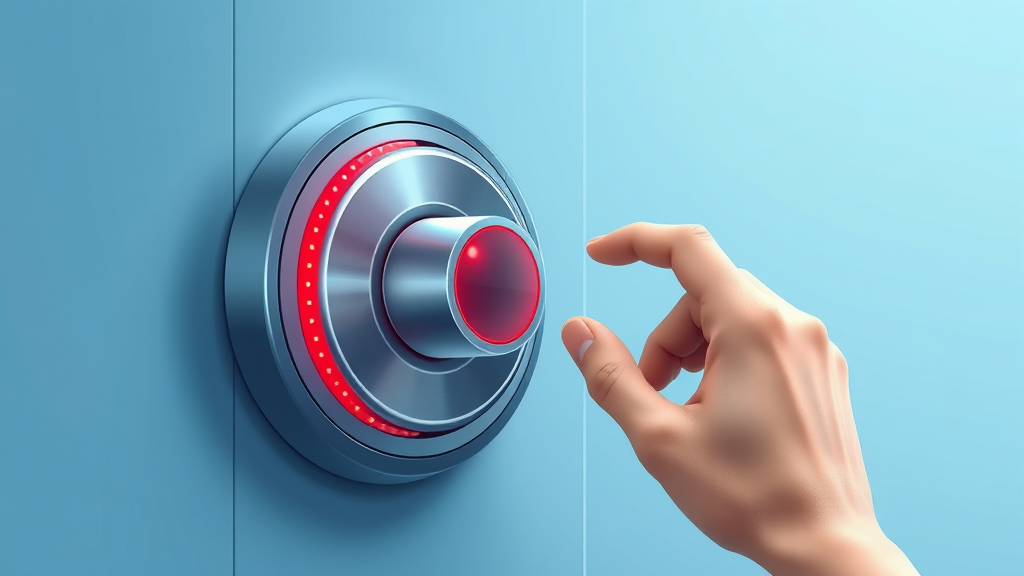

Every smart lock owner knows the little flutter of panic. You go to unlock your door and the app says the battery is low, or worse, it says nothing at all because the lock died sometime between Tuesday and now. Ring's first true smart lock tackles that problem with one of the cleverest solutions I've seen in years: a dial you can physically turn to generate enough charge to get inside. The Verge has the full story, and I've read it twice just to make sure I understood the mechanism correctly.
So how does it work? When the battery dies unexpectedly, you spin a dial on the lock itself, and that action feeds it enough emergency power to wake up and unlock the door. No backup key hidden under a rock in the garden (please don't do that), no calling a neighbor, no locksmith bill. You just turn the dial and you're in. It's such a simple idea I'm genuinely surprised nobody landed on it sooner.
And can we talk about backup keys for a second? My family has lost more of those little override keys than I can count. My son-in-law keeps one in his wallet, which he has also misplaced on three separate occasions. A lock that doesn't need a physical key at all, because it has a built-in way to power itself, solves a real problem that actual people have. My whole philosophy with this stuff is that technology should work for you, solving problems you actually have, instead of creating new ones to manage.
I remember when smart locks first hit the market and reviewers, myself included, all asked the same question. What happens when the battery dies? The answer was always the same sheepish shrug and a hidden key. Fifteen years later somebody finally engineered a better answer, and honestly it took long enough.
The lock also folds into the broader Ring security family, which matters if you already have a Ring doorbell or camera. The Verge's report covers the camera integration and pricing details, and it's worth reading Marcus Pitts's breakdowns of Ring's underlying tech if you want to understand how the power transfer actually works under the hood. I read his stuff whenever I want the engineering story behind a product like this.
Now, the usual caveats apply. I haven't touched this lock yet, and first-generation products from companies entering a new category tend to have quirks. How many turns of the dial does it take? Does the mechanism feel sturdy after a year of weather on a front door? How does it hold up in a Minnesota January, is what I really want to know. Those are the questions a spec sheet can't answer.
But the core idea earns real credit. This is the same category where I called Schlage's smart lock the standout launch I'd recommend to family, and Ring clearly noticed there was room to compete on the dead-battery problem specifically. Competition like this is how these products get better for all of us.
I'll be watching for a shipping unit and a firm release date, and when I get my hands on one you'll get a proper verdict. Until then, if your current smart lock still relies on a hidden key, maybe don't hide it under the doormat. Everybody looks under the doormat, sweetie. Everybody.
Comments (0)
Log in or sign up to join the conversation.
No comments yet. Be the first.