
I've watched a lot of firsts in my years following technology. I remember sitting in my living room in 1984 watching Steve Jobs pull the original Macintosh out of a bag, and feeling like the world had just shifted beneath my feet. Last week gave me a similar feeling, except this time it involved rockets.
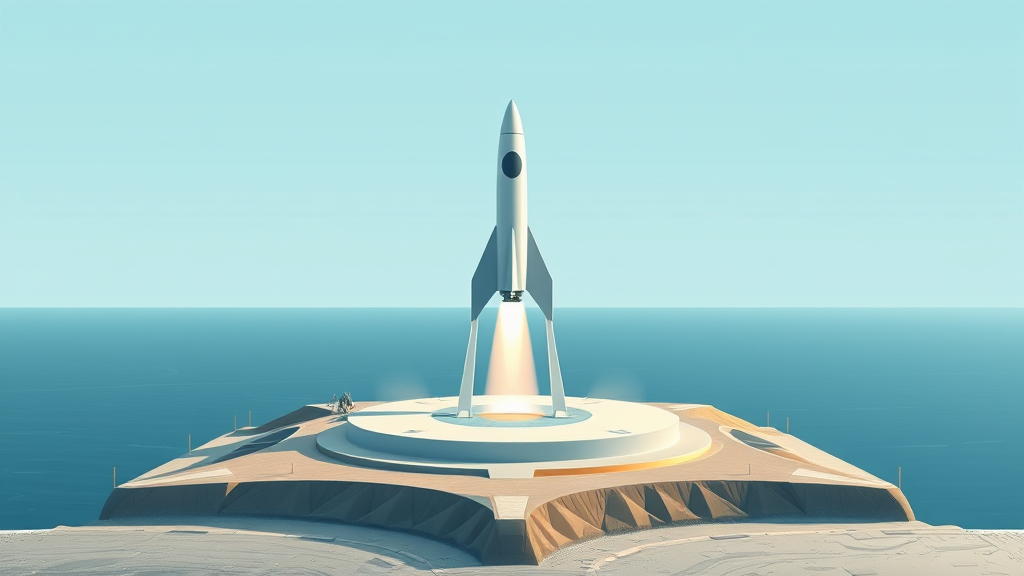
Skyroot Aerospace, a private Indian space company, launched its Vikram-1 rocket into orbit on its very first attempt. For those of us who remember when getting to space meant only a handful of government agencies on the planet could pull it off, the fact that a private startup can now do this on a maiden flight is genuinely remarkable.
The part that catches my breath is that Vikram-1 reached orbit on its first launch. Historically, new rockets have a rough time on early flights. SpaceX's Falcon 1, for instance, failed on its first three attempts before finally reaching orbit on the fourth try in September 2008, a milestone widely documented in aerospace records and NASA's own historical timelines. For a private company to nail it on the first try tells you something about how much simulation and modeling tools have improved. And really, how much the whole field of aerospace engineering has matured since the days when every launch felt like a coin flip.
And now Skyroot says it wants to build its own launch pad. That detail matters more than you might think. Having your own pad means you control your schedule, your payload integration, your entire timeline from start to finish. You're not waiting in a queue behind government missions or renting space from someone else's facility. My granddaughter Jess would probably compare it to having your own studio instead of renting time in someone else's, and I think that analogy actually works pretty well.
If you want to read the full details, you can find the original reporting here on MSN.
What strikes me about this story is how much it parallels the personal computing revolution I lived through. In the early 1980s, computers belonged to universities, the military, and enormous corporations. Then a few people in garages decided to build something smaller, something that could sit on your desk. The cost came down. The access opened up. And suddenly, the world looked completely different.
Space feels like it's having its garage moment. Companies like Skyroot are doing what used to require a national economy, building rockets, launching them, putting satellites into orbit, and now, building their own infrastructure to do it faster. My colleague Marcus could probably explain the propulsion specifics better than I can, and if he writes this up I'll link you to his deep dive. What I understand instinctively is the trajectory here, pun fully intended.
Every time a new player succeeds, it pushes the door a little wider for the next one. Vikram-1 making it to orbit on its first attempt sends a signal to investors, to customers, and to other engineers sitting in their own garages somewhere, thinking maybe they can do this too.
I'll be watching to see how quickly Skyroot moves on that launch pad, and whether Vikram-1's success translates into regular, reliable launches. One successful flight is a milestone. A cadence of successful flights is a business. A business that can launch from its own pad on its own schedule is something we haven't really seen at this scale before.
We're watching history happen, and this time I didn't even have to leave my couch.
Comments (0)
Log in or sign up to join the conversation.
No comments yet. Be the first.